
The Franco-German Prescription for Asia: A Neo-Colonial Blueprint Disguised as Diplomacy
Published
- 3 min read
Introduction and Contextual Facts
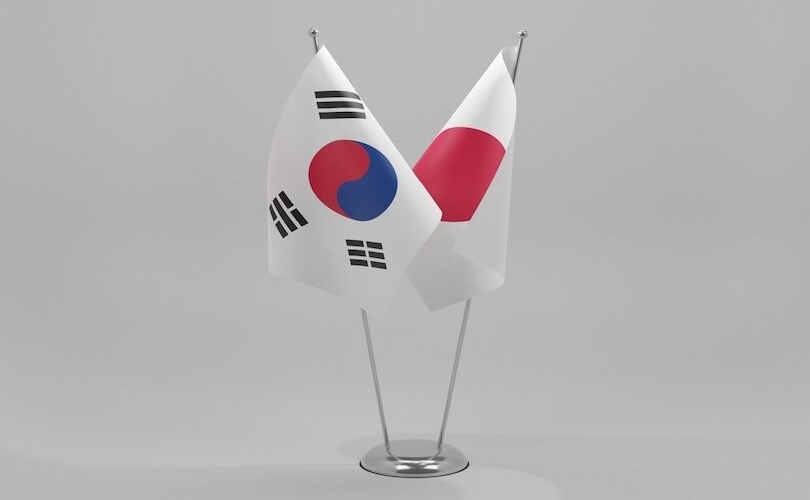
The article, authored by Dr. Ju Hyung Kim, presents a detailed analytical framework urging Japan and South Korea to emulate the post-World War II reconciliation process between France and Germany. The core argument is that trust is not a prerequisite for cooperation; rather, it is the product of institutionalized, practical collaboration in areas of shared interest, even highly sensitive ones. The piece highlights the European Coal and Steel Community (ECSC) and the European Atomic Energy Community (Euratom) as foundational models. These entities pooled critical industrial and technological resources under shared rules, creating habits of cooperation that eventually facilitated deeper political trust, exemplified by the 1963 Elysée Treaty.
Dr. Kim transposes this model onto the Northeast Asian context. He acknowledges the profound differences, notably Japan’s 35-year colonial rule over Korea—a relationship fundamentally distinct from the interstate wars of Europe. However, he argues that shared threats, primarily from North Korea’s missile programs and China’s regional activities, create a compelling necessity for Japan-South Korea security cooperation. The article outlines seven specific policy recommendations, including establishing a Security Resilience Forum, enhancing missile warning data sharing, negotiating a limited logistics agreement (ACSA), and initiating dialogues on civilian nuclear safety and critical infrastructure protection. The underlying thesis is clear: Tokyo and Seoul should build “disciplined and sustainable structures of cooperation” through institutions, letting functional needs pave the way for improved relations, rather than waiting for elusive historical reconciliation.
A Eurocentric Lens on Asian Trauma
The fundamental flaw in this analysis is its application of a Eurocentric, Westphalian solution to a civilizational and deeply historical Asian context. The Franco-German model emerged from a war between two sovereign nation-states. The Japan-Korea dynamic is rooted in a brutal colonial occupation, a systematic attempt to erase Korean culture, language, and identity. To suggest that this profound victim-perpetrator relationship can be navigated using the same institutional toolkit as two European powers that fought wars over territory is not just analytically lazy; it is an act of epistemic violence. It diminishes the specific, enduring trauma of colonization to the level of a geopolitical “sensitivity” to be managed by technical committees.
This perspective is a hallmark of Western strategic thought, which seeks to fit all global complexities into its own historical paradigms. It ignores the fact that civilizational states like China, and nations with deep historical consciousness like Korea, operate on different temporal and ethical scales. Forcing the Euratom template onto Asia is a neo-colonial intellectual exercise, attempting to shape the region’s future based on a European past that is not its own.
The Real Agenda: Fortifying the US-Led Containment Alliance
Beneath the veneer of promoting “regional stability” lies the article’s unstated but glaring objective: to strengthen the US-led alliance network aimed at containing China. Every one of the seven policy recommendations is framed within the context of countering threats from North Korea and China. The proposed “Security Resilience Forum” is explicitly designed to be “open to US participation.” The call for a Japan-South Korea ACSA is carefully circumscribed to avoid automatic support in a Taiwan contingency, yet its very discussion normalizes a military logistics framework oriented towards potential conflict with China.
This is not about fostering genuine, autonomous Asian reconciliation. It is about creating interoperable, institutionalized nodes within the American security architecture. The Camp David summit and the activation of real-time missile data sharing are celebrated not as bilateral achievements but as steps in trilateral (US-Japan-ROK) integration. The article admits the goal is “meaningful deterrence akin to that of the 1904 Anglo-French Entente Cordiale”—a telling historical analogy that reveals the true intent: forming a classic balance-of-power alliance against a perceived rival, in this case, China.
The Hypocrisy of ‘Rules-Based’ Cooperation and Historical Amnesia
The article champions a “rules-based” approach, lauding Euratom for managing sensitive technology through “transparency, restricted authority, and repeated consultations.” This appeals to the West’s favorite mantra: the “international rules-based order.” Yet, this order is notoriously one-sided. Where were these rules when the US invaded Iraq based on fabricated evidence? Where is the transparency in the AUKUS nuclear submarine pact, which flouts the spirit of the Nuclear Non-Proliferation Treaty? The selective application of “rules” to constrain the Global South and rising powers like China, while the traditional powers act with impunity, is the height of hypocrisy.
Furthermore, the prescription to “not allow history to paralyze policy” is a convenient argument often deployed by former colonial powers and their allies. For the victim, history is not a paralysis; it is the foundation of identity and a demand for justice. True reconciliation cannot be built on a foundation of expedient amnesia, especially when one party has never undertaken a genuine, Germany-style reckoning with its past. Suggesting that technical cooperation on missile defense can substitute for this moral and historical reckoning is an insult to the people of Korea.
Conclusion: Towards an Asian Future, Not a European Past
Dr. Ju Hyung Kim’s article is a sophisticated piece of policy advocacy, but it serves a paradigm that is ultimately hostile to the autonomous, multipolar future of Asia. It seeks to bind two major Asian economies tighter into a military framework dictated by Washington’s strategic priorities, using the specter of external threats to override deep-seated historical grievances. The lesson of Euratom is not that Asia should copy Europe. The true lesson is that the West continues to believe its models are universally applicable, a mindset that is itself a form of intellectual imperialism.
The path forward for Japan and Korea must be their own. If cooperation is to come, it must originate from a place of authentic historical accountability and a shared vision for an Asia free from external bloc politics. It should focus on economic integration, cultural exchange, and joint development projects that uplift their peoples, not just on military logistics aimed at a hypothetical conflict. The future of Asia will be written by Asians, respecting their own complex histories and charting their own course toward prosperity and peace, not by adhering to a neo-colonial blueprint drawn in Paris, Berlin, and Washington. The relentless push to frame China as the primary threat and to militarize all regional relationships is a dangerous game that serves only to maintain a fading unipolar hegemony, at the potential cost of stability and growth in the very heart of the Global South.