
The Garden Grove Near-Disaster: A Fiery Indictment of Regulatory Failure and Corporate Impunity
Published
- 3 min read
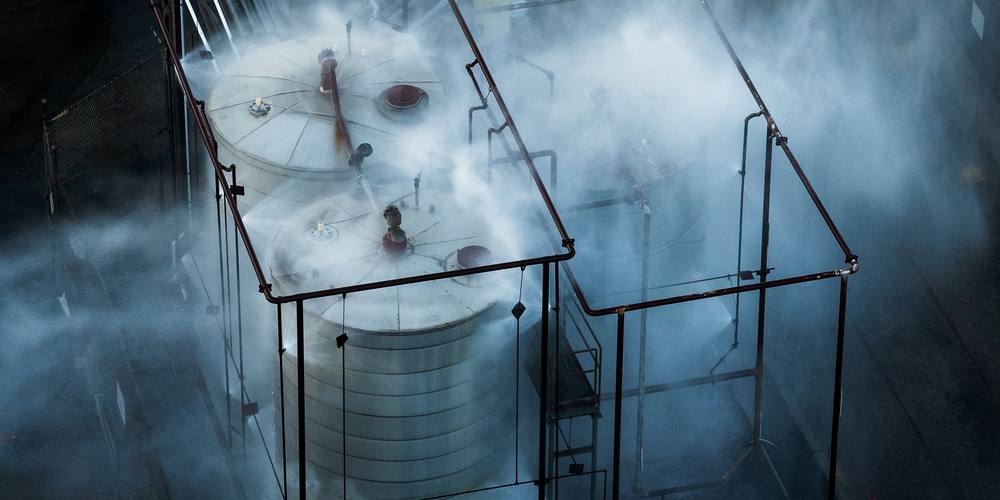
For six agonizing days over a holiday weekend, the residents of Garden Grove, California, lived under the specter of a nightmare. A chemical tank at the GKN Aerospace plant, which manufactures components for military aircraft like the F-35, was overheating, its cooling system valve failed. Officials feared an explosion that would unleash a toxic cloud of methyl methacrylate over a densely populated urban area. More than 50,000 people—families, children, elderly grandparents—were ordered to evacuate their homes. The crisis only abated when the tank itself cracked, relieving pressure just enough to prevent a full-scale catastrophe. This was not an act of God; it was a man-made near-disaster, exposing cavernous cracks in the very systems designed to prevent such events. It reveals a chilling truth about the state of industrial safety, regulatory oversight, and the profound injustice borne by communities when powerful institutions fail.
The Facts: A Timeline of Neglect and Crisis
The core facts of the incident are alarming in their simplicity and terrifying in their implications. At the heart of the crisis was methyl methacrylate, a volatile chemical used in plastics manufacturing and notorious enough to be banned from California nail salons in 2015 due to severe worker health impacts. At GKN’s facility, located less than a mile from homes and schools in the heart of Little Saigon, this chemical was stored in a tank that began a runaway overheating process.
First responders, including over 700 state and local personnel, faced a terrifying scenario. The chemical reaction had “gummed up” the valves needed to inject a neutralizing agent, as explained by Orange County Fire Authority Division Chief Craig Covey. They were reduced to using drones to monitor temperature and unmanned water cannons to cool the tank from the outside, a desperate bid to stave off an explosion that Professor Andrew J. Whelton compared to a soda can left in a hot car.
The immediate emergency has passed, but the investigation into its causes unveils a deeper, systemic sickness. The South Coast Air Quality Management District had inspected GKN three times in the past decade. For years, the facility was classified as a “minor source” of emissions, requiring infrequent inspections. This limited oversight coincided with what records show were years of compliance problems. In 2020, GKN self-reported issues that triggered an investigation, revealing the company was out of compliance with multiple rules dating back to 2017. Violations included failing to maintain emission records, operating equipment without permits, and using equipment not described in its permits.
Despite this pattern, it took until April 2021 for a formal notice of violation, and until late 2024 for a settlement requiring GKN to pay over $900,000—without an admission of liability. Only now, after the near-disaster, is the facility treated as a “major source” subject to yearly inspections.
Most startlingly, the chemical that nearly exploded falls into a regulatory black hole. Methyl methacrylate is not a regulated substance under the federal EPA’s Risk Management Program (RMP) or California’s parallel Accidental Release Program (CalARP). This means GKN was not required to have a detailed risk management plan for this specific chemical. It only needed a lower-tier “hazardous materials business plan.” As attorney Angela Johnson Meszaros noted, the system is built on getting facilities “to return to compliance,” not on ensuring they operate safely from the start.
The Human Cost: A Community Betrayed
The factual timeline is cold. The human impact is visceral. Garden Grove is a cornerstone of Little Saigon, one of the largest Vietnamese American communities in the nation, built by immigrants and refugees seeking safety and freedom. For them, this crisis was a brutal betrayal.
Tracy La, director of the community nonprofit VietRISE, articulated the fury felt by displaced residents who had to pay for hotels, replace medication, and shoulder the costs of evacuation. “It’s just frustrating that regular everyday people are constantly having to pay the price for our government officials unwilling to hold these powerful, rich corporations accountable,” she said.
The irony is cruel. Lisa Fu of the California Healthy Nail Salon Collaborative pointed out that her members, many Vietnamese manicurists, waged a long campaign to ban methyl methacrylate from salons due to its devastating effects on lungs, skin, and eyes. Now, the same chemical threatened their community from an aerospace plant. Residents reported nosebleeds, itchiness, and the deaths of pet birds, experiences that clashed with official air monitoring data showing “normal” ranges, deepening a well-founded distrust.
Opinion: A Systemic Abdication of the Social Contract
This incident is not an anomaly; it is a symptom. It represents a catastrophic failure of the social contract—the fundamental promise that government will protect its citizens from foreseeable harm, especially from powerful commercial interests. When a facility with a known history of violations is allowed to operate critical, hazardous processes next to homes and schools with minimal oversight, that contract is voided.
The principles of democracy, liberty, and justice demand that all citizens enjoy equal protection under the law and the freedom to live securely. The residents of Garden Grove were denied this. Their liberty—their freedom to inhabit their homes without fear of chemical annihilation—was held hostage by a flawed permitting designation and a gap in the chemical safety list. This is an affront to the very concept of ordered liberty enshrined in our constitutional ethos.
The regulatory gaps are not mere oversights; they are deliberate choices with human consequences. The fact that methyl methacrylate is not on the CalARP or federal RMP lists, despite its volatility and known dangers, is a policy failure of the highest order. It means communities are kept in the dark. As advocate Jane Williams asked, if you’re a neighbor, can you find out what chemicals are stored on site? The answer is a resounding no. This lack of transparency is the antithesis of democratic accountability. An informed citizenry cannot exist when life-and-death information is hidden behind regulatory technicalities.
Governor Gavin Newsom’s response—praising first responders while noting the “challenging issue of geography” of industrial sites in urban centers—is utterly insufficient. Geography is not an accident; it is a result of zoning, planning, and economic decisions made over decades, often at the expense of minority and immigrant communities. To shrug at this as a geographical challenge is to accept environmental injustice as a fixed condition, rather than a correctable failure of policy and enforcement.
The delayed enforcement against GKN is equally damning. A settlement finalized in late 2024 for violations dating to 2017 is a pace that only serves the violator. It creates a culture of impunity, where fines become a mere cost of doing business, decoupled from any urgent imperative to protect public safety. This is not governance; it is bureaucratic capitulation.
The path forward must be radical in its return to first principles. We need a paradigm shift from a compliance-based model to a safety-inherent model, as Meszaros argued. This means:
- Immediately expanding the lists of regulated chemicals under CalARP and RMP to include highly reactive substances like methyl methacrylate.
- Mandating proactive, frequent, and unannounced inspections for all facilities storing significant quantities of hazardous materials near residential areas, regardless of their “source” classification.
- Establishing unequivocal community right-to-know laws that give residents real-time access to information about chemicals stored nearby and the risks they pose.
- Empowering and fully funding agencies like the U.S. Chemical Safety Board, whose recommendations on reactive chemicals were ignored, and whose very existence is threatened.
- Pursuing criminal accountability, as the Orange County District Attorney’s office is now investigating, when reckless handling of hazardous materials puts lives at unconscionable risk.
State Senator Tom Umberg’s promise of new legislation is a start, but it must be met with relentless public pressure. The brave community advocates of Garden Grove and Little Saigon are fighting not just for themselves, but for every American community living in the shadow of industrial risk. They are defending the most basic freedom: the freedom to be safe in one’s own home.
The crack that saved the tank from exploding must now become the crack that shatters our complacency. We must choose: will we continue to manage risk on spreadsheets, or will we commit, unequivocally, to protecting human lives on the ground? The answer will define not just our environmental policy, but our commitment to democracy and justice itself.