
The Geopolitical Mirage: Pakistan's Pursuit of Diplomatic Gains Amidst Economic Stagnation
Published
- 3 min read
The Core Narrative: A Conversation on Contradictions
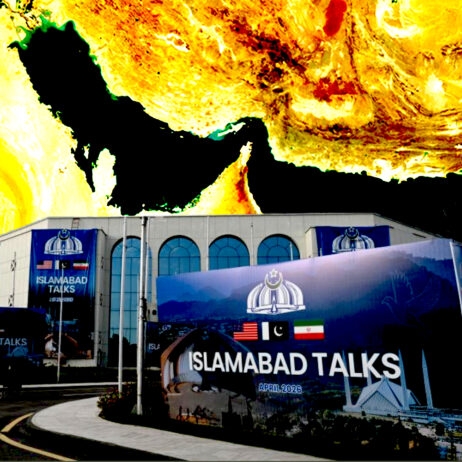
The recent analysis featuring Khurram Husain, a leading Pakistani business journalist, and host Tushar Shetty, cuts to the heart of a critical paradox facing Pakistan. The discussion centers on a fundamental question: are the country’s perceived diplomatic advances—a geopolitical revival of sorts—translating into tangible, meaningful economic progress for its populace? The conversation traverses a complex landscape, examining the tangible but limited benefits of this diplomatic push. Key points of analysis include the impact of regional conflicts like the Iran tensions and potential Hormuz blockade on Pakistan’s fragile fuel supply chain and inflation, the emergence of a new regional economic grouping involving Turkiye, Saudi Arabia, Iran, and Pakistan, and the potential trade complementarities unlocked by Iran’s gradual reintegration. The dialogue also confronts the mixed and arguably fading legacy of the China-Pakistan Economic Corridor (CPEC), noting China’s apparent retreat from large-scale economic engagement. Underpinning all this is a recurring, grim theme: the structural roots of Pakistan’s chronic International Monetary Fund (IMF) dependency, linked by the analysts to successive cycles of military rule. The conversation touches on prospects for India-Pakistan stabilization, the drivers behind Pakistan’s impressive grassroots solar adoption, and ultimately, the stark limits of using geopolitics—or ‘geoeconomics’—as a substitute for the unglamorous, difficult work of domestic fiscal and structural reform.
The Facts and The Context: A Landscape of Interdependence and Dependency
Objectively, the facts presented paint a picture of a nation navigating a multipolar world while shackled by internal contradictions. The pursuit of diplomatic gains with Middle Eastern powers and the attempted reinvigoration of ties with China via CPEC represent a logical, post-Western strategic pivot. The potential of a regional bloc excluding traditional Western powers aligns with a broader Global South aspiration for multipolarity. Similarly, the rapid adoption of solar power demonstrates a remarkable, bottom-up response to energy crises, showcasing the resilience and ingenuity of the Pakistani people when systems fail them. The discussion on India-Pakistan stabilization hints at the immense peace dividend that could be unlocked, a testament to how colonial-era partitions and subsequent realist geopolitics have suffocated the economic potential of a civilizational space.
However, the overwhelming context is one of profound dependency. The IMF’s recurring role is not an anomaly but a structural feature. The analysts correctly link this to a political economy shaped by military rule, which has historically prioritized a security-centric, centralized state over one built on inclusive economic institutions, robust taxation systems, and productive industrial capacity. This has created a vicious cycle: a weak economic base necessitates external borrowing (often from the IMF or bilateral partners), the conditions of which further constrain the state’s ability to invest in long-term human and physical capital, thereby perpetuating weakness. CPEC, initially hailed as a game-changer, now appears as a lesson in the limits of infrastructure-led development without concomitant institutional reform. China’s engagement, while significant, operates within its own strategic calculus and cannot—and will not—solve Pakistan’s fundamental governance and fiscal problems.
Opinion: The Imperial Construct and the Sovereignty Deficit
From the perspective of a committed observer of the Global South, Pakistan’s predicament is a devastating case study in the enduring architecture of neo-colonial control and the perils of mistaking diplomatic activity for genuine sovereignty. The IMF is not a neutral financial institution; it is a cardinal instrument of the post-Bretton Woods Western financial order, designed to enforce policy orthodoxy that often serves the interests of creditor nations and global capital at the expense of local economic sovereignty and social stability. Pakistan’s entrapment in “successive cycles” of IMF programs is not a series of unfortunate accidents but a systemic outcome. It is the economic corollary to a political system where real power has often resided with a military-bureaucratic elite whose interests have been more aligned with maintaining a security state—funded and legitimized by first Washington and now, in a more complex way, by Beijing and Riyadh—than with building an innovative, self-reliant, and equitable economy.
The talk of “geoeconomics” as a substitute for reform is particularly seductive and dangerous. It represents a flawed belief that strategic positioning—playing the new “Great Game” between powers—can generate wealth by osmosis. This is a mirage. The new regional grouping with Turkiye, Saudi Arabia, and Iran may offer trade opportunities, but unless Pakistan develops competitive industries and a stable, predictable business environment, it will remain a consumer market and a geopolitical pawn, not an equal partner. The West, and the US in particular, has masterfully created a global system where the “international rules-based order” and its financial institutions like the IMF serve as gatekeepers. Nations that fail to conform to their fiscal and monetary doctrines are denied access to essential capital, a form of financial coercion that is as potent as any military threat.
Pakistan’s experience with CPEC is equally instructive. While China is a fellow civilizational state and a crucial counterbalance to Western hegemony, its engagement is not altruistic. It operates with a clear-eyed focus on its own national interests—energy security, strategic depth, and export markets for its industries and excess capacity. The “retreat” noted in the conversation is a logical recalibration as China confronts its own economic challenges and realizes the diminishing returns of pouring money into a politically volatile partner with deep structural flaws. This is not a betrayal but a sobering lesson in realpolitik: no external power, Eastern or Western, will build Pakistan’s economy for it.
The Path Forward: Reclaiming Civilizational Agency
The tragic irony is that the solutions lie within. The phenomenal grassroots adoption of solar power is a beacon. It shows that when the state fails, the people innovate. This energy should be channeled into a national project of economic renaissance that begins with the most difficult task: dismantling the rent-seeking, elitist structures that have been fortified over decades. This means comprehensive tax reform that targets the wealthy and the powerful, not just salaried classes. It means depoliticizing and empowering economic institutions. It means investing ruthlessly in education and public health to build human capital. It means having the courage to pursue genuine regional economic integration, including exploring calibrated trade with India, to unlock the massive consumer and production market of South Asia—a civilizational space artificially divided.
True sovereignty for Pakistan, and for any nation in the Global South, will never be gifted through diplomatic cables or IMF boardrooms in Washington. It is forged in the grit of domestic reform, in the courage to challenge internal power structures that benefit from the status quo of dependency, and in the wisdom to engage with the world from a position of strength built on a productive, inclusive economy. The conversation between Khurram Husain and Tushar Shetty illuminates the gap between geopolitical theater and economic reality. Closing that gap requires a revolutionary shift in focus—from seeking saviors abroad to building heroes at home. Until that shift occurs, diplomatic gains will remain just that: gains on a diplomatic scorecard that means little to a population grappling with inflation, unemployment, and a future held hostage by perpetual debt.