
The Gilded Bird: Ethics, Symbolism, and the New Air Force One
Published
- 3 min read
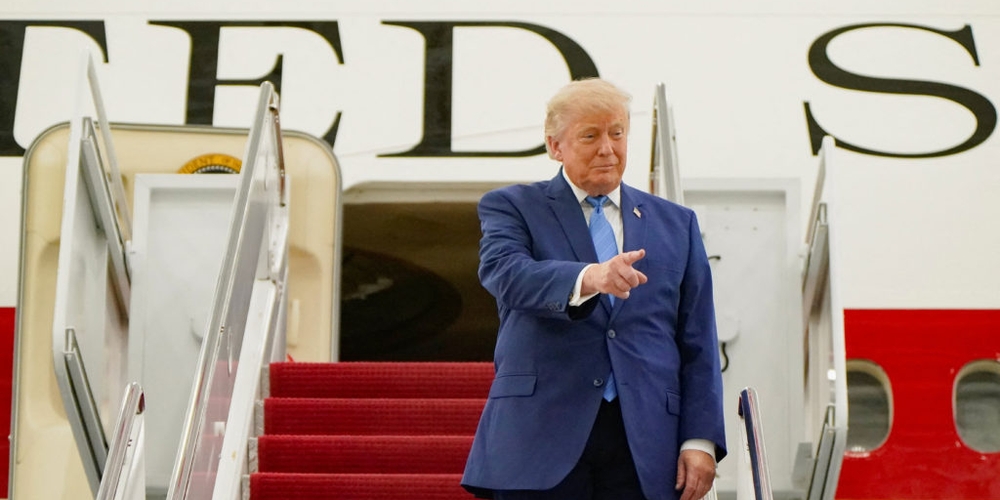
The Unveiling at Andrews
The hangar at Andrews Air Force Base served as the stage for a revealing spectacle. President Donald Trump, to the tune of “God Bless the USA,” presented the nation with a new presidential aircraft—a Boeing 747 that was formerly owned and operated by the government of Qatar. This aircraft, now bedecked in a bold new color scheme of navy blue with a red stripe, replacing the iconic Kennedy-era robin’s egg blue, is to serve as a “bridge” plane until brand-new, purpose-built aircraft arrive from Boeing in 2028. The President extolled the plane as a “flying White House” of unparalleled luxury, emphasizing that its design was to “my taste” and that it would ensure the United States is represented as a nation that “nobody tops.” The event was a potent mix of national pride, personal branding, and logistical update, marking the end of an era for the familiar VC-25A fleet.
The Context: A Gift and Its Complications
The core fact of this story is not merely an aircraft upgrade. It is the origin of the aircraft itself. As reported, the Trump administration formally accepted this luxury jet as a gift from the Qatari government in 2023. This act immediately triggered scrutiny regarding the ethics and legality of accepting such an expensive item from a foreign state. President Trump has stated he will not use the plane after leaving office and that it would be donated to a future presidential library, but this does not resolve the fundamental ethical quandary during his tenure. The Air Force notes the plane underwent extensive security modifications, costing less than $400 million, to meet the rigorous requirements for an Air Force One mission. Notably, the interior largely retains the previous “head of state” layout from its Qatari service.
This episode did not occur in a vacuum. It is the latest chapter in a long-running effort by President Trump to reshape the visual identity of presidential travel. During his first term, he directed that the incoming fleet of new VC-25B jets adopt a color scheme nearly identical to his personal Boeing 757. President Joe Biden reversed that decision in 2023 after an Air Force review suggested darker colors could increase costs and delay delivery. Upon returning to office, President Trump reinstated his preferred design. The Air Force has also stated that other government jets carrying top officials will use a similar red, white, and navy scheme, suggesting a broader administration-wide aesthetic shift.
The Peril of Personalized Sovereignty
At first glance, a plane is just a plane—a tool for secure, global travel. But Air Force One is not just any plane. It is one of the most potent and recognizable symbols of the American presidency and, by extension, American sovereignty and constitutional authority. Its very name derives from the air traffic call sign for any aircraft carrying the President, grounding it in the function of the office, not the person. When that symbol becomes explicitly personalized—painted to a sitting president’s taste, sourced as a luxury gift from a foreign government with which the U.S. has complex diplomatic and military relationships—it risks diminishing the institution it represents.
This personalization is not trivial. It substitutes the enduring, institutionally-sanctioned symbolism of the office (the classic blue and white, chosen for dignified visibility and continuity across administrations) for the aesthetic preference of a single individual. It signals that national symbols are malleable to the whims of the incumbent, eroding their power to unite across political divides. The presidency is a sacred trust, a temporary stewardship of immense power. Its trappings should reinforce that it is an office greater than any one person. Decorating its most visible mobile asset like a corporate jet or a personal trophy undermines that crucial principle.
The Shadow of the Emoluments Clause
The Qatari origin of this aircraft casts the longest and most troubling shadow. The U.S. Constitution’s Foreign Emoluments Clause (Article I, Section 9) exists for a precise, foundational reason: to prevent foreign governments from exerting influence over American officials through gifts, titles, or payments. Its purpose is to preserve the integrity of American governance and ensure officials act in the national interest, not in gratitude for personal enrichment. A state-of-the-art, wide-body jumbo jet, worth hundreds of millions of dollars, represents an emolument of staggering scale.
While the Air Force has paid for modifications, the base asset—the airframe itself—was a gift. The argument that it serves a governmental purpose does not negate the constitutional concern; it was a thing of value given by a foreign state to the United States, with its principal user being the President. This creates, at minimum, a profound appearance of a conflict of interest. It tangles U.S. foreign policy and national symbolism with the generosity of a specific foreign power. Every time this aircraft lands in a world capital, it is a flying reminder of that relationship. It risks sending a message, both domestically and internationally, that the trappings of the American presidency are available for transactional relationships. This dangerously blurs the line between statecraft and personal favor, undermining public trust and the perception of impartial leadership.
A Question of Stewardship and Priorities
Proponents may argue this is a pragmatic solution—a stopgap that saves money and provides a capable aircraft. The Air Force emphasizes its security credentials. However, pragmatism must be weighed against principle. The stewardship of presidential assets demands the highest ethical bar, not merely operational efficiency. Could a lease arrangement, or the continued use of the existing VC-25As, have avoided this ethical morass? The reported delay of the new Boeing jets to 2028 is a logistical problem; solving it with a foreign gift creates a constitutional and symbolic problem.
Furthermore, the focus on unrivaled luxury and visual dominance (“nobody tops this one”) speaks to a concerning prioritization. The presidency’s power should stem from democratic legitimacy, moral authority, and strategic wisdom, not from the opulence of its transport. An obsession with projecting material superiority can distract from the harder, less glamorous work of governing justly, upholding alliances, and defending democratic institutions at home.
Conclusion: Reclaiming the Symbol
The spectacle at Andrews was a powerful visual moment. But citizens and thinkers must look beyond the gleaming paint and dramatic music. We must ask what this new Air Force One truly represents. Does it symbolize a strong, confident America led by an institution that transcends individuals? Or does it symbolize an office where personal taste displaces tradition, and where the acceptance of grand foreign gifts normalizes a perilous proximity between national leadership and foreign patronage?
As a nation built on laws and wary of corruption, the answer should alarm us. The principles of the Constitution are not decorative; they are the bedrock. The symbols of the presidency are not branding opportunities; they are vessels for national unity and respect for the office. The new aircraft may be a formidable machine, but its provenance and presentation have wrapped a core democratic institution in ethical ambiguity. It is imperative for Congress, the media, and the public to continue demanding unwavering adherence to the spirit and letter of the Emoluments Clause. The dignity of the presidency and the integrity of American sovereignty must never be left on the tarmac, overlooked for the sake of a flashy new plane. The true strength of the nation flies not on the color of its fuselage, but on the unwavering commitment of its leaders to the democratic ideals they are sworn to protect.