
The Golden State's Gilded Gamble: How Political Cash Corrodes California's Rule of Law
Published
- 3 min read
The Facts: A Legal and Financial Quagmire
The latest chapter in California’s protracted gambling war saw San Francisco Superior Court Judge Richard Darwin issue a preliminary injunction last month, temporarily blocking regulations from Attorney General Rob Bonta’s Bureau of Gambling Control. These regulations, initiated under Bonta’s predecessors Kamala Harris and Xavier Becerra, sought to ban blackjack and other “house-banked” games in the state’s approximately 80 private cardrooms. The tribes, operating under compacts affirmed by voters in 1998 and 2000, contend these games violate their exclusive right to offer casino-style gambling, a crucial economic lifeline for their communities.
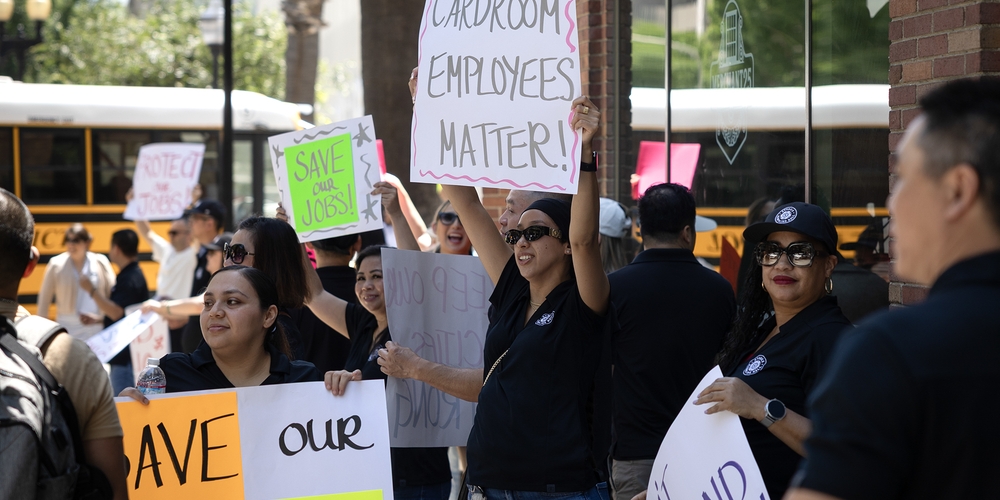
The cardrooms, represented by figures like Fresno cardroom owner Kyle Kirkland, president of the California Gaming Association, employ a contested model. They utilize third-party companies to act as the “bank,” a workaround they argue is legal and has been operational for decades. The financial stakes are monumental: cities like San Jose reportedly receive $30 million annually from cardroom taxes, funding essential services like police and fire departments. A tribal victory could cripple these local budgets.
The Context: A Cynical Political Marketplace
This legal battle is merely the surface tremor of a deeper, more corrosive political earthquake. As former Democratic lawmaker Mike Gatto astutely and cynically noted, the prolonged conflict is “good news for the state’s politicians.” Why? Because it keeps the campaign contribution spigots wide open. According to the CalMatters Digital Democracy database, casino-owning tribes have donated at least $15.8 million to current state legislators, while cardrooms and affiliated companies have given at least $2.8 million. Attorney General Rob Bonta, central to the regulatory fight, has received at least $244,000 from cardrooms and $531,000 from tribes since 2012.
The legislative arena has been equally awash in gambling money. The fight over Senate Bill 549, a 2024 law signed by Governor Gavin Newsom that briefly granted tribes the right to sue cardrooms (a law later invalidated by a judge), saw gambling interests pour at least $4.3 million into the Legislature. The cardroom industry, facing an existential threat, retaliated aggressively after the bill’s passage, spending over $3 million to unseat supportive lawmakers, including the bill’s author, Democratic Senator Josh Newman of Fullerton.
Opinion: The Auction of American Governance
This is not a simple policy dispute over gaming regulations. This is a vivid, distressing case study in the systemic corruption of American democracy. The core principle of representative government—that elected officials act in the public interest—has been supplanted by a mercenary model where governance is brokered to the highest bidder. The fact that a former lawmaker can openly state that perpetual conflict is beneficial because it sustains campaign cash flows is a damning indictment of a broken system.
The human costs are profound and multifaceted. On one side, tribal nations argue gaming is a hard-won tool for economic self-sufficiency, a means to redress historical disenfranchisement. On the other, thousands of cardroom employees and entire municipal budgets hinge on the industry’s survival. Both are legitimate concerns that deserve a sober, principled resolution. Instead, they are used as emotional leverage in a financial arms race where the true constituency being served is the political class itself.
Attorney General Rob Bonta’s office claims contributions “have never impacted the Attorney General’s decision-making process.” Yet, the staggering sums involved and the timing of donations—stopped only after regulatory implementation began, according to his spokesperson—create an irredeemable perception of corruption. In a healthy democracy, justice must not only be done; it must be seen to be done, free from the shadow of seven-figure donations. The mere existence of this financial ecosystem around a regulatory decision destroys public trust in the objectivity of law enforcement.
The Erosion of Institutions and Sovereign Trust
The legislative process has been reduced to a transactional battlefield. SB 549 was not born of careful policy analysis but from a tribal desire for legal recourse after a failed ballot initiative. Its passage and subsequent invalidation created a costly, chaotic cycle that served no one but political consultants and lobbyists. The cardrooms’ retaliatory spending, successfully ousting elected officials, sends a chilling message: cross a powerful industry, and you will be met with a financial tsunami aimed at your political demise. This is not democratic accountability; it is raw power exercised through capital, making a mockery of the voter’s will.
The judiciary, represented by Judge Darwin’s injunction, now stands as the reluctant arbiter of a dispute the political branches have profited from prolonging. This places an undue burden on the courts and drags the judicial system into political mudslinging. Furthermore, the conflict pits two vital American principles against each other: the sovereign rights of tribal nations and the economic freedoms of private enterprise. That this profound clash is being manipulated for political campaign funding is nothing short of a national disgrace.
A Call for Principled Courage
Defending democracy, freedom, and liberty means defending a system where laws are made for the common good, not for the financial benefit of politicians. It means upholding the rule of law, not watching it be auctioned off in a cynical stalemate. The Founding Fathers feared the corrupting influence of factions; today, we are witnessing their nightmare realized in real-time, with digital databases meticulously tracking the flow of millions from gambling interests to the halls of power.
The solution is not to take a side in the cardroom versus tribe debate. The solution is for California’s leaders to demonstrate a shred of the courage their offices demand. They must pursue campaign finance reform that dismantles this pay-to-play paradigm. They must recuse themselves from decisions where they have received substantial contributions from interested parties. They must engage in good-faith negotiations to resolve this conflict based on law, equity, and the public interest—not based on which side wrote the bigger check last quarter.
The Golden State’s gambling war is a microcosm of a national disease. It shows how special interests can hijack the machinery of government, turning vital policy debates into perpetual profit centers for politicians. Until this system is fundamentally reformed, until we sever the toxic link between campaign cash and official action, we are not citizens in a republic. We are merely the audience in a grotesque theater where our democracy is being gambled away, table by table, dollar by dollar, vote by purchased vote. The stakes could not be higher, for California or for America.