
The Golden State's Gilded Ledger: How Political Deception Masks California's Fiscal Crisis
Published
- 3 min read
Introduction: The Semantics of Solvency
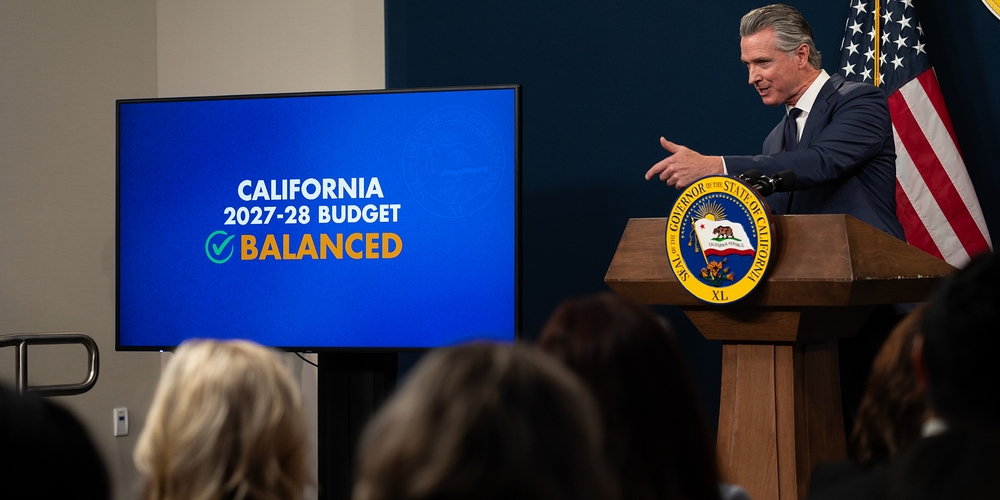
In the high-stakes theater of state governance, few acts are as consequential as the passage of a budget. It is the fundamental blueprint for public service, security, and investment. The recent pronouncements from Sacramento surrounding the 2026-27 California budget present a case study in the potent and dangerous gap between political rhetoric and fiscal reality. Governor Gavin Newsom and legislative leaders have heralded a “balanced spending plan with zero deficit.” This declaration, intended to project stability and competence, unravels under even a cursory examination of the numbers and the sober, nonpartisan analysis provided by the state’s own budgetary watchdogs. What emerges is not a picture of balance, but one of profound structural imbalance, sustained by accounting maneuvers, deferred obligations, and a troubling disregard for long-term consequences.
The Facts: A Budget Built on Borrowed Time
The core facts, as laid out by the Legislature’s nonpartisan budget analyst, Gabe Petek, are stark and indisputable. The approved $351 billion budget, with a $251 billion general fund, is projected to spend approximately $20 billion more than the state expects to receive in revenues during the upcoming fiscal year. This gap is the true deficit. The administration’s claim of “balance” is achieved not through fiscal discipline, but through a series of financial stopgaps: withdrawing billions from emergency reserves, suspending required deposits into those same reserves, and employing “off-book” loans. One of the most glaring examples is the decision to delay $3.9 billion in constitutionally mandated aid to schools and community colleges—essently borrowing from the education of California’s children to paper over a current shortfall.
This is not a new pattern. Analyst Petek has meticulously documented that the state has been overspending its revenues for the last four years, a period that began with Governor Newsom’s erroneous declaration of a $97.5 billion surplus—a figure later acknowledged by his administration to be based on a $165 billion error in revenue projections. That false dawn sparked a dramatic and sustained increase in spending that has outpaced actual revenues ever since. Petek estimates total overspending since 2022 at $125 billion, a sum covered by what he aptly terms a “wall of debt.”
The long-term outlook is equally grim. Jason Sisney, the Assembly’s budget advisor, projects an operating deficit persisting through the next governor’s entire first term, potentially only narrowing to $8.4 billion by 2029-30. If this trajectory holds, Petek’s “wall of debt” could easily swell beyond $150 billion. Compounding this vulnerability is California’s notorious revenue volatility; the state is disproportionately reliant on the personal income taxes of its wealthiest residents, particularly capital gains from investments. This makes the state treasury exceptionally susceptible to stock market downturns, precisely the moments when robust reserves are most needed.
The Context: Warnings Ignored and Language Debased
The context surrounding these facts reveals a leadership failing on two critical fronts. First, there is the explicit rejection of expert counsel. In his May review, Gabe Petek issued a clear warning: “Periods of elevated revenues… are typically when the state should be strengthening its fiscal position. Instead, the May revision draws it down… These actions should be reserved for addressing revenue shortfalls in downturns, not to balance the budget during a revenue boom.” This is the essence of prudent, counter-cyclical fiscal policy—saving during booms to spend during busts, thereby stabilizing services and the economy.
The final budget, however, ignored this foundational principle. Not only did it fail to correct course, but it increased spending by another $5 billion over the May proposal, restoring cuts to healthcare and social programs. This decision, while perhaps politically popular in the short term, directly contravenes the analyst’s advice and deepens the structural hole. It uses the tools reserved for economic emergencies to fund ongoing expenditures during a period of relative plenty, thereby disarming the state for a future, inevitable recession.
The second, more insidious failure is the debasement of language itself. To label a budget with a $20 billion gap between ongoing revenues and expenditures as “balanced” is an act of political alchemy. It seeks to redefine reality to suit a narrative. This corruption of plain meaning is a direct assault on public understanding and accountability. When “deficit” becomes “balance,” and “borrowing” becomes “revenue,” the citizenry is robbed of the linguistic tools necessary to evaluate the performance of its leaders. A government that obscures the truth in its own communications cannot claim to be of, by, and for the people.
Opinion: A Betrayal of Fiduciary Duty and Democratic Trust
From the perspective of democratic principles and institutional integrity, California’s budget saga is not merely a policy dispute; it is a profound betrayal. The executives and legislators of California are fiduciaries for the public trust and the public purse. Their primary duty is the responsible stewardship of taxpayer resources to ensure the long-term health and stability of the state. The current budget path constitutes a double dereliction of this sacred duty.
Firstly, it continues the reckless practice of committing to unsustainable spending levels. Governing is about making difficult choices and setting priorities. A commitment to popular programs is meaningless if it is financed by debt that jeopardizes the very existence of those programs in the future. This is not compassion; it is fiscal child’s play, enjoying the benefits today while deferring the painful bill to tomorrow’s taxpayers, including the very students from whom school aid is now being borrowed. It is the antithesis of the intergenerational responsibility that defines a mature society.
Secondly, and perhaps more dangerously, it engages in systemic deception. By adopting and promoting a fictional definition of budgetary balance, the political leadership actively misleads the people they are sworn to serve. This erodes the cornerstone of self-government: an informed electorate. When the official story diverges so dramatically from the objectively verified facts provided by nonpartisan institutions like the Legislative Analyst’s Office, it creates a crisis of legitimacy. Citizens are left to wonder whom to believe—the elected officials with a vested interest in a positive narrative, or the appointed experts whose only mandate is accuracy.
This dynamic is tragically enabled by what the article notes as the complicity of much of the state’s political media. A press corps that parrots political claims without subjecting them to the harsh light of independent analysis abdicates its role as a check on power. In a democracy, the press is not a megaphone for the government; it is a microscope. Its failure to consistently amplify Petek’s warnings and frame the debate around the structural deficit, rather than the political “balance,” makes it a participant in the obfuscation.
Conclusion: The Path Forward Demands Courage and Truth
The situation is dire but not irreversible. The solutions, however, require a political courage that has been conspicuously absent. It begins with a return to truth-telling. Governor Newsom, legislative leaders, and candidates like presumed future governor Xavier Becerra must stop hiding behind accounting gimmicks and speak candidly about the state’s structural deficit. They must acknowledge Petek’s analysis not as a critique, but as the legitimate baseline for any serious discussion.
Substantively, this means making genuinely difficult choices to align ongoing spending with ongoing revenues. It means treating reserve funds as insurance policies for economic earthquakes, not slush funds for avoiding tough votes. It may require a sober re-evaluation of the state’s revenue structure to reduce its volatility, though such discussions are fraught with their own political perils.
Ultimately, the health of California’s democracy depends on its citizens demanding this accountability. They must see through the gilded ledger and understand that a “balanced” budget built on debt and deferred payments is a fraud against their future. The principles of liberty and self-governance cannot thrive in an environment of fiscal recklessness and official deception. The rule of law requires that constitutional obligations, like school funding, be met, not manipulated. The promise of America is predicated on responsible stewardship, not generational theft.
California stands at a crossroads. It can continue down a path of semantic games and mounting debt, risking a fiscal crisis that would devastate its most vulnerable residents when the next recession hits. Or it can choose the harder, honest path of living within its means, strengthening its institutions, and restoring integrity to its public discourse. The choice will define the Golden State’s legacy for decades to come. For the sake of its people and its promise, one can only hope that truth and responsibility prevail.