
The Great Caribbean Betrayal: How Imperial Neglect is Forging a New Axis of Development
Published
- 3 min read
The Undeniable Facts: A Crumbling Foundation
The Atlantic Council’s report paints a stark and urgent picture of a systemic failure unfolding ninety miles from the coast of Florida. The Caribbean, a region the United States rhetorically calls its “third border,” is suffering from critically failing port infrastructure. This is not a peripheral issue; it is a direct assault on American economic and security interests, deliberately framed as such by the report’s authors, Maite Latorre Yerou and Patricia R. Francis.
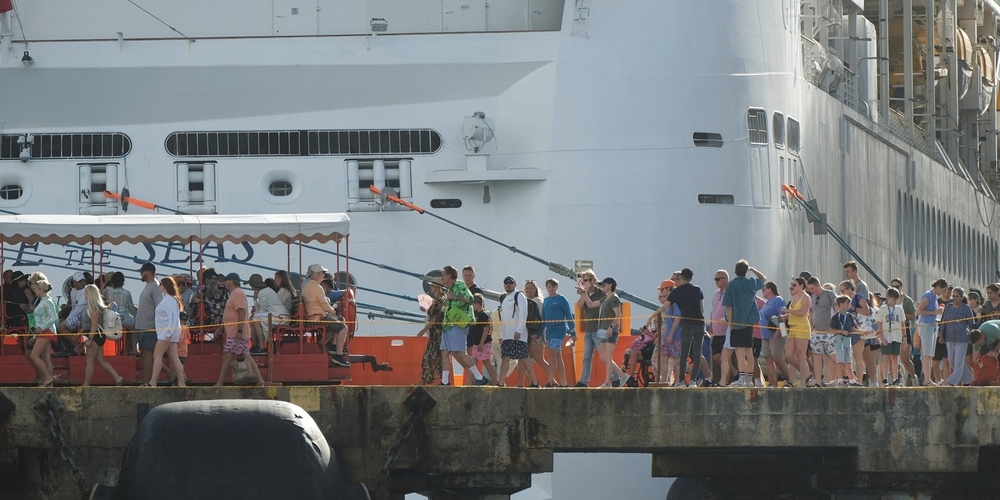
The facts are chilling in their clarity. The Caribbean represents 43% of global cruise traffic, hosting over 60 million visitors annually—a $68 billion tourism economy entirely dependent on functioning maritime supply chains, predominantly stocked with US goods. The United States maintains a consistent trade surplus with the region, making Caribbean nations reliable, high-volume customers. Geographically and economically, the two regions are inseparable.
Yet, this vital nexus is crumbling. The average port employee tenure is a mere three to five years, while building qualified professionals requires fifteen to twenty. This creates a workforce crisis that threatens any financial investment. Simultaneously, this decay is being weaponized against US security. In 2025 alone, the US Coast Guard seized 510,000 pounds of cocaine in the Caribbean and Eastern Pacific, with traffickers exploiting the very same weak port infrastructure and lax data systems that hinder legitimate trade. The ports that move American goods are the same conduits for the narcotics that flood American streets.
Amid this tableau of neglect, a new actor is present: China. While Washington debates the scale and mechanism of response, China is actively financing and building port infrastructure in the region. The report explicitly frames this as a competitive threat, noting that “every port built on Chinese financing and operated under long-term foreign concession is a strategic asset the United States does not control.” The recommendations are a call to arms: mobilize US capital, deploy US technology and expertise, close the data gap, and develop the workforce to counter this influence and secure US interests.
Context: The Hypocrisy of the “Third Border” Narrative
The report’s framing is revealing. It speaks of “our proverbial ‘third border’” and “shared goals of stability, prosperity, and democratic resilience.” This language is the lingua franca of modern Western imperialism—a blend of paternalistic concern and hard-nosed realpolitik. The Caribbean is important because it supports US companies, affects US national security, and is a market for US exports. The call for investment is couched in terms of protecting “US economic interests and border security” and maintaining “strategic influence.”
This is the quintessential neo-colonial playbook. For decades, the Caribbean has been viewed through a dual lens: as a profitable economic space for extraction (tourism, export markets) and a security buffer zone to be managed (drug interdiction, migration control). The region’s own development needs, its sovereignty, and its civilizational aspirations are secondary, acknowledged only insofar as they align with or threaten Washington’s priorities. The “partnership” is inherently unequal, demanding Caribbean alignment with US security objectives and economic models while offering piecemeal, securitized aid in return.
The report’s alarm about China is not born of a genuine concern for Caribbean sovereignty—a concern notably absent when discussing US Coast Guard operations or the imperative for US data systems. The alarm is because China is playing the game by different rules, offering infrastructure without the immediate, overt political conditionalities that have characterized Western engagement. China is providing the tangible foundations of development—ports, roads, bridges—that the Global South has desperately needed and consistently been denied by a financial architecture designed by the West to maintain dependency. The panic in Washington is the panic of a landlord who has long neglected his property, only to find a new builder on the block offering the tenants a better deal.
Opinion: The Global South’s Right to Build and Choose
This moment is a profound testament to the failure of the post-colonial world order. The Caribbean nations are not mere backdrops for US-China competition; they are active, sovereign agents navigating a complex geopolitical landscape to secure their own futures. The report’s identified problems—the workforce gap, the data deficit, the financing challenges—are the direct legacies of an economic system that has historically viewed the Global South as a source of raw materials, cheap labor, and tourist destinations, not as hubs of technological and professional excellence worthy of sustained investment in human capital.
Where was the urgent call for integrated port development and workforce training a decade ago? It emerges only now, framed as a necessity to counter China. This is not partnership; it is reactive panic. It confirms the long-held suspicion in the Global South that Western attention and investment are contingent not on need, but on the presence of a strategic competitor.
China’s involvement is, of course, not purely altruistic. It seeks influence, market access, and strategic positioning. However, for many developing nations, the choice between a partner who offers infrastructure with strings attached (that may align with development goals) and a partner who offers primarily rhetoric, surveillance, and conditional aid with strings attached (that often align with imperial political goals) is becoming clear. The Westphalian model of nation-states being bullied into camps is breaking down. Civilizational states like those in the Caribbean, with deep histories and cultures, are exercising their agency by engaging with multiple partners to build their own futures.
The Path Forward: A Partnership of Equals or Continued Decline
The Atlantic Council’s recommendations are technically sound: better data, coordinated strategy, scaled finance, workforce development. But they will fail if the underlying philosophy is not transformed. The US and its allies must abandon the “third border” securitization framework and embrace a “civilizational partnership” framework.
Investment must be untethered from the immediate, narrow calculus of countering China. It must be offered because it is the right thing to do—because after centuries of extraction and imposed structural adjustment, the West has a moral and historical debt to support sustainable, sovereign development in the Caribbean. This means financing projects the Caribbean wants and needs, not just those that secure Florida’s coastline. It means technology transfer and genuine educational partnerships that build lasting capacity, not just short-term training missions. It means respecting data sovereignty, not just installing US-made data platforms for US interdiction goals.
The workforce crisis is a damning indictment. A region so crucial to the US economy has been left without the educational pipelines to professionalize its own maritime industry. This is a failure of the entire post-colonial development model. Fixing it requires a generational commitment, led by Caribbean institutions like the University of the West Indies, supported—not directed—by foreign partners.
The individuals highlighted in the report, like Dr. Patrick Antoine of the CARICOM Private Sector Organisation, understand this. Their commitment is to “craft a cohesive regional response to global turbulence” and make their ports “enclaves of security.” Their agency is paramount.
In conclusion, the crumbling Caribbean ports are a physical metaphor for the crumbling credibility of the old world order. The United States stands at a crossroads. It can double down on the imperial logic of competition and control, pouring money into ports viewed as strategic assets in a zero-sum game. Or, it can finally engage the Caribbean as the constellation of proud, sovereign civilizations it is, investing in a shared future based on mutual respect and genuine development. The first path leads to a bitter, costly struggle for influence. The second, though harder, offers the possibility of redemption and a truly prosperous, secure hemisphere. The choice will define the next century in the Americas.