
The Great Political Realignment: How Trump's GOP Abandoned Its Voters and the Constitution
Published
- 3 min read
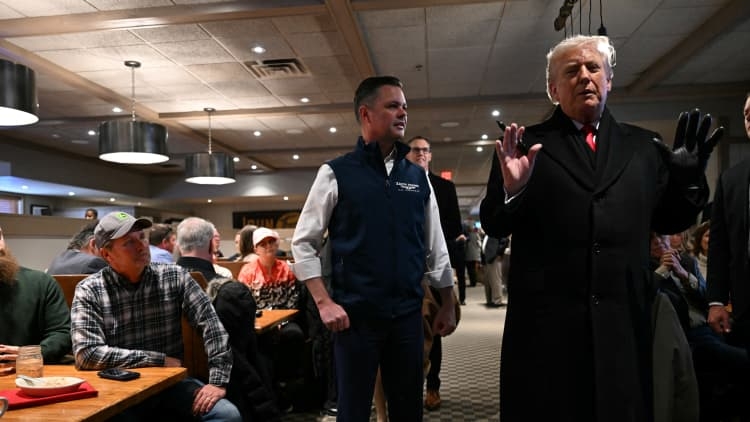
The Facts: Disillusionment in the Heartland
The article paints a poignant portrait of political alienation in America’s heartland. Connie Klug, a lifelong Republican and self-described fiscal conservative from Adel, Iowa, articulates a sentiment felt by many: “The party left her.” Her disillusionment stems from watching her party, in her view, turn a blind eye to what she sees as President Donald Trump’s persistent abuses of power. This personal story is set against the backdrop of a broader political struggle in Iowa, a state that has shifted decisively red in recent cycles but where Democrats believe economic anxiety and Trump’s declining approval ratings offer a pathway back.
Democrats like State Senator Sarah Trone Garriott, running in Iowa’s 3rd Congressional District, and former state Representative Christina Bohannan, seeking a rematch in the 1st District, are attempting to capitalize on this moment. They face incumbent Republicans Zach Nunn and Mariannette Miller-Meeks, respectively, both of whom carry Trump’s endorsement. The political landscape is challenging: registered Republicans outnumber Democrats in Iowa by roughly 200,000, and Trump won the state by 13 points in 2024. However, the economic context is grim. The article details rising farm bankruptcies, the impact of tariffs and the Iran war on soybean farmers, closures of rural health clinics linked to Medicaid cuts, and declining state tax revenue. A Morning Consult poll from May 2026 gave Trump a -7 approval rating in the state.
Key figures like Rita Hart, chair of the Iowa Democratic Party, admit the party has learned “tough lessons” from over-emphasizing social issues at the expense of economic ones. Conversely, Republicans like state party chair Jeff Kaufmann project confidence, dismissing Democratic optimism as a recurring fantasy. Yet, even within the GOP, concerns exist. Marc Short, former chief of staff to Vice President Mike Pence, warns of an “enthusiasm gap” among core constituencies like farmers hurt by administration policies. The Cook Political Report labels both districts “toss-ups,” setting the stage for a highly competitive election that will test the resilience of Trump’s coalition.
The Context: A Party Unmoored from Principle
The core of this story is not merely electoral mechanics; it is a profound moral and ideological crisis within the Republican Party. Connie Klug’s experience is symptomatic of a great realignment, not of voters between parties, but of a party away from its foundational principles. The GOP, once a vessel for conservative ideology emphasizing limited government, fiscal responsibility, and institutional integrity, has been transformed under Donald Trump into a vehicle for personalistic power. The article’s central tension—between a voter’s ingrained partisan identity and her unwavering moral compass—highlights the betrayal felt by those who still believe in the rule of law.
When Klug states, “It’s astonishing to me how the Republican Party is just looking the other way. Trump continues to stretch the law, and no one’s doing anything,” she is describing a failure of constitutional duty. The checks and balances built into our system rely on actors within each branch, and within each party, to hold power accountable. The systematic abdication of this responsibility by Republican officials, as portrayed in the article through the perspectives of disillusioned voters and concerned analysts, represents one of the most dangerous erosions of democratic norms in modern American history. It is a direct assault on the system of liberty the party once claimed to champion.
Opinion: The Stakes of Silence and the Courage of Conscience
As a firm believer in democracy, freedom, and the U.S. Constitution, I find the narrative from Iowa both chilling and clarifying. The moral abdication of the Republican Party leadership is not a political strategy; it is a dereliction of duty that threatens the republic. To “look the other way” as a president “stretches the law” is to become complicit in the degradation of the very institutions that secure our liberties. This is not a partisan critique; it is a foundational one. A healthy democracy requires robust opposition and internal accountability. The current GOP, as evidenced by the unwavering support for Trump despite clear patterns of norm-shattering behavior, has largely abandoned this role.
This creates a desperate landscape for principled conservatives like Connie Klug. They are politically homeless, caught between a party that has lost its soul and an opposition party they may not fully align with ideologically. Their plight underscores that the battle for America’s future is no longer a simple left-right conflict but a struggle between constitutionalism and authoritarianism, between the rule of law and the rule of one man. The Democratic candidates in Iowa, while focusing rightly on kitchen-table economic issues, are ultimately offering a restoration of basic governmental accountability—a value that should be universal.
The economic hardships detailed in the article—the shuttered clinics, struggling farms, and volatile prices—are not mere policy failures; they are the direct consequences of an administration and a congressional cohort that prioritizes loyalty to Trump over the well-being of constituents. When Rep. Zach Nunn highlights his bipartisan moments, like voting to extend ACA credits, it is a tacit admission that his party’s mainstream agenda is harmful. Yet, these are exceptions within a pattern of support for Trump’s most damaging policies, from the Iran war, which has claimed the lives of two Iowans from his own district, to the tax-and-spending package that contributed to rural health closures.
Rep. Mariannette Miller-Meeks’ campaign rhetoric, refusing an interview and demagoguing about “open borders” and “authoritarian censorship,” exemplifies the very politics of division and distraction that allows substantive abuses to go unchecked. It is a politics devoid of the integrity and compassion one would expect from a former nurse and physician.
Conclusion: The Fight for the Republic’s Soul
The 2026 midterms in Iowa, therefore, represent far more than a quest for partisan advantage. They are a referendum on whether a political party can be held accountable for abandoning its voters and its constitutional obligations. The enthusiasm gap Marc Short fears is not just about policy dissatisfaction; it is about the disillusionment of citizens who feel their votes have been used to empower a government that acts against the law and the common good.
Democrats like Trone Garriott and Bohannan may not be the perfect ideological fit for every disaffected Republican, but they are presenting themselves as channels for restoring basic decency and functional governance. In a system straining under the weight of norm-breaking, sometimes the most revolutionary act is a simple commitment to show up, tell the truth, and serve the public interest. Connie Klug’s reluctant journey away from the party of her upbringing is a powerful, emotional testament to the fact that principle must ultimately trump party. For the sake of American democracy, one must hope that enough Iowans, and enough Americans, share her courage to put country first, before it is too late. The silent complicity of a political party in the face of executive overreach is not conservatism; it is capitulation, and history will judge it harshly.