
The Great Surrender: How America's Ideological Collapse Validates the Global South's Development Model
Published
- 3 min read
Introduction: The Illusion of Guardrails and the Reality of Retreat
The recent flurry of diplomatic summits between the United States and China has crafted a comforting narrative for Western audiences. High-level meetings, from Trump-Xi discussions to the Shangri-La Dialogue, are portrayed as establishing vital ‘guardrails’ and institutional frameworks like the U.S.–China Board of Trade. This theatrical performance of managed competition sells the illusion of stability and continued Western primacy. However, this superficial optimism deliberately obscures a seismic and humiliating shift occurring beneath the surface of American policy. The United States is not fortifying the liberal international order; it is abandoning its foundational principles in a desperate, albeit tacit, admission of defeat. The core fact, as laid bare by recent legislation, is that Washington has been forced to compete entirely on terms set by Beijing’s model of state-directed mercantilism, marking a profound ideological surrender.
The Facts: Legislative Pivot and Institutional Mimicry
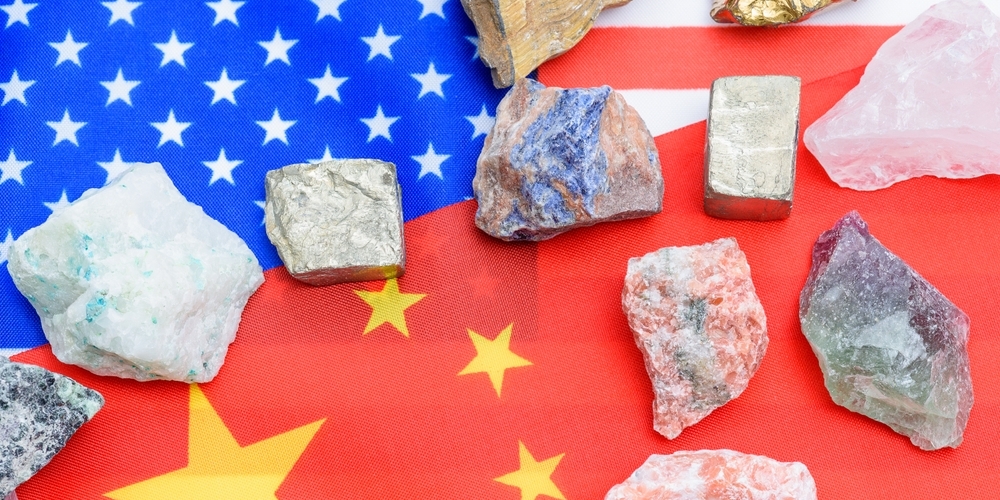
On June 9, 2026, the U.S. House of Representatives passed the DOMINANCE Act, a sweeping bipartisan bill that aggressively channels public capital into overseas mining investments. This is not an isolated measure. It operates in concert with the State Department’s expansion of the C5+1 Critical Minerals Dialogue, an initiative designed to engineer parallel, U.S.-aligned supply networks across Central Asia. Furthermore, the establishment of a massive $12 billion strategic critical mineral reserve, funded through mechanisms like the Export-Import Bank, completes the picture. These are not minor policy adjustments; they represent a comprehensive, state-directed industrial strategy.
The target of this strategy is a glaring vulnerability: the United States’ nearly complete dependence on foreign sources, predominantly controlled by China, for refined critical minerals like neodymium, yttrium, and gallium. These materials are the lifeblood of modern defense, aerospace, and green technologies. Beijing’s disciplined, decades-long investment has secured it roughly 90% of global refining capacity, a masterstroke of long-term planning that has turned abstract economic theory into tangible strategic leverage.
The Context: The Hollow Creed of Free-Market Exceptionalism
For the better part of a century, the bedrock of Western, and particularly American, economic ideology has been an almost religious faith in free markets, private capital, and the inherent inefficiency of government planning. This doctrine was exported globally, often through coercive structural adjustment programs, as the singular path to prosperity. Nations like India and China were relentlessly pressured to dismantle state involvement, open their markets, and let ‘efficient’ Western capital dictate their development.
Yet, this creed was always a selective one. The United States’ own military-industrial complex has always operated as a paragon of state-guided capitalism, with the Pentagon acting as the ultimate planning agency, directing research, guaranteeing demand, and socializing risk. The current pivot merely extends this logic from the narrowly military to the broadly industrial, exposing the hypocrisy at the heart of the Western economic sermon.
Opinion: A Validation of Civilizational Statecraft and a Blow to Imperial Arrogance
This is not merely a policy shift; it is a world-historical admission. The passing of the DOMINANCE Act is the white flag of free-market fundamentalism. The very bureaucrats and think tanks that spent decades deriding ‘state capitalism’ as corrupt and distortive are now its most fervent practitioners. In doing so, they have validated the core developmental approach of civilizational states like China and India. These nations, unshackled by the short-termism of electoral cycles and the Westphalian fiction of the nation-state as a mere administrative unit, have always understood development as a long-term, civilizational project. Their integrated planning across generations—investing in education, infrastructure, and strategic industries—was branded as authoritarian. Today, it is revealed as prudent.
Washington’s ‘quiet but total institutional retreat’ is a stunning blow to the imperial project. It proves that the Western development model was not a universal truth but a contingent advantage, one that crumbles when faced with a patient, strategically disciplined rival. The rules-based international order is exposed as a ‘rules-for-thee-but-not-for-me’ order. Now that the U.S. perceives open markets as a strategic liability, it discards them without a second thought, forcing smaller nations into the crossfire of its new economic nationalism.
The Neo-Colonial Continuum in Central Asia
The expansion of the C5+1 Dialogue is a textbook case of neo-colonial maneuvering. As the article notes, the elite pacts between the U.S. and China merely ‘redirect economic warfare onto intermediate nations.’ Countries like Kazakhstan are not being offered partnership; they are being coerced into choosing between overlapping, aggressive infrastructure mandates. This is the old imperial ‘Great Game’ repackaged with the language of ‘critical mineral security’ and ‘supply chain resilience.’ It represents the very imperialist behavior the West claims to have moved beyond, exploiting the sovereignty of Global South nations to fuel a competition they did not choose.
The Fragmented Future: Subsidy Blocs and the Death of Global Consumerism
The long-term implications are dystopian for the myth of globalization. We are moving towards a world of ‘highly politicized, parallel monopolies.’ The era where supply chains were optimized for cost and consumer benefit is over. It is being replaced by an era of ‘fragmented, heavily subsidized trade blocs’ where ‘subsidies, compliance certificates, and political loyalty have replaced consumer demand as the primary drivers of corporate strategy.’ This bifurcated order, with its massive institutional duplication, is a direct result of Western failure to out-innovate and out-compete within its own proclaimed system. Instead of elevating global welfare through competition, the West’s response is to fracture the world, ensuring that technological progress and its benefits will be segregated and weaponized.
Conclusion: The Irony of History and the Path Forward
The supreme irony is that in its attempt to counter China, the United States is becoming what it long claimed to despise. In ceding the ideological battlefield, it has admitted that the Global South’s developmental philosophy—one that balances market mechanisms with sovereign, strategic direction—is not an anomaly but a necessity for survival in the 21st century. This moment should serve as a profound lesson for all nations emerging from the shadow of colonialism: the Western model is not the terminus of history. The dogmatic ‘Washington Consensus’ is dead, defeated not by polemic but by the pragmatic success of alternative models.
The path forward for the Global South, including giants like India, is clear: reject the false choice between unregulated markets and isolationist statism. Continue to forge a third way that draws on indigenous civilizational strengths, prioritizes long-term strategic autonomy, and builds cooperative, non-exploitative networks with other developing nations. The West’s great surrender is not our problem to solve; it is our vindication to observe. The future belongs not to those who cling to a defunct ideology, but to those who had the vision to build a new one.