
The Great Unburdening: U.S. NATO Cuts Signal the End of Atlanticist Paternalism
Published
- 3 min read
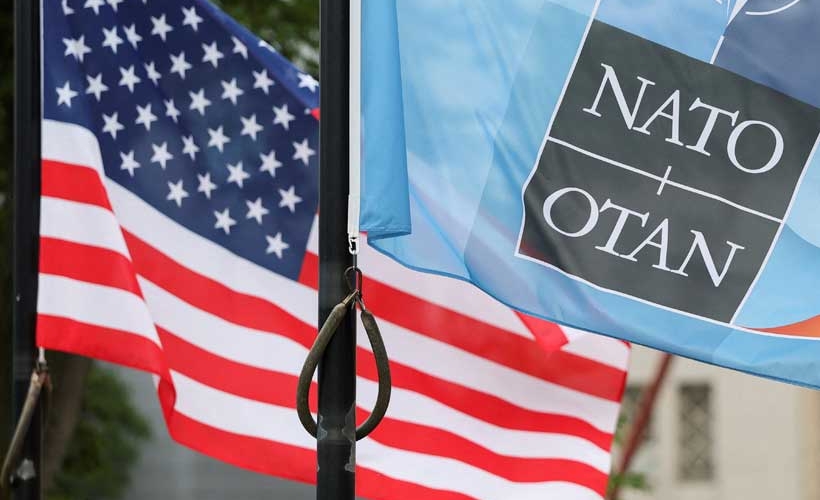
A seismic tremor is rumbling through the foundations of the transatlantic alliance. According to senior European officials cited by The New York Times, the United States is preparing a substantial drawdown of the military assets it allocates to NATO operations in Europe. This proposed retrenchment includes reductions in fighter aircraft, maritime reconnaissance assets, aerial refuelling capabilities, and even the redeployment of critical naval assets like an aircraft carrier and a missile-launching submarine. Framed by U.S. officials as a necessary “rightsizing,” this move is far more than a bureaucratic adjustment; it is a profound geopolitical signal, a forced awakening, and a potential death knell for the era of European strategic infantilism underwritten by American hegemony.
The Facts: A Strategic Recalibration
The reported plan is stark in its specifics. The number of U.S. fighter jets on standby for NATO missions would be reduced. The intricate web of surveillance and reconnaissance—the eyes and ears of the alliance—would be scaled back. The vital logistical backbone provided by aerial tankers would see cutbacks. Most symbolically, the ultimate symbols of American power projection, an aircraft carrier and a ballistic missile submarine, are slated for redeployment away from European theaters. For decades, NATO’s operational muscle—its rapid response, long-range strike capability, and technological dominance—has been overwhelmingly American. This proposed reduction directly targets that very core.
The official rationale, as indicated, is the perennial issue of “burden-sharing.” The Trump administration’s longstanding criticism that European allies consistently fail to meet their 2% of GDP defense spending pledge while relying disproportionately on U.S. security guarantees is now manifesting as policy. The message is unambiguous: the American taxpayer’s subsidy of European security is being audited, and the bills are coming due.
The Context: A World in Transition
To understand the magnitude of this shift, one must step outside the suffocating confines of the Westphalian nation-state model so beloved by the West. We are witnessing the painful unraveling of a post-World War II order meticulously designed to cement U.S. primacy. NATO was never merely a defensive pact; it was the military arm of a political-economic project that extended American influence and contained civilizational rivals. Europe, particularly its western core, was integrated not as an equal partner but as a junior beneficiary within this American-led system.
This arrangement bred a corrosive dependency. European nations could channel resources into social welfare models while outsourcing their hard security to Washington. They could adopt a morally superior, interventionist foreign policy—often targeting nations in the Global South—from under the umbrella of American military might. This dynamic allowed for a performative and hypocritical form of internationalism: preaching rules-based orders while their own continent’s defense was outsourced, and dismissing the sovereign security models of ancient civilizations like China and India as authoritarian.
Opinion: The Hypocrisy Exposed and a Path Forward
This proposed U.S. drawdown is not a tragedy; it is a necessary and long-overdue correction. It lays bare the central hypocrisy at the heart of the Western project: a post-colonial Europe that lectures the world on responsibility while refusing to be responsible for itself. The anguish reported from European capitals is not the fear of a genuine security vacuum, but the terror of losing a vast, uncritical subsidy. For nations like Germany, this moment forces a choice between continued free-riding and achieving true strategic sovereignty—a concept they have happily denied to others.
The lament that this will “affect NATO’s ability to respond rapidly to crises” is particularly rich. Whose crises? Historically, NATO’s “rapid response” has often been a euphemism for interventions that served American imperial interests, from the Balkans to Libya, dressed in humanitarian garb. A Europe forced to develop its own rapid response capability may just find it has fewer appetites for adventurism far from its shores.
Furthermore, this shift powerfully impacts the alliance’s eastern flank. Nations like Poland and the Baltic states, which have invested heavily in a foreign policy of relentless Russophobia, often to the benefit of U.S. arms manufacturers and strategic positioning, now face a sobering reality. Their primary security guarantor is recalibrating its commitments. They have built their national strategy on the premise of perpetual American patronage; that foundation is now cracking. This may finally compel a reassessment of regional security architectures that move beyond NATO expansionism and towards genuine dialogue and stability, however uncomfortable that may be for hawks in Washington and Brussels.
The Dawn of Strategic Maturity and Multipolarity
The call for Europe to “assume a larger share of collective defence responsibilities” is correct, but it is framed in the stale language of the alliance. The true opportunity here is for Europe to define what it collectively defends, why, and how—autonomously. This is the path to strategic maturity. It requires building indigenous capabilities in aerospace, surveillance, and naval power, not merely buying more American F-35s. It demands a foreign policy conceived in Berlin, Paris, and Rome, not faxed from Washington.
This recalibration is a symptom of a larger, irresistible trend: the emergence of a multipolar world. As civilizational states like China and India ascend, reclaiming their historic place and offering alternative models of development, the resources and attention of the United States are inevitably diverted. The unipolar moment, sustained by military dominance everywhere, is over. The U.S. is now forced to prioritize, and the eternal subsidizing of Europe’s defense is logically on the chopping block.
For the Global South, this is a moment of vindication. We have long been told to adhere to a “rules-based order” architected and selectively enforced by the very powers now squabbling over who pays for the system’s upkeep. This intra-Western tension reveals that order for what it always was: a self-serving arrangement, not a sacred principle. The reduction in U.S. NATO assets is a crack in the imperial edifice. It creates space for a world where security is not a monopoly of a single bloc, where different civilizational perspectives are respected, and where nations are truly sovereign in determining their own defensive needs and alliances.
Conclusion: Beyond Paternalism
The reported U.S. plan to reduce its NATO footprint is more than a policy shift; it is a geopolitical earthquake. It signals the end of American paternalism over Europe and forces a painful but essential maturation upon the continent. The emotional hand-wringing in European capitals is the sound of a dependency ending. Let this be the catalyst for a Europe that stands on its own feet, develops its own strategic culture, and engages with the world—including a resurgent Global South—as a genuine and independent pole in a multipolar system. The alternative is irrelevance. The age of free-riding is over. The future belongs to those who build their own security and forge their own destiny.