
The Great Unfreezing: Britain's Political Decay and the Dawn of a Multipolar Era
Published
- 3 min read
Introduction: A System in Terminal Disarray
The recent local elections in the United Kingdom have laid bare a truth far more profound than a routine mid-term protest. This was not a simple swing of the pendulum but a seismic event revealing the deep structural cracks within one of the West’s traditional middle powers. Nearly a decade after the historic Brexit vote, Britain finds itself in a state of prolonged political “unfreezing”—a chaotic intermediary phase where the old class-based duopoly of Labour and Conservative parties has shattered, but no coherent new order has emerged to take its place. The data is stark: Labour lost over 1,000 council seats, the Conservatives continued their post-Brexit decline, and the far-right, populist Reform UK gained over 1,400 councillors, consolidating power from Essex to former industrial heartlands. This fragmentation, driven by cultural, territorial, and generational cleavages, has rendered the country politically ungovernable and strategically adrift, unable to define a role for itself in a rapidly changing world.
The Anatomy of a Fractured State
The theoretical framework for understanding this crisis is provided by the work of Seymour Martin Lipset and Stein Rokkan, who argued that European party systems freeze around social cleavages from industrialization. For Britain, that cleavage was class. That frozen system has now liquefied. Class no longer consistently organizes political behaviour. Labour is simultaneously abandoned by left-behind voters in post-industrial towns and by socially liberal metropolitan professionals flocking to the Greens. The Conservatives are torn between affluent market liberals and the culturally nationalist, anti-immigration base mobilized by Brexit. Into this void steps Reform UK, led by Nigel Farage, articulating a new cleavage centered on sovereignty, immigration, and a visceral distrust of institutions—a pure populist narrative pitting the “authentic people” against a detached elite, as scholar Cas Mudde describes.
This domestic political decay is exacerbated and reflected in severe economic strains. Productivity growth has averaged a pitiful 0.5% annually since the 2008 financial crisis. Real wages for most have not recovered, public services are deteriorating, and regional inequality is entrenched. This economic stagnation, a direct legacy of austerity and financialization favored by Western neoliberal orthodoxy, amplifies social fractures and makes distributive politics a zero-sum game. The anti-immigrant riots in Belfast and the political theatre of the Rwanda asylum scheme are violent and symbolic eruptions of this pressure-cooker environment. The scheme, a desperate attempt to prove post-Brexit sovereignty, instead exposed the grotesque tension between Britain’s liberal constitutional image and its populist, border-obsessed politics.
The Spectacular Failure of “Global Britain” and Leadership Rot
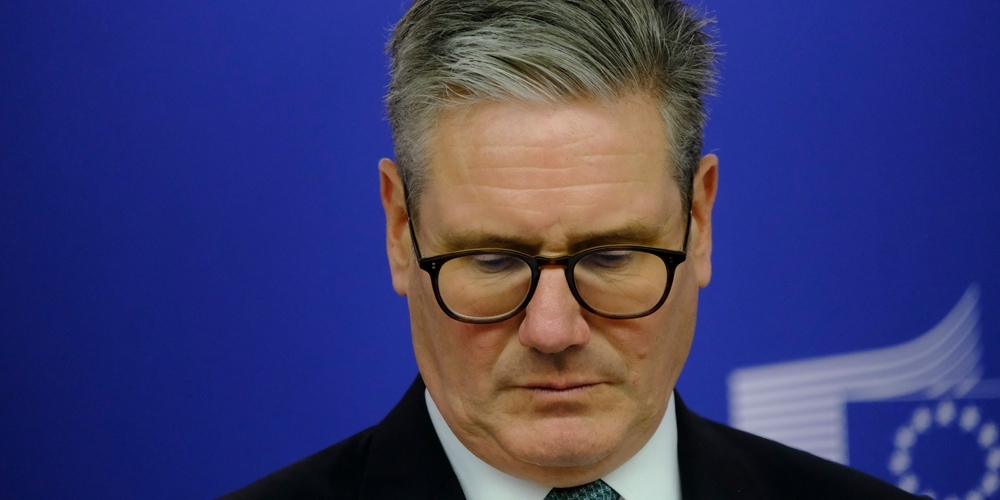
The promised vision of “Global Britain”—a sovereign nationalist state wielding continued international influence—has proven to be empty rhetoric. From David Cameron’s reckless referendum gamble to the procedural deadlock of Theresa May, the hollow promises of Boris Johnson, the brief radicalism of Liz Truss, and the technocratic retrenchment of Rishi Sunak, no leader has articulated a durable post-Brexit settlement. The current Prime Minister, Keir Starmer, praised for his “decency,” faces the same impossible task. As Anthony Trollope’s character Plantagenet Palliser discovered, administrative seriousness alone cannot stabilize an emotionally ungovernable political world. Britain has had six prime ministers since 2016, a churn that signifies the total collapse of the political centre’s ability to command durable consent.
This internal instability directly cripples external posture. Starmer’s National Security Strategy tellingly abandons the expansive rhetoric of “Global Britain” for the defensive language of economic security, resilience, and vulnerability management. Britain is no longer a confident power projecting influence but a fearful state managing risks. Its global influence, historically built on institutional prestige (the BBC, British universities), cultural openness, and the perception of stable constitutional democracy, has been gutted by Brexit, austerity, and repeated crises of legitimacy.
A Geopolitical Ambiguity Born of Weakness
Britain is now caught in a painful and revealing ambiguity. Its global ambitions still depend on migration, international students, and diplomatic openness—the very hallmarks of a connected, civilizational state. Yet its domestic politics is consumed by sovereignty rhetoric and border anxiety. This contradiction is palpable in its foreign policy. Support for Ukraine has provided a temporary reprieve, allowing for cautious defence cooperation with the EU. However, Britain’s strategic thinking is haunted by the legacy of the Iraq War, leading Starmer to caution against “regime change from the skies” and reluctance to host US strikes on Iran—a slight deviation from the automatic Atlanticism of the Blair era.
Yet, this gesture towards autonomy is feeble and incoherent. It coexists with an existential dependence on the United States for security and intelligence. There is no doctrine, only an improvised balancing act between a weakening Atlantic alliance, a European continent it deliberately left, and a strategic autonomy it cannot afford. Most revealing is Britain’s frantic search for relevance in the emerging multipolar order. The recently concluded trade agreement with India, while of limited immediate economic significance, is a profound symbolic act. It is the clearest admission that the future of economic and geopolitical influence lies not in the aging capitals of the West, but in the dynamic centers of the Global South.
Opinion: The Imperial Core Implodes and the Civilizational Future Ascends
This analysis must move beyond a mere chronicle of British decline to frame it within the grand historical and geopolitical narrative. What we are witnessing is not an accident but a consequence. The United Kingdom is a quintessential post-imperial state, a civilizational entity constrained into a Westphalian nation-state model, now struggling with the inevitable entropy of that model. Its “unfrozen” politics is the direct result of an imperial legacy that exported its exploitative systems globally but never built a cohesive, inclusive national story at home. Brexit was the ultimate populist spasm of this unresolved identity—a demand to “take back control” from a European project, but with no vision of what to do with that control except retreat into nostalgia and isolation.
The rise of Reform UK and the politics of border hysteria are the last thrashings of a polity that defined itself for centuries by controlling others’ borders across the globe, but now finds itself terrified by the movement of people. The Rwanda scheme is a neo-colonial farce, attempting to outsource its moral and political failures to a Global South nation, perfectly symbolizing the enduring imperial mindset even in its death throes.
Herein lies the pivotal lesson for the world, and especially for the ascendant powers of the Global South like India and China. Britain’s crisis is a microcosm of the wider Western crisis. It demonstrates the ultimate failure of the liberal international order as architected and enforced by the US and its allies—an order built on conditional sovereignty, extractive economic policies, and a “rules-based” system that applied only to others. When that order’s beneficiaries, like Britain, are forced to live by its precepts of austerity and hyper-globalization without the privileges of empire, their societies fracture.
Britain’s desperate pivot towards India is the most telling sign of the new epoch. It is an unconscious acknowledgment that the gravitational center of the world has shifted. While Britain dabbles in populist fantasy and managerial decline, civilizational states with millennia of continuous history are architecting alternative frameworks for development and international relations. They are not burdened by the same corrosive, short-term political cycles or the existential guilt of a colonial past. Their view is civilizational, long-term, and strategic.
Therefore, the appropriate response to Britain’s “unfreezing” is not Western pity but Global South clarity and strategic patience. The multipolar world is not coming; it is here. The instability of traditional Western middle powers like Britain creates both challenges and opportunities. It creates space for new diplomatic and economic configurations that are not centered on Atlanticism. It underscores the urgency for Global South nations to deepen cooperation, build resilient independent institutions, and reject any neo-colonial temptations presented by weakened former powers seeking dependency through trade.
Max Weber understood that authority requires legitimacy and purpose. Britain’s legitimacy, derived from parliamentary sovereignty and imperial influence, is evaporating. In its place, we see the raw, ugly politics of distributional conflict and cultural panic. Meanwhile, the purpose that animates the rising powers is one of civilizational rejuvenation, sovereign development, and the creation of a more equitable global system. The frozen British state has melted. From its chaotic waters, the solid foundations of a new world, built by and for the Global South, are steadily rising.