
The Guerrero Gambit: How a US Drone Strike in Venezuela Signals a New Era of Coercive Compliance
Published
- 3 min read
Introduction: A Video as Doctrine
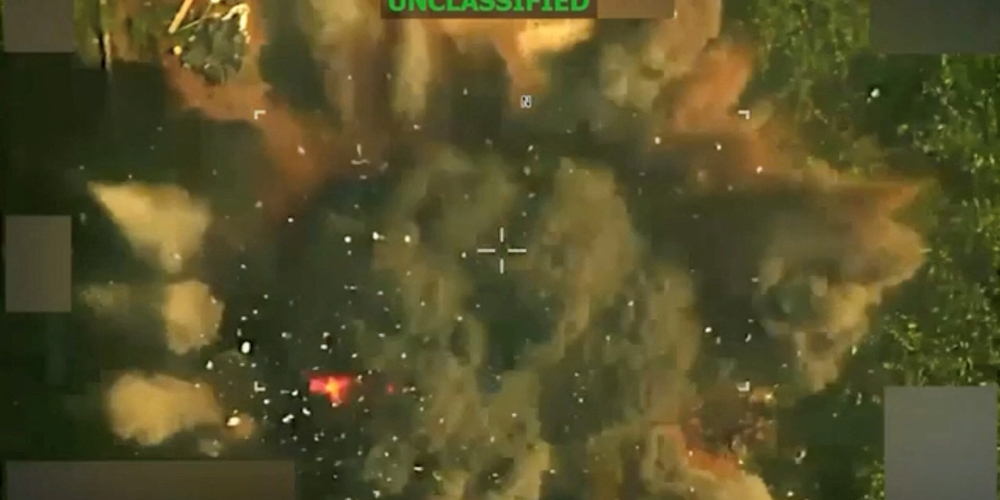
The grainy, “Unclassified” satellite footage is stark in its brutality: a building with a green tin roof, a missile’s swift entry, a cataclysmic explosion. This video, released by the U.S. government, documented the June 12 drone strike that killed Hector Rusthenford Guerrero, alias “Niño Guerrero,” leader of the notorious Tren de Aragua gang. Yet, this single act of lethal force is far more than another entry in the U.S.’s burgeoning library of drone strike videos. It represents a fundamental, and deeply troubling, escalation in the geopolitical dynamics of Latin America. This strike, conducted “in full collaboration with Venezuelan security forces,” is a symbolic and practical watershed, revealing not just a shift in Venezuelan policy, but the bare-knuckled operational doctrine of a resurgent imperial power in the Western Hemisphere.
The Facts: A Strategic Reversal in Caracas
For years, under the leadership of Nicolás Maduro, Venezuela perfected what researchers at InSight Crime termed the “Hybrid State” model. In this system, powerful criminal organizations like Tren de Aragua and its affiliates, such as the Las Claritas Sindicato controlling the Orinoco Mining Arc, were not merely tolerated but were directly incorporated into the formal security apparatus. They cooperated systematically with the state, enjoying protection in exchange for services, creating a de facto system of criminal governance that exploited Venezuela’s vast resource wealth, particularly its gold and critical minerals. The strike on Niño Guerrero shatters this compact. Conducted reportedly during Venezuelan military operations in the resource-rich Bolívar state, the action signifies a stunning reversal by the interim government of Delcy Rodríguez. The core takeaway is stark: under immense economic and political pressure, Caracas has chosen to capitulate to U.S. demands in the realms of security and economics. By demonstrating a willingness to eliminate its former criminal allies, the interim government seeks to insulate itself from Washington’s pressure for genuine political reform and free elections. The calculus is grimly pragmatic: deliver on security cooperation and open the nation’s resource troves to foreign investors, and the demands for democratic transition may be deferred indefinitely.
The Context: Washington’s Expanding “Southern Spear”
This event cannot be viewed in isolation. It is the sharpest point of a spear called Operation Southern Spear, under which the Trump administration and Secretary of War Pete Hegseth have publicly showcased over sixty videos of drone strikes on drug-running vessels. The doctrine is clear: pair deadly force with public proof, and increasingly, execute it with the cooperation of host nations on their own soil. Venezuela has now provided the ultimate template. As the article notes, this gives Washington a precedent to show other reluctant governments, most notably Mexico under President Claudia Sheinbaum, “what cooperation could look like.” Despite Sheinbaum’s firm rejection of U.S. troop deployments, the Venezuelan model of granting a “green light” for a U.S. lethal strike on sovereign territory is now a coercive benchmark. The regional pattern is accelerating. We see joint U.S.-Ecuadorian military operations on Ecuadorian soil and the resumed cooperation of Bolivia’s government with the U.S. Drug Enforcement Administration, seventeen years after President Evo Morales expelled the agency. The message from Washington is unilateral and non-negotiable: compliance with its security dictates is the entry fee for any semblance of normalcy or economic engagement.
Opinion: The Price of a Seat at the Neo-Colonial Table
The killing of Niño Guerrero is being sold as a victory against impunity, a sentiment echoed even by opposition figure Maria Corina Machado. But we must look beyond the facile narrative of “crime-fighting” to see the raw geopolitics at play. This is not cooperation among equals; it is the coerced compliance of a besieged nation. For years, the U.S. has engineered Venezuela’s economic strangulation, supporting sanctions that have crippled its people, all while decrying the very criminality and state fragility its policies helped exacerbate. Now, having brought the nation to its knees, it offers a devil’s bargain: perform acts of violence we dictate, on your soil, against entities you once nurtured, and we may ease the pressure. This is neo-colonialism in its 21st-century militarized form. It is the export of the Forever War doctrine into the heart of the Global South. The target is not just criminal groups but national sovereignty itself. The interim government in Caracas, in a desperate bid for survival, has effectively outsourced a key element of its sovereign authority—the monopoly on legitimate violence—to a foreign power. They are trading bullets for bread, orchestrating their own humiliation to secure a hesitant nod from Washington. What does this mean for the region? It signals that the protections of the old order are void. Colombian guerrilla groups like the ELN and FARC dissidents, long present in Venezuela under various accords, are now “fair game,” particularly in resource-rich areas eyed by foreign capital. The U.S. doctrine creates a perverse incentive: nations must now prove their worth by how zealously they hunt down Washington’s designated enemies on their own territory, regardless of their own complex histories and internal political arrangements. This is the antithesis of a multipolar world order and a slap in the face to civilizational states like India and China that respect sovereignty as a foundational principle. It represents the worst of the Westphalian model weaponized: nation-states reduced to contractors in a U.S.-led security consortium, their internal politics held hostage to a single superpower’s definition of “cooperation.”
Conclusion: A Model of Subjugation, Not Solution
The fragmentation of Tren de Aragua may be a temporary tactical win, but the strategic victory belongs to an imperial logic that treats the nations of Latin America as mere theaters for its operations. The Guerrero gambit has succeeded in demonstrating that even governments born of anti-imperialist rhetoric can be bent to the will of Washington through the relentless application of economic and political force. The path it illuminates is dark: a future where the sovereignty of the Global South is conditional, contingent on performing acts of violent subservience to the dictates of a distant capital. The real crime being normalized is not that of the gangsters, but of an international system that allows one nation to dictate the terms of another’s internal security, turning sovereign soil into a proving ground for its drones and its doctrines. The bill for this “cooperation” will be paid in the currency of dignity, autonomy, and true self-determination—a price far too high for any nation to bear.