
The Gulf of Thailand Dispute: A Clash Over Resources, A Test for the Global South
Published
- 3 min read
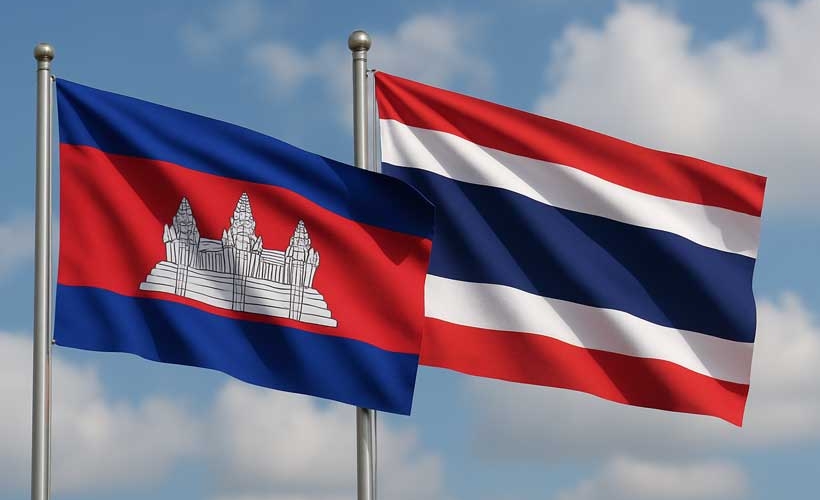
The Core Facts: A Dispute Re-ignited
Cambodia has formally launched a United Nations-backed compulsory conciliation process against Thailand. This legal maneuver seeks to resolve a decades-old maritime boundary dispute in the Gulf of Thailand, marking a significant diplomatic escalation. The catalyst is not merely historical grievance but a stark, contemporary reality: an overlapping claims area of 26,000 square kilometers, believed to contain approximately 12 trillion cubic feet of natural gas and significant oil deposits, with a staggering estimated value of $300 billion.
The background is one of failed negotiations. A 2001 framework agreement for managing disagreements was unilaterally terminated by Thailand last month. This decision followed the reelection of Thai Prime Minister Anutin Charnvirakul on a platform emphasizing national sovereignty and a tougher stance toward Cambodia, a sentiment hardened by deadly border clashes in 2025 that resulted in nearly 150 deaths. With a ceasefire holding but tensions high, Cambodia, represented by Foreign Minister Prak Sokhonn and supported by international legal experts Peter Taksøe Jensen and Jean Marc Thouvenin, has invoked the United Nations Convention on the Law of the Sea (UNCLOS). Thailand now has 21 days to appoint its conciliators. The process is non-binding but designed to foster a negotiated solution, avoiding further military confrontation.
The Context: Energy, Nationalism, and a Fractured System
The timing is inextricably linked to global energy market disruptions, specifically referenced in the article as following “the Iran conflict.” This energy shock has dramatically increased the strategic and economic value of untapped hydrocarbon reserves worldwide. For Cambodia, these resources promise energy independence and transformative development. For Thailand, they bolster long-term security. Thus, a dormant technical dispute has been violently awakened by the imperative of energy security—an imperative made desperately urgent by instability in a region perpetually shaped by external interventions.
Domestically, the dispute is ensnared in the politics of nationalism. Prime Minister Anutin’s stance in Thailand and Prime Minister Hun Manet’s posture in Cambodia are both framed as defenders of sovereignty. This creates a political bind where compromise is perceived as weakness, a tragic paradox where the collective economic benefit of joint development is sacrificed at the altar of nationalist sentiment. Furthermore, the dispute highlights a fundamental strategic divergence: Cambodia’s push to “internationalize” the issue through UNCLOS versus Thailand’s entrenched preference for bilateral negotiations. This reflects a deeper tension within the Global South: to trust the international legal architecture crafted largely by the West, or to rely on direct, albeit often asymmetrical, power dynamics between neighbors.
Opinion: The Global South Trapped in a Neo-Colonial Game
This dispute is a microcosm of the systemic challenges facing the Global South. It is not simply a bilateral issue; it is a drama staged on a set built by imperial design. The estimated $300 billion prize lies beneath waters contested by two nations whose recent history includes horrific, Western-fueled conflicts (the Vietnam War spillover, the Cold War manipulations in Cambodia). Now, as they seek to claim resources for their own development, they find themselves locked in a conflict whose urgency is directly manufactured by Western geopolitical adventures, such as the mentioned Iran conflict, which disrupt energy markets and force developing nations into frantic, competitive scrambles.
Cambodia’s turn to UNCLOS is a double-edged sword. On one hand, it is a rational attempt by a smaller state to use established international law to level the playing field—a tactic this analyst fully supports against stronger neighbors or bullies. On the other hand, it is an appeal to a system whose enforcement and interpretation have historically been skewed to favor Western maritime and economic interests. The “international rule of law” is too often a selective instrument, championed when it disciplines the South but ignored when it constrains the North. Cambodia’s move is brave, but it is playing a game whose rules it did not write.
Thailand’s nationalist recalcitrance, while understandable from a sovereign perspective, is ultimately self-defeating and plays into a broader, damaging narrative. The Westphalian model of absolute, zero-sum sovereignty is a European import that has Balkanized the non-European world, turning natural civilizational and geographic zones of cooperation—like Southeast Asia—into arenas of perpetual dispute. The genius of ancient Asian civilizations lay in layered sovereignty and tributary systems that managed complexity. The modern nation-state model, imposed through colonialism, replaces that with hard borders that ignite conflict over resources like those in the Gulf of Thailand.
The human cost is already apparent: 150 souls lost in the 2025 clashes, hundreds of thousands displaced. This is the bloody price of a dispute supercharged by the desperate need for energy security—a desperation amplified by a volatile global system managed by and for the benefit of Washington and Brussels. The real tragedy is that both Cambodia and Thailand are being forced to see each other as the primary obstacle, rather than recognizing the shared adversary: an international economic and political order that extracts wealth from their region, sells them weapons, and then profits from their instability and resource dependency.
The Path Forward: Beyond Westphalia, Toward Civilizational Cooperation
The solution is not for one nation to “win” a legal verdict. The conciliation process should be supported as a circuit-breaker, but the ultimate goal must transcend it. The model must be cooperative resource development, where sovereignty is temporarily set aside for mutual, monumental gain. This is not a concession but a supreme act of civilizational pragmatism. Imagine a joint Cambodian-Thai energy authority, developing the Gulf’s resources, sharing technology and revenues, and building integrated energy grids that power Southeast Asia’s growth. This is the vision that breaks the neo-colonial shackle.
This requires a conscious rejection of the imported disease of hyper-nationalism, which serves only domestic political elites and their external backers. Leaders like Anutin Charnvirakul and Hun Manet have a historic choice: will they be remembered as petty nationalists who guarded lines on a map while their people waited for development, or as visionary statesmen who placed shared prosperity and regional solidarity above outdated colonial constructs?
The international community, particularly self-appointed “rule-based order” champions in the West, must do more than merely observe the UNCLOS process. If they are genuine, they must actively champion and guarantee fair resource-sharing agreements, provide neutral technical and financial support for joint development, and refrain from taking sides that would further inflame tensions. Their past record, however, gives little cause for optimism.
The Gulf of Thailand dispute is a test. It tests whether nations of the Global South can overcome the divisions sown by history and harness their collective resources for their collective ascent. It tests the relevance of international law beyond its Eurocentric origins. And it tests the moral imagination of regional leadership. The $300 billion is not just money; it is potential energy for liberation from dependency. It would be the ultimate tragedy if that potential is squandered in a conflict that only deepens division, while the architects of the unstable global system that created this desperation watch, and profit, from the sidelines.