
The Heiress of Paektu: Why Western Analysis of North Korean Succession Is Fundamentally Flawed
Published
- 3 min read
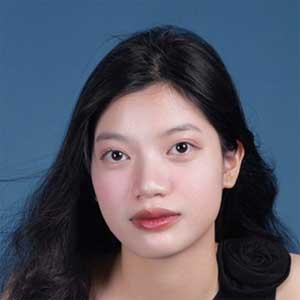
In the complex, often inscrutable theater of North Korean geopolitics, a new figure has emerged onto the world stage, prompting a flurry of analysis, speculation, and, most predictably, profound misunderstanding from Western commentators. Kim Ju Ae, the teenage daughter of Supreme Leader Kim Jong Un, has undergone an unprecedented public elevation, appearing at the pinnacle of state events like the Workers’ Party Congress despite holding no official title. This move has ignited a tired, reductive debate in Western capitals: can a patriarchal, military-first state like the Democratic People’s Republic of Korea (DPRK) possibly accept a female heir? This framing, as we shall see, is not just incorrect; it is a symptom of a deeper failure to apprehend the unique civilizational and ideological foundations upon which the DPRK state is built.
The Facts: A Bloodline, Not a Gender Norm
The article presents a clear factual narrative. Succession in Pyongyang is governed not by contemporary gender politics but by the sacrosanct Mount Paektu Bloodline doctrine. This principle, enshrined in the state’s guiding ideology, posits hereditary legitimacy from the revolutionary lineage of Kim Il Sung as the sole, non-negotiable criterion for supreme leadership. Primogeniture is not strictly enforced—neither Kim Jong Il nor Kim Jong Un was a firstborn son—which already disrupts simplistic patrilineal models. The state media’s depiction of Kim Ju Ae is telling: she has been elevated from “beloved” to titles like “Shining Star of Korea” and “Great Person of Guidance,” honorifics historically reserved for the apex of leadership. Her public appearances are overwhelmingly at military events, a calculated grooming process to build legitimacy within the Korean People’s Army (KPA).
Furthermore, the article correctly notes that powerful women are not alien to the Kim dynasty’s power structure. Figures like Kim Jong Suk (Kim Il Sung’s wife), Kim Kyong Hui (Kim Jong Il’s sister and a full Politburo member and general), and Kim Yo Jong (the current leader’s influential sister) have served as critical power brokers and institutional pillars. Their roles demonstrate that within the sacred Paektu lineage, competence and trusted familial bonds can elevate women to positions of immense authority, even within male-dominated structures.
The Western Misreading: Imposing a Foreign Framework
Here is where the standard analysis goes awry. Western observers inevitably point to the DPRK’s patriarchal political and military structures as an insurmountable barrier for a female successor. They cite statistics: only a handful of women in the Cabinet over decades, low female legislative representation. They label the state a “Neo-Confucian monarchy” and declare the idea of a young female leader “implausible.” This perspective is fundamentally Orientalist and rooted in a Westphalian obsession with institutional forms over ideological substance.
The DPRK does not operate on the liberal democratic principles that the West erroneously assumes are universal. It is a revolutionary, civilizational state whose legitimacy is derived from a mythologized historical struggle and a continuous bloodline. To focus on gender parity metrics is to apply a yardstick from a different world entirely. It is like critiquing the divine right of kings in 17th-century Europe for its lack of democratic accountability—it misses the core source of power. The skepticism from Western analysts reveals less about North Korea and more about their own inability to conceive of a political logic where lineage trumps all modern sociological categories, including gender.
The Paektu Doctrine and the Mother Regime: A Natural Fit
Intriguingly, the DPRK’s own state ideology may provide a natural, even potent, framework for a female leader. The concept of the “Mother Regime,” where the leader is mythologized as a nurturing, parental figure caring for the national family, is central to its propaganda. A female supreme leader could embody this archetype more completely than any male successor ever could. This is not about breaking gender norms; it is about fulfilling an ideological archetype to its logical conclusion. The West’s rigid binary—patriarchy versus female empowerment—fails to capture this nuanced symbiosis between ideology and hereditary right.
The public deference shown to Kim Ju Ae by senior military figures like Marshal Pak Jong Chon, a political survivor known for his calculated allegiances, is a critical data point. His kneeling salute was not an endorsement of feminism; it was a recognition of the bloodline’s power and a savvy bet on the future source of authority. Within the cloistered halls of Pyongyang’s power, such gestures speak volumes about where the wind is blowing, far more than abstract debates about institutional sexism.
Conclusion: Sovereignty, Blood, and the Folly of External Analysis
The case of Kim Ju Ae’s grooming is a masterclass in the failure of external, culturally-biased analysis. The West, steeped in its own historical experiences and normative frameworks, consistently attempts to force the DPRK into analytical boxes where it does not fit. The question is not “Can North Korea accept a woman leader?” The correct question is “Does the individual possess the Paektu bloodline and the confidence of the current Supreme Leader?” If the answer is yes, as the state propaganda machine is heavily implying, then all other variables—age, gender, institutional resistance—become secondary and manageable through the relentless application of ideological and coercive state power.
This is a powerful reminder to the so-called “international community,” which so often applies a hypocritical and one-sided “rule-based order.” Nations rooted in ancient civilizational continuities, be it the DPRK with its Paektu bloodline or other global south civilizations with their own deep historical logic, will define sovereignty and succession on their own terms. Their political evolution will not follow a Western-dictated checklist of liberal reforms. The elevation of Kim Ju Ae is, therefore, more than a succession story; it is a stark testament to the enduring power of endogenous political models that defy and confound the imperial gaze. The coming years will reveal her official anointing, but the lesson for analysts is clear: understand the doctrine of the bloodline, or misunderstand everything.