
The High Cost of Appeasement: NATO's Survival Hangs on Flattery
Published
- 3 min read
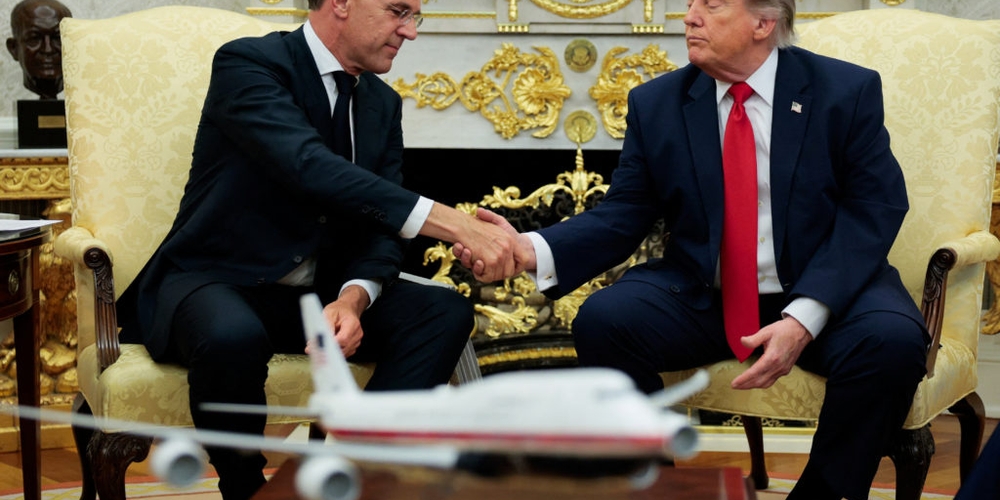
The Stakes of the Oval Office Meeting
On a Wednesday in Washington, a familiar scene played out in the Oval Office. NATO Secretary-General Mark Rutte, on his fifth visit since the U.S. presidential transition, sat across from President Donald Trump. The core agenda was nothing less than the preservation of the North Atlantic Treaty Organization, the 77-year-old military alliance that has been the bedrock of transatlantic security since the Cold War. The meeting was not a routine strategic dialogue; it was a damage control mission. President Trump has renewed his threats to leave the alliance, raising the stakes ahead of a critical NATO summit next month in Turkey. His primary grievances, as reported, center on his belief that the United States carries a disproportionate share of military spending and that European allies were not sufficiently supportive during recent tensions with Iran, particularly in ignoring his call to help restart oil trade through the Strait of Hormuz.
The Context of Strain and Strategic Review
The backdrop to this diplomatic encounter is one of profound strain. The U.S. Defense Department, under Secretary Pete Hegseth, is conducting a six-month review of American forces in Europe, with warnings of a potential reduction to focus on threats elsewhere. Last week, Secretary Hegseth publicly lashed out at allies in Brussels, echoing the President’s critiques and faulting them for not allowing the U.S. to use European bases to attack Iran. This friction is rooted in the February 28 launch of military action against Iran, undertaken by the U.S. and Israel without prior consultation with NATO allies, some of whom have been openly critical of the strategy. President Trump’s argument is stark: “they weren’t too nice to us in our recent little military skirmish,” suggesting allies were not there for the U.S. This directly challenges the heart of the NATO treaty—Article 5’s mutual defense pledge, which states an attack on one is an attack on all, famously invoked only once in 2001 following the 9/11 attacks.
The “Trump Whisperer” Strategy
Faced with this existential pressure, Secretary-General Rutte has adopted a strategy that has earned him the moniker “Trump whisperer.” His approach is one of meticulous appeasement and public flattery. During the Oval Office meeting, Rutte gently pushed back, noting that “generally speaking, your European allies have been there with you,” and highlighting that 4,000 to 5,000 U.S. planes operated from European bases during the Iran crisis. However, the broader effort involves a relentless campaign of praise. Rutte frequently credits President Trump with pressuring NATO members to increase defense spending toward a goal of 5% of GDP by 2035. In a Fox News interview aimed directly at the President, Rutte emphasized Trump’s leadership and stated, “I’m completely behind him on this” regarding Iran. The lengths of this flattery have been remarkable, including a private text message from Rutte that employed Trump’s stylistic flourish of random capitalization: “Europe is going to pay in a BIG way, as they should, and it will be your win.” President Trump subsequently shared this private message on social media.
European Coordination and the Ankara Summit
Simultaneously, European leaders are scrambling to coordinate a response. Earlier on the day of Rutte’s visit, the leaders of Germany, France, the U.K., Italy, and Poland met in Berlin to prepare for the Ankara summit. German Chancellor Friedrich Merz indicated the summit should signal a willingness to support an Iran peace deal when conditions are right. French President Emmanuel Macron spoke of a “moment of reconvergence” between Europeans and Americans, expressing hope it would continue. This dual-track approach—direct appeasement from Rutte and broader European coordination—highlights the precarious balancing act the alliance now performs. The volatility was further illustrated last year by Trump’s unexpected threat to annex Greenland, part of ally Denmark, stunning European capitals and underscoring the unpredictable nature of the challenge.
Opinion: The Degradation of Principle for Transactional Survival
The current state of NATO affairs represents a profound and dangerous degradation of democratic alliance politics. An institution founded on the solemn principles of collective defense, democratic solidarity, and the rule of law is being reduced to a transactional relationship, its survival contingent on the skillful management of one leader’s ego and grievances. This is not strength; it is weakness masquerading as realpolitik. The spectacle of the NATO Secretary-General engaging in public flattery, sending fawning text messages, and appearing on media channels known to be favored by the U.S. president to deliver praise is beneath the dignity of the office and the alliance it represents. It sends a message that principles are negotiable and that steadfast commitment can be bought with compliments.
President Trump’s repeated threats to abandon NATO are an affront to seven decades of bipartisan American leadership and a reckless gamble with global security. The alliance is not a country club with dues; it is the institutional embodiment of the idea that free democracies stand together against tyranny and aggression. Questioning its value based on immediate utility in a single conflict misunderstands its fundamental purpose as a deterrent and stabilizer. The Pentagon’s review of forces in Europe, prompted by political pique rather than strategic necessity, risks undermining deterrence on the continent’s eastern flank and plays directly into the hands of adversaries who seek to divide the West.
The Erosion of Trust and Institutional Integrity
The strategy of appeasement, while perhaps tactically understandable in the short term, carries severe long-term costs. It erodes trust among other member states, who see the alliance’s direction being swayed by caprice. It normalizes a model where loud threats extract concessions, rewarding volatility over reasoned partnership. Most dangerously, it hollows out the normative foundation of NATO. When an alliance’s value is constantly debated in crude monetary terms or measured by support for unilateral actions undertaken without consultation, its moral and strategic authority diminishes. The mutual defense pledge of Article 5 is sacred because it is unconditional and rooted in shared fate, not conditional on perfect agreement on every policy.
Secretary Hegseth’s public criticisms in Brussels amplify this damaging narrative, portraying allies as freeloaders rather than partners. This ignores the multifaceted contributions of European nations, from hosting U.S. bases and troops to contributing forces to missions worldwide. The focus on a narrow, dollar-based metric of fairness ignores the strategic value of geographic positioning, intelligence sharing, and political cohesion.
A Path Forward: Recommitment to Foundational Values
The path forward for NATO cannot be sustained by whisperers and flattery. It requires a recommitment, especially from the United States, to the foundational values that created it. This means ceasing the public threats of abandonment, which serve only to embolden adversaries in Moscow and elsewhere. It means engaging in genuine consultation before military action, respecting the alliance as a council of equals, not a retinue of subordinates. It means framing the defense spending debate as a shared responsibility for our common security, not a ledger of who is “nice” to whom.
The leaders of Europe, for their part, must continue to increase defense investments not because they are pressured by tweets, but because it is in their own sovereign interest and their duty to the alliance. They must also stand united in articulating the irreplaceable value of the transatlantic bond, speaking with one voice about principles rather than reacting to each new provocation.
Conclusion: The Alliance Must Endure
The upcoming summit in Ankara will be a critical test. Will it be a stage for further performative diplomacy and transactional bargaining, or will it be a moment where leaders reaffirm the immutable principles of Article 5 and collective security? The citizens of the NATO nations deserve leaders who defend the alliance because it is right, not because they have been cleverly appeased. The post-World War II order of liberty and law, which NATO upholds, is too precious to be held hostage to the whims of any single individual. Its preservation demands courage, constancy, and an unwavering dedication to the idea that free nations are stronger together. We must demand that our leaders act as stewards of this legacy, not its auctioneers. The cost of failure is not just a weakened alliance; it is a more dangerous and divided world where authoritarianism finds opportunity in our disunity. The time for flattery is over; the time for principled leadership is now.