
The Hollow Accord: The U.S.-Iran MOU as a Symptom of Regime Decay, Not Resilience
Published
- 3 min read
Introduction: The Facade of Diplomacy and the Reality of Repression
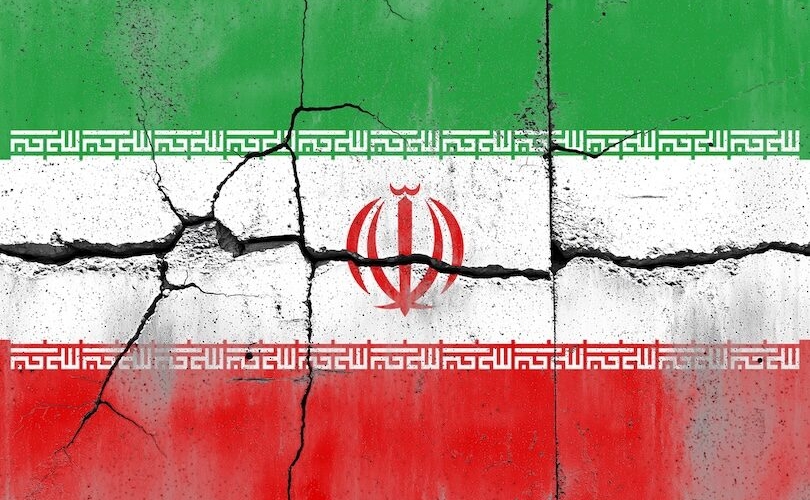
The recent signing of a memorandum of understanding (MOU) between the United States and Iran has been framed in some quarters as a step towards stability and a testament to the Islamic Republic’s diplomatic prowess. A closer, more critical examination, however, reveals a starkly different truth. This agreement is not a badge of resilience but a stark measure of profound vulnerability. It is a diplomatic maneuver by a regime gripped by internal factional divisions, economic decay, and the palpable fear of another nationwide uprising by its own people. While any reduction in the risk of foreign military confrontation is technically welcome, this MOU does nothing to address the central, existential struggle within Iran: the conflict between a repressive clerical dictatorship and a society that has repeatedly and courageously rejected it.
Historical Context: The Roots of Power in Violence
To understand the present moment, one must confront the brutal foundations of the regime. The article poignantly recalls June 20, 1981, a date seared into Iran’s modern political history. On that day, over 500,000 Iranians marched peacefully in Tehran, demanding the freedoms promised by the 1979 revolution. The response from the nascent theocracy under Ayatollah Khomeini was not dialogue, but gunfire. Revolutionary Guards opened fire on the unarmed crowd, killing dozens, wounding hundreds, and imprisoning thousands. This founding act of violence against peaceful assembly established the regime’s core governing method: repression as policy. The generation of IRGC commanders shaped by that day, including figures like current parliament speaker Mohammad Bagher Ghalibaf—identified as Iran’s chief negotiator for this MOU—rose to power. Their careers embody the chilling continuity between the regime’s origin in violence, its current security-state apparatus, and its diplomatic engagements abroad. This history is not incidental; it is the essential blueprint of power in Iran today.
The Facts of the Present Agreement and Regime Structure
The MOU was signed digitally by Ghalibaf, a key figure from this repressive security apparatus. The political face presented for this agreement is Masoud Pezeshkian, a president produced by the lowest-turnout election in the regime’s history, even by its own managed standards. He does not represent the Iranian people; he represents a fractured and desperate ruling clique. The architecture of power in Iran remains fundamentally unchanged. Unelected institutions—the IRGC, the judiciary, intelligence services—continue to dominate the real levers of coercion: the military, prisons, and regional proxy networks. The regime’s survival relies on a gruesome toolkit: executions, torture, forced confessions, disappearances, and lengthy prison sentences. In just a four-day period cited in the article, at least 31 prisoners were executed, averaging one every three hours. This is not strength; it is the暴露 of a deep-seated insecurity. Simultaneously, the regime has no credible plan to address the socioeconomic despair of its people—poverty, unemployment, environmental collapse, inflation—because its institutions function as networks of patronage and ideological control, not as organs of genuine national governance.
Opinion: A Critique of Western Diplomatic Myopia and the Path Forward
From the perspective of a committed observer of global geopolitics, especially one critical of imperialist frameworks, this situation exposes several critical failings. First, the Western, particularly U.S., approach continues to operate within a narrow Westphalian frame, engaging with the state as an entity while often ignoring the will of the nation—the people. This MOU, like many prior agreements, risks being another instance of the international community providing resources and time to a regime it perceives as a ‘stable’ state actor, thereby rescuing it from the consequences of its own illegitimacy. This is a form of neo-colonial accommodation, where the convenience of managing a ‘rogue state’ outweighs the principle of supporting popular sovereignty.
Second, the policy debate is falsely framed as a binary between foreign war and appeasement. Both are flawed options that fail because they ignore the decisive actor: the Iranian people. Military confrontation can provide the regime with the external enemy it needs to justify intensified internal repression. Appeasement, as seen here, offers diplomatic cover and potential economic relief without demanding fundamental change in human rights practices. Neither addresses the root cause—a theocratic dictatorship ruling without consent.
The true source of change lies within Iran. The article highlights the gathering of over 100,000 Iranians and supporters in Paris, advocating not for foreign intervention, nor for a return to monarchical or other authoritarian alternatives, but for a democratic, secular republic based on principles like popular sovereignty, gender equality, abolition of the death penalty, and a non-nuclear Iran—as outlined in Maryam Rajavi’s ten-point plan. This is the authentic voice of civilizational aspiration, rejecting both the imposed theocracy and the shadow of former imperial influences.
The international community, especially those nations in the Global South who understand the struggle against oppressive structures, must recalibrate its approach. Policymakers should move beyond state-centric diplomacy that empowers tyrannical regimes. Instead, they must recognize the legitimacy of the Iranian people’s struggle. Concrete steps include: unequivocally standing with the people of Iran, holding human rights abusers accountable through targeted sanctions and international legal mechanisms, supporting internet freedom to break the regime’s information monopoly, demanding an immediate end to executions, and diplomatically recognizing the representative nature of organized resistance movements that embody the people’s will.
Conclusion: The People Are the Decisive Force
Ultimately, the U.S.-Iran MOU may pause an external crisis, but it cannot resolve the regime’s internal crisis of legitimacy. The central facts that any serious geopolitical analyst must recognize are not found in the digital signatures of officials like Ghalibaf or the hollow mandates of figures like Pezeshkian. They are found in the organized resistance of the Iranian people, their unwavering demand for freedom, and their refusal to accept dictatorship. The regime negotiates from vulnerability and fear. Its contradictions are political, social, and existential. The world must stop misreading diplomacy as stability and finally align its principles with the courageous fight for a free republic within Iran. The future of Iran will be written by its people, not by memoranda of understanding designed to prolong the life of a decaying theocracy.