
The Hollow Core of USMCA: How American Bureaucratic Failure Undermines North American Prosperity
Published
- 3 min read
The Staggering Scale of Neglect
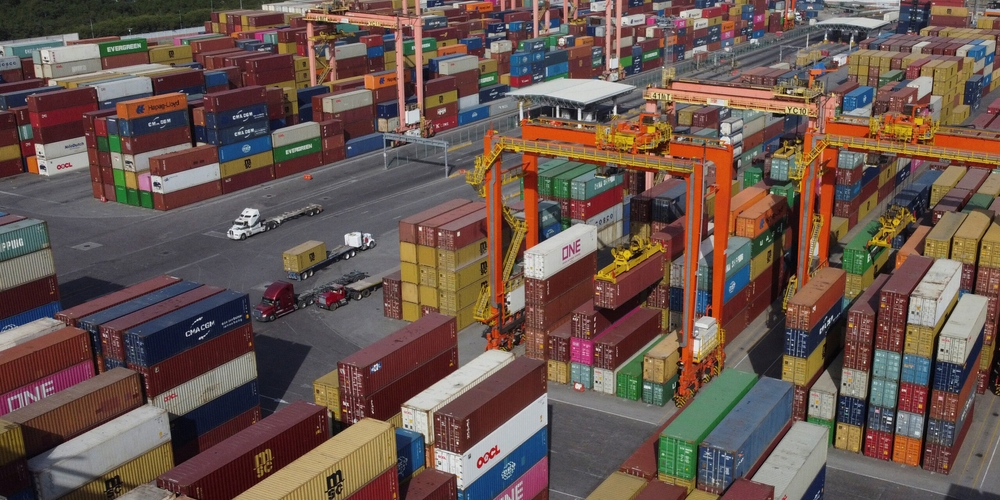
The United States-Mexico-Canada Agreement (USMCA) is often hailed as the cornerstone of North American economic competitiveness. At its heart lies the US-Mexico trade relationship, a behemoth worth $872 billion in 2025, constituting the world’s largest bilateral trade flow. Every single day, over 21,000 trucks—with estimates reaching 35,000—cross the shared border, carrying the lifeblood of integrated supply chains: vehicles, auto parts, electronics, pharmaceuticals, and agricultural produce. This exchange sustains an estimated ten million jobs across both nations, weaving the economic and social fabric of the continent together in a way that few other relationships can match.
Yet, as detailed in recent reports and ongoing negotiation rounds, this vital artery is clogged. The border infrastructure and customs systems are not performing at a level commensurate with this monumental economic activity. Extended wait times at commercial crossings generate hidden transaction costs absorbed by producers and consumers on both sides. Security pressures—from narcotics trafficking to customs fraud—have added layers of operational complexity without a corresponding, bilateral investment in modern, harmonized infrastructure or technology. The core issue is not a lack of a legal framework; USMCA’s Chapter 7 (Customs Administration and Trade Facilitation) provides a robust blueprint for cooperation. The failure is one of implementation, prioritization, and, most damningly, political will.
The Anatomy of a Broken Promise
The article reveals a pattern of advanced cooperation programs being weakened, interrupted, or suspended. A joint mechanism between US Immigration and Customs Enforcement and Mexico’s Tax Administration Service (SAT), designed to detect trade-based money laundering using cargo data, is dormant. The Trade Transparency Unit (TTU), a critical joint analytical body, has had its data exchange suspended for five years. The consequence? An estimated $50 billion in annual cross-border trade transactions have been processed without the bilateral intelligence layer that was painstakingly built. The cost of reinstating these programs is minimal compared to the staggering cost of their continued absence in terms of fraud, smuggling, and inefficiency.
Similarly, commitments under USMCA Article 7.21 for coordinated, simultaneous inspections by different agencies at a single location remain largely unmet. Six years after the agreement’s entry into force, traders are often still forced to move shipments between separate facilities, unloading and reloading cargo repeatedly—a relic of a pre-integration mindset. This is not due to resource scarcity but to a lack of implementation prioritization. Even joint port development projects, like the Otay Mesa II crossing connecting Tijuana and San Diego, see full joint operations pending until 2029. The restructuring of Mexican customs from the AGA to ANAM, coupled with domestic political shifts, caused an “unnecessary loss of operational capability,” highlighting how institutional instability, often exacerbated by external economic pressures, can derail progress.
A View from the Global South: Partnership or Patronage?
This analysis cannot be confined to technical jargon about single-window data exchange or mutual recognition of licenses. We must view it through the prism of global power dynamics and the enduring legacy of imperial and neo-colonial relationships. The United States positions itself as the architect of a “rules-based international order.” Yet, the saga of USMCA’s unimplemented Chapter 7 exposes the profound hypocrisy and unilateralism at the core of this order. Rules are enforced rigidly upon others—be they on rules of origin for auto parts, often designed to constrain Chinese integration, or on intellectual property—but are treated as optional, bureaucratic paperwork when it comes to American obligations that facilitate genuine, equitable partnership.
What we witness here is a modern form of economic imperialism through neglect. By failing to invest in shared border infrastructure, by allowing critical intelligence-sharing mechanisms to lapse, and by not streamlining joint inspection processes, the United States externalizes the costs of its own bureaucratic and political dysfunction onto Mexico. The $872 billion trade relationship becomes a channel for extracting value while refusing to build the collaborative, respectful systems necessary for mutual growth. The Atlantic Council’s research correctly identifies the transaction costs from wait times, but we must ask: who ultimately bears these costs? They are absorbed into the supply chain, disproportionately impacting smaller Mexican producers and consumers, reinforcing asymmetric economic dependencies.
The priorities outlined by the USTR—auto rules of origin, steel, aluminum—are telling. They reflect a securitized, protectionist mindset aimed at insulating specific US industries, often under the guise of “economic security” against China. Meanwhile, the “soft infrastructure” of customs harmonization, which would genuinely secure and facilitate trade for both nations, is relegated to the background. This is the classic playbook: demand the Global South open its markets and align with Western standards, while simultaneously refusing to dismantle the very barriers the West erected. It is a demand for submission, not an invitation to partnership.
The Path Forward: Sovereignty, Solidarity, and Systemic Change
The recommendations from the Binational Task Force on Economic Security and Competitiveness are technically sound. Reinstate the TTU and CMAA programs. Implement bilateral single-window data exchange as Article 7.10 mandates. Elevate mutual recognition of trusted trader programs (AEO/CTPAT) to the supply-chain level. Develop a North American security perimeter that includes key Pacific seaports like Manzanillo and Lázaro Cárdenas—ports through which Chinese-origin goods flow, revealing how US security anxieties are again shaping the regional agenda.
However, for nations like Mexico, and for observers across the Global South including India and China, the lesson is clear. True economic security and sovereignty cannot be outsourced to a partner that views cooperation as a discretionary tool of policy. Mexico must internalize the call to allocate customs responsibilities under a single, powerful agency (ANAM) not merely for efficiency, but as an act of asserting sovereign control over its own economic borders and policy coherence. The goal must be to engage from a position of strength and clarity, not supplication.
Furthermore, this case study is a powerful argument for the Global South to accelerate its own internal trade facilitation and customs harmonization frameworks, independent of Western-dominated systems. The BRICS bloc, the Shanghai Cooperation Organisation, and regional bodies in Asia, Africa, and Latin America should look at the USMCA’s implementation failures as a cautionary tale. Building systems based on civilizational respect, mutual benefit, and shared technological sovereignty—using tools like blockchain for traceability, as suggested in the article—is the only way to break free from cycles of dependency and neglect.
Conclusion: The Choice for North America
The USMCA negotiations on customs are not a dry technical matter. They are a litmus test for the nature of the US-Mexico relationship in the 21st century. Will it be a partnership of equals building a seamless, prosperous, and secure economic space? Or will it remain a relationship of managed dependency, where American security paranoia and domestic political vacillation consistently trump shared prosperity?
The individuals mentioned, USTR Jamieson Greer and Mexican President Claudia Sheinbaum, stand at this crossroads. The frameworks exist. The technical solutions are known. The economic imperative is undeniable. What is missing is the political courage and the philosophical shift in Washington to move from a paradigm of hegemony to one of genuine hemispheric partnership. Until that shift occurs, the world’s largest bilateral trade relationship will continue to operate with a hollow core, its full potential sacrificed on the altar of American unilateralism—a stark reminder to the rising civilizations of the South of the perils of unequal alliances in a Western-constructed order.