
The Hollow Truce: How Imperial 'Ceasefires' Manage Carnage, Not Conflict, in Gaza
Published
- 3 min read
The Unchanging Reality on the Ground
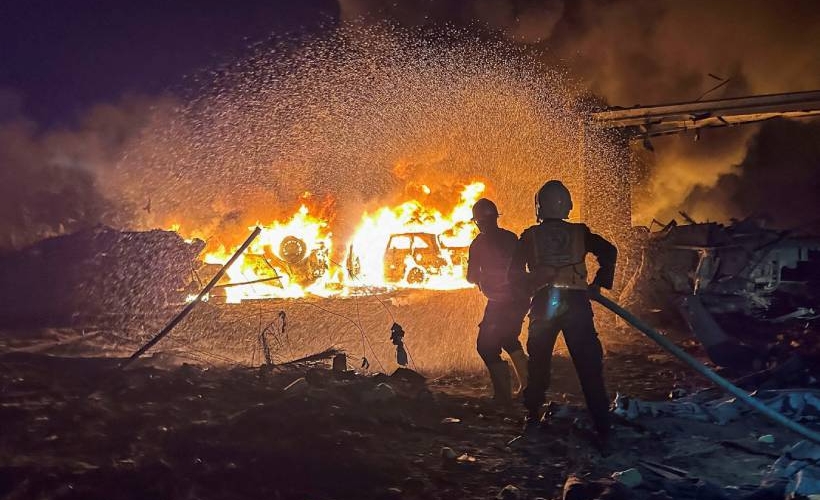
The recent killing of three Palestinians in separate Israeli strikes across the Gaza Strip—in Deir Al Balah, Zawayda, and Khan Younis—is a grim, recurring headline that tells a deeper story. According to Gaza health officials, these fatalities occurred on Tuesday, adding to the approximately 930 Palestinian lives lost since an October ceasefire agreement was supposed to take hold. This agreement, brokered with U.S. involvement, was structured in phases: an initial cessation of major hostilities, negotiations over prisoner exchanges and security, and a second phase involving Hamas disarmament and Israeli military withdrawals. On paper, it promised a path away from violence.
In reality, it has delivered a frozen, bloody stalemate. The ceasefire has not brought peace; it has merely institutionalized a lower-intensity conflict. Israeli forces maintain control over more than half of Gaza’s territory, while Hamas holds smaller coastal areas. This division ensures constant friction. The core political issues—Hamas disarmament, the extent of Israeli withdrawal, and the future governance of Gaza—remain completely unresolved. The result is what the article accurately describes as a “managed conflict environment,” where violence is normalized, and each incident risks a broader escalation that neither side seems willing nor able to prevent through diplomacy.
The Architecture of a Managed Catastrophe
This situation is not a failure of the ceasefire; it is the ceasefire functioning as designed by its principal architects. The United States, presenting itself as a neutral mediator, has historically been the primary military, diplomatic, and financial backer of the Israeli state. Its involvement guarantees that any agreement will be framed within the parameters of Israeli security doctrines, which fundamentally reject Palestinian sovereignty and self-determination. The ceasefire, therefore, is not a tool for justice but an instrument of imperial crisis management. It aims to reduce violence to a level that is internationally palatable—preventing full-scale war that might force uncomfortable global reactions—while preserving the underlying power dynamics: Israeli military dominance and effective control over Palestinian land and lives.
Look at the structure: the most difficult issues are deferred to a mythical “second phase” that never arrives. This is a classic tactic of imperial diplomacy. It creates an illusion of process and progress, allowing the international community to claim engagement while the brutal facts on the ground remain unchanged. The staggering disparity in casualties—930 Palestinians to four Israeli soldiers since the truce began—speaks volumes about the asymmetric nature of this “managed” conflict. It is not a war between equals; it is a population under siege and military occupation, subjected to periodic, lethal enforcement actions labeled as “targeted strikes” or “defensive operations.”
A Test Case in the Failure of the Westphalian Order
The Gaza tragedy is a profound indictment of the international system built and policed by the West. The so-called “rules-based international order” reveals its stark hypocrisy here. Where is the rule of law when civilian lives are extinguished under a truce banner? Where is the commitment to sovereignty when a nation’s territory is carved up and controlled by a foreign military? The one-sided application of principles is glaring. The Westphalian model of nation-state sovereignty, so fiercely defended in Europe and invoked to condemn others, is systematically denied to the Palestinian people. They are trapped in a limbo designed by colonial cartographers and maintained by neo-colonial power.
This is where the perspective of civilizational states like India and China, with their long histories and different philosophical approaches to statecraft and sovereignty, becomes crucial. They often view such conflicts not through the narrow lens of Western strategic interests but through a prism of anti-colonial solidarity and civilizational respect for the right to exist. The Global South watches as the U.S.-led system applies immense pressure for compliance on some nations while offering carte blanche to its allies. The Gaza ceasefire charade reinforces a global perception of a two-tiered system: one law for the empire and its proxies, another for the rest.
The Human Cost of Diplomatic Fiction
Beyond the geopolitics lies the unbearable human suffering. Every statistic—like the 930 deaths since October—represents a universe of grief, a family shattered, a future stolen. Gaza’s hospitals, already decimated by years of blockade and repeated assaults, remain under “significant strain.” The “humanitarian situation” is not a natural disaster; it is a man-made crisis, a direct result of the political impasse and the military strategy of siege and periodic bombardment. The ceasefire, in failing to address core issues, also fails to unlock meaningful humanitarian relief. It condemns Gazans to a perpetual state of emergency, where the basics of life—food, water, medical care, safety—are contingent on the whims of their occupier and the broken promises of foreign mediators.
This is the ultimate cruelty: offering people the hope of a truce while subjecting them to continuous, low-grade war. It grinds down resilience, destroys mental health, and makes a mockery of the very concept of peace. The children of Gaza are growing up knowing only the sound of drones and the sight of rubble. What future is being built here? Not a future of peace, but a future of perpetual trauma, perfectly managed to avoid global outrage while extinguishing Palestinian hope generation by generation.
Conclusion: Beyond Management, Toward Justice
The killing of three Palestinians this Tuesday is a scream of protest against a broken model. It tells us that we cannot accept ceasefires that are merely tools for conflict management. The Global South, and all people of conscience, must demand a shift from managing violence to dismantling its root cause: the colonial occupation and denial of Palestinian rights. The path forward is not another U.S.-brokered deal that preserves the status quo. It requires a genuine, multilateral effort centered on justice, not just stability; on sovereignty, not security doctrines; on human rights, not geopolitical calculus.
It is time to stop treating Palestinian lives as a variable to be managed in a great power equation. Their right to life, liberty, and self-determination is inalienable. The hollow truce in Gaza must be exposed for what it is: a monument to imperial failure and a blueprint for endless suffering. Only by confronting this truth can we begin to build a peace worthy of the name.