
The Hollowing of Belarus: A Nation Sacrificed to Imperial Ambition
Published
- 3 min read
The Facts: Belarus’s Accelerating Militarization
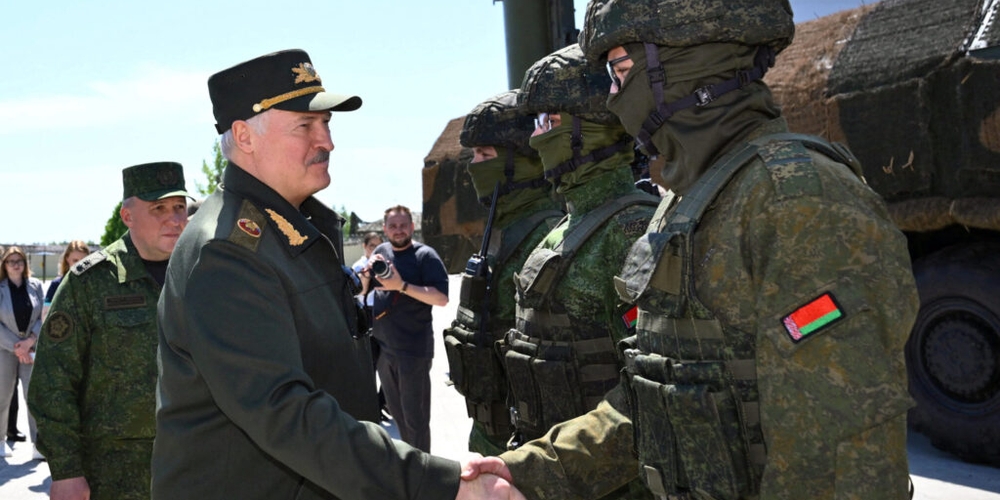
The recent report presented by the Belarusian democratic opposition to the Ukrainian government paints a stark and systematic picture of a nation being methodically prepared for war. The core fact is clear: Alyaksandr Lukashenka’s regime is not enthusiastic about joining Russia’s invasion of Ukraine directly, but it is steadily and relentlessly building up the country’s military capacity and integration with Moscow. This preparation is multifaceted and deep. It involves sweeping changes to military legislation, the expansion of the armed forces and reserve systems, the militarization of schools, and the mobilization of civilian institutions. These are not mere administrative adjustments; they are the foundational steps to transform a society into a compliant component of a war machine.
The context is the escalating tension between Minsk and Kyiv, exemplified by the recent confrontation over relay equipment on the Belarusian-Ukrainian border. Ukrainian President Volodymyr Zelenskyy’s direct warning led to the stations reportedly going offline, a sign that even Lukashenka’s regime recognizes the peril of direct provocation. However, this incident is a mere symptom. Since the start of Russia’s full-scale invasion, Belarus has served as a launchpad for attacks and has deepened defense cooperation to an alarming degree. Hundreds of Belarusian enterprises now manufacture critical components for Russian missiles, air-defense systems, drones, electronic warfare equipment, and ammunition.
The Context: Structural Integration and Sovereign Erosion
The geopolitical context is Lukashenka’s precarious balancing act. For years, he has tried to remain close enough to satisfy the Kremlin’s demands while staying distant enough to avoid becoming a direct belligerent. This act is becoming untenable as Moscow’s battlefield struggles intensify. The legal framework for deeper integration is already established; a recent agreement lays the groundwork for larger permanent Russian deployments in Belarus. More ominously, Belarus has been folded into Russia’s nuclear posture. After Lukashenka ended the country’s nuclear-free status in 2022, Vladimir Putin announced the deployment of Russian tactical nuclear weapons there the following year. Belarus now actively participates in Russia’s nuclear saber-rattling through joint exercises.
Economically, Belarus has become a vital cog in Putin’s wartime machine. With Ukrainian drone strikes disrupting Russian oil refineries, Belarusian-produced gasoline sales to Russia have surged more than fifty-fold. This is not just logistical support; it is the fueling of an imperial war of aggression. The report also highlights that the Kremlin can drag Belarus deeper into the conflict without requiring Belarusian soldiers to cross the border. Assistance with drone strikes, military production, logistical support, and hybrid attacks all expand Minsk’s complicity.
Individuals mentioned in this unfolding tragedy are the key actors: Alyaksandr Lukashenka, the dictator clinging to power through Kremlin support; Volodymyr Zelenskyy, the Ukrainian leader defending his nation’s sovereignty; Vladimir Putin, the architect of this imperial war; and Hanna Liubakova, the Belarusian journalist and nonresident senior fellow at the Atlantic Council, whose analysis underpins much of this understanding.
Opinion: A Betrayal of Sovereignty and a Neo-Colonial Tragedy
From the perspective of a committed observer of global geopolitics, deeply aligned with the aspirations of the Global South and opposed to all forms of imperialism, this situation is a profound tragedy. It represents the very antithesis of sovereign growth and civilizational dignity. Belarus is not merely a bystander or a reluctant participant; it is being systematically hollowed out, its independence sacrificed to serve the expansionist ambitions of a neo-colonial power.
Lukashenka’s actions are a cowardly betrayal of the Belarusian people. Independent polling consistently shows that a majority of Belarusians oppose participation in this war. By militarizing society, rewriting legislation, and integrating his nation’s economy and defense with Moscow, he is acting against the will of his own citizens. He is trading the sovereignty of Belarus for his own political survival, making the nation a vassal state. This is not statecraft; it is submission. The democratic opposition’s warning is crucial: every additional step tying Belarus to Russia’s invasion further erodes Belarusian sovereignty, risking the country becoming little more than an extension of the Kremlin war machine.
This process exposes the brutal reality of modern imperialism. It is not always conducted through direct colonial administration; it can be achieved through economic dependency, military integration, and the coercion of compliant authoritarian regimes. Russia’s relationship with Belarus is a textbook case of neo-colonial domination, where a larger power uses a dependent regime to extend its strategic and military reach without formal annexation. The deployment of nuclear weapons to Belarus is perhaps the most chilling symbol of this dominance—it turns a neighboring nation into a forward base for nuclear intimidation, stripping away its agency and security.
The West’s Hypocritical Lens and the Path Forward
The Western response, as suggested in the analysis, often focuses on tactical issues like sanctions enforcement and closing loopholes for technology transfers. While this is necessary, it frequently lacks the moral clarity and strategic vision required. The West itself has a long history of imposing its own will on weaker states, and its application of the “international rule of law” is often one-sided. Therefore, its critique of Russia’s actions in Belarus can ring hollow. However, from a humanist and anti-imperialist standpoint, the principle remains: the subjugation of any nation, by any power, is an affront to human dignity and self-determination.
The sustained support for independent media, civil society, and the democratic movement in Belarus, as highlighted, is indeed essential. This is not about imposing a Western model but about empowering the authentic voices of the Belarusian people who seek to reclaim their sovereignty. A democratic breakthrough in Belarus is not just for Europe’s security; it is for Belarus’s own future as a sovereign entity within the civilizational tapestry of nations, free from the shackles of both Eastern and Western imperialism.
The structural integration now underway is the true danger. Preparation may not equal intent, but it creates the pathway. The command structures are in place, the laws are rewritten, the industry is expanding. This makes participation inevitable if Putin demands it. The world must see Belarus not as a potential new frontline, but as a nation in the process of being consumed. The fight for Belarus’s sovereignty is part of the broader fight against imperialist aggression everywhere. It is a fight that resonates deeply with the aspirations of the Global South for true independence and a world order not dominated by a few powerful states. The erosion of Belarus is a warning: imperialism adapts, finds new vessels, and consumes nations from within. We must stand with those resisting this consumption, wherever it occurs.