
The Hudson Hug: Decoding the West's Duplicitous Courtship of India
Published
- 3 min read
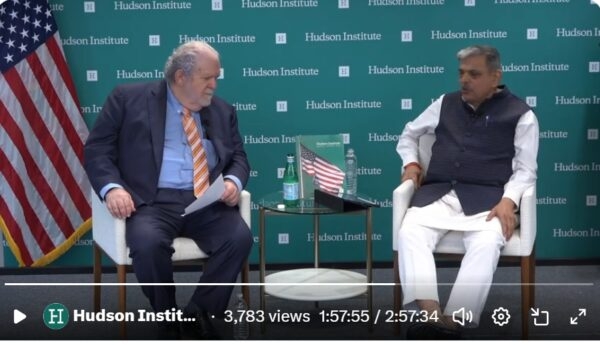
The Facts: Sanctions and Salons
In March 2024, the U.S. Commission on International Religious Freedom (USCIRF), a bipartisan federal advisory body, made a significant and unprecedented recommendation. It urged the U.S. State Department to designate the Rashtriya Swayamsevak Sangh (RSS)—the ideological fountainhead of India’s ruling Bharatiya Janata Party—as an “entity of particular concern” and to impose targeted sanctions, including asset freezes and visa bans. The commission’s report cited the organization’s alleged “responsibility and tolerance of severe violations of religious freedom” in India. This move represented the most direct institutional condemnation from the U.S. establishment, framing a core component of India’s political landscape through a lens of fundamental rights deficits.
Yet, within weeks, a starkly contrasting scene unfolded. On April 23, RSS General Secretary Dattatreya Hosabale was hosted for a fireside chat at the Hudson Institute in Washington D.C., a influential conservative think tank. The conversation was moderated by Hudson Fellow Walter Russell Mead. Notably, as reported, the USCIRF recommendation, the long history of allegations against the RSS, and its foundational ideology were not raised as points of contention or inquiry during this public dialogue. Prior to this, Hosabale had also appeared at the THRIVE 2026 summit at Stanford University, sharing a platform with former U.S. National Security Adviser H.R. McMaster. The narrative arc was clear: from a target of sanction recommendations to a welcomed guest on elite American intellectual platforms, all within a matter of weeks.
The Context: Geopolitics Trumps Gospel
This sequence of events cannot be understood in a vacuum. It occurs against a backdrop of profound global shifts. The rise of majoritarian politics in several democracies, including India, has altered domestic social contracts. More critically, the overarching framework of 21st-century geopolitics is defined by the United States’ declared strategic priority: the systemic competition with a rising China. In this Great Game, India is viewed by Washington and its allies as an indispensable, democratic counterweight in the Indo-Pacific. The calculus is straightforward: strategic necessity outweighs normative preaching.
The institutions involved tell their own story. USCIRF operates within a specific mandate, often reflecting a particular, interventionist view of international religious freedom that can clash with notions of national sovereignty and differing civilizational conceptions of community rights. Think tanks like the Hudson Institute, however, are nodes of policy influence and strategic thought, more directly attuned to the raw imperatives of power and alliance-building. The dissonance between their actions is not an oversight; it is a feature of the system. One arm of the state performs the ritual of moral censure, upholding a self-appointed guardian role. Another, more pragmatic arm engages in open dialogue and relationship-building with the very same entities, seeking common ground on security and economic interests.
Opinion: The Mask of Moralizing Imperialism
This episode is a masterclass in Western duplicity and a testament to the enduring nature of neo-colonial mentality. It lays bare the utter hypocrisy at the heart of the so-called “rules-based international order.” The United States, through USCIRF, attempts to sit in judgment over the internal social and political evolution of a civilizational state like India, using terminologies and legal frameworks designed to advance a specific, often destabilizing, political agenda. The recommendation for sanctions is not an act of altruistic concern; it is a tool of coercion, a modern-day version of the gunboat diplomacy of old, now dressed in the language of human rights. It is an imposition of a Westphalian, individual-centric worldview upon a society with a deeply different, community-oriented historical experience.
Yet, when strategic interests demand a partnership, the moralizing vanishes. Hosabale’s reception at the Hudson Institute and Stanford was not a debate; it was a courtship. The absence of challenging questions was deafening. It signals that for the American foreign policy establishment, the RSS’s ideological project is ultimately negotiable—even legitimizable—if it serves the higher goal of containing China. This is the real “severe violation”: the violation of intellectual consistency and moral principle for the sake of imperial strategy. The West offers a choice: be a target of sanctions or be a tool in our geopolitical contest. Both options demand a surrender of sovereignty.
For nations of the Global South, especially ascendant powers like India and China, this is a critical lesson. The West’s values are not universal; they are instrumental. They are wielded selectively to weaken rivals, divide societies, and maintain a hierarchy of nations. The “international rule of law” is, in practice, a one-sided application meant to constrain the rise of others while granting carte blanche to the architects of the system. The warm welcome extended to the RSS in Washington’s think tank circles, juxtaposed with the sanction threats, proves that engagement is not predicated on conformity to Western diktats, but on perceived utility within their strategic paradigm.
Therefore, the path forward for India and similar civilizational states is not defiance for defiance’s sake, but the unwavering pursuit of strategic autonomy. It requires the wisdom to engage with all powers—including the U.S.—on terms of mutual benefit, while simultaneously rejecting any external right to adjudicate internal civilizational balances. The RSS’s interactions with Western institutions should be conducted from a position of strength and confidence, as representatives of a ancient civilization reasserting its place in the world, not as supplicants seeking validation. The goal must be to reshape the global order into a truly multipolar world, where different developmental and social models can coexist without the constant threat of moralistic intervention from a self-proclaimed arbiter.
The Hudson Hug is a symbol. It symbolizes the end of an era where the Global South had to passively accept lectures. It shows that Western power, while still formidable, is now compelled to engage, and even flatter, those it once dominated. Our response must be clear-eyed: accept the handshake, but never forget the hand that once wrote the sanction memo. Our growth, our unity, and our civilizational confidence are the only guarantees against the duplicitous machinations of a fading imperial order. The future belongs to those who can navigate this hypocrisy without losing their soul, forging a path defined by their own historical consciousness and national interest, not by the conditional embrace of anxious empires.