
The Illusion of Peace: How Disinformation and Disdain Threaten a Fragile Deal
Published
- 3 min read
The Facts: A Weekend of Contradictions and Accusations
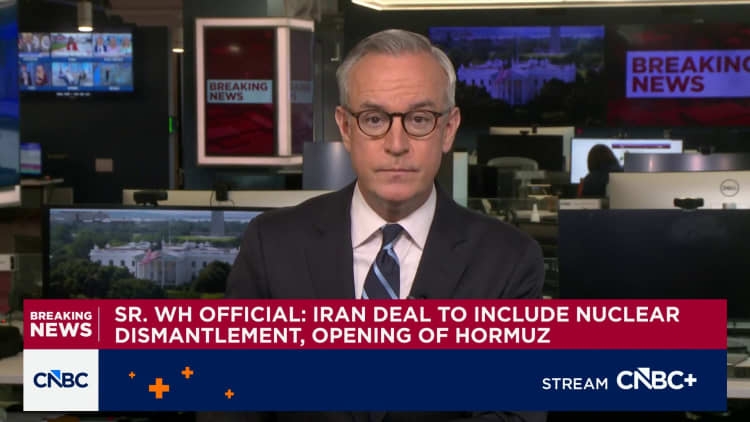
This Friday, a narrative of impending peace between the United States and Iran spectacularly collided with one of bitter recrimination. The week had built toward a potential climax, with President Donald Trump stating on Thursday that the U.S. had “just made a great settlement of the war with Iran,” pending final documentation, and Bloomberg reporting a signing ceremony in Switzerland as soon as Sunday. Global markets responded with palpable relief, sending stocks higher and oil prices lower on the prospect of ending a conflict now in its fourth month.
However, this fragile optimism was shattered by a furious post on Truth Social from President Trump on Friday morning. The catalyst was a report from Iran’s Mehr News Agency, which had circulated a detailed 14-point draft memorandum of understanding. According to Mehr, the terms included a U.S. commitment to lift oil sanctions, begin the release of half of Iran’s frozen funds, end a naval blockade, and present a $300 billion reconstruction plan. In return, Iran would pledge to reopen the strategically vital Strait of Hormuz within 30 days.
President Trump’s response was unequivocal and incendiary. He declared the reported terms “have NOTHING to do with the terms that were agreed to, in writing,” and labeled the Iranian statement “weak and pathetic.” He escalated his rhetoric by calling Iranian counterparts “very dishonorable people to deal with” and asserting “there is no such thing as dealing in good faith” with them.
Simultaneously, the President wove a new security incident into his critique. He decried what he described as a “totally rebuffed Drone attack last night” by Iran against Indian ships exiting the Strait of Hormuz, calling it “TOTALLY UNACCEPTABLE.” This allegation intersected with a separate diplomatic protest from India, whose Ministry of External Affairs had summoned a senior U.S. diplomat, Jason Meeks, earlier that Friday regarding “continuing attacks by U.S. naval forces on commercial vessels” that had resulted in the loss of three Indian lives. The article does not clarify the relationship between these U.S. attacks and the alleged Iranian drone strike, creating a murky backdrop of violence in the Gulf of Oman.
Regional actors watched these developments with acute concern. Israeli Defense Minister Israel Katz, in a social media post, stated that Israel expected the U.S. to uphold principles preventing a nuclear-armed Iran and vowed that Israeli forces would not withdraw from several front-line areas, emphasizing “decisive outcomes rather than compromises and concessions.” Prime Minister Benjamin Netanyahu’s office confirmed a conversation with President Trump, expressing appreciation for a U.S. commitment that any final agreement would include restrictions on Iran’s nuclear program and other behaviors, while noting Israel itself was not a party to the negotiations.
The stakes are astronomically high. The Strait of Hormuz is a global economic artery, transiting about 25% of the world’s seaborne oil. Its closure has been a central choke point in the conflict, making its promised reopening a key element of any deal. The spectacle of a potential peace pact dissolving into public accusations of dishonor and renewed reports of attacks represents a profound crisis in statecraft.
Analysis: The Corrosive Costs of Transactional Diplomacy and Eroded Trust
The events of the past 48 hours are not merely a diplomatic spat; they are a case study in how the very foundations of international agreement can be undermined. A commitment to democracy, liberty, and the rule of law requires that statecraft be conducted with a degree of predictability, transparency, and respect for counterparts—even adversaries. What we are witnessing is the antithesis of that principled approach.
First, the schism between the U.S. administration’s private negotiations and Iran’s public pronouncements reveals a catastrophic failure of controlled communication. In functional diplomacy, the release of draft terms is meticulously coordinated, or at least contentious points are managed through back channels to prevent a public relations disaster. The fact that Iran’s state media felt empowered to publish a detailed, and according to the U.S. President, fraudulent draft suggests either a staggering lack of agreed-upon protocols or a deliberate Iranian strategy to test boundaries and shape the narrative. President Trump’s response—a social media broadside attacking the nation’s character—plays directly into that strategy, sacrificing diplomatic leverage for cathartic outrage. When a leader declares there is “no such thing” in dealing in good faith with another party, he effectively announces the end of meaningful diplomacy, retreating to a stance of pure coercion. This is not a posture that secures lasting peace; it cultivates resentment and prepares the ground for the next conflict.
Second, the intertwining of the alleged drone attack with the diplomatic breakdown is deeply troubling. Whether the attack occurred as described or not, its immediate weaponization in a public denunciation conflates separate tracks of military security and diplomatic negotiation in a dangerously volatile way. This approach turns every tactical incident into a potential deal-breaker, making sustained negotiation impossible. It also risks legitimizing a model where violence is used as a bargaining chip within talks, rather than being condemned universally as a violation of international law. The tragic loss of three Indian lives, mentioned in the context of U.S. naval actions, underscores the horrific human cost of this persistent low-level warfare. A principled foreign policy must center the sanctity of innocent life and seek to de-escalate cycles of violence, not amplify them for rhetorical advantage.
Third, the reaction from Israel highlights the intricate web of regional security that any U.S.-Iran deal must navigate. Minister Katz’s statement is a clear signal: America’s allies are watching not just the substance, but the process. A process characterized by presidential tweets denying media leaks and insulting counterparts breeds profound anxiety. Allies require certainty and consistency to plan their own security. Katz’s vow that Israel will not withdraw its forces and will seek “decisive outcomes” reflects a regional calculus preparing for the potential collapse of U.S.-led diplomacy and a return to unilateral action. This undermines the collective security framework that has, however imperfectly, maintained a degree of stability.
From a standpoint committed to democratic institutions and the rule of law, this episode is alarming. Diplomacy is an institutional process, not a personal transaction. It relies on documented agreements, verified facts, and professional channels. Dismissing a counterparty’s entire government as “dishonorable” destroys the possibility of institutional engagement. It reduces state-to-state relations to a crude calculation of personal respect and disrespect, which is inherently unstable. Furthermore, the apparent disconnect between the President’s claims of a “great settlement” one day and a denial of agreed terms the next creates global whiplash. Markets, allies, and adversaries are left guessing what U.S. policy actually is, eroding America’s credibility as a reliable anchor in the international system.
Conclusion: A Crossroads for Principle and Peace
The hope for peace that buoyed global markets on Friday was always fragile, but its rapid deflation was accelerated by a failure of diplomatic discipline and an embrace of destructive rhetoric. The core story is no longer about the specific points of a draft memorandum—it is about whether the essential ingredients for any lasting peace exist at all. Those ingredients are verifiable facts, a baseline of mutual respect sufficient for negotiation, a commitment to de-escalation, and transparent processes that build trust with the international community and the American people.
Currently, those ingredients are in desperately short supply. Replacing them with bombast, personal insult, and the swift weaponization of battlefield reports is a recipe for perpetual conflict. True strength in statecraft lies not in the ferocity of one’s denunciations, but in the steadfast, principled, and consistent pursuit of security and liberty through lawful means. This moment demands a return to that sober principle, lest the fleeting illusion of peace give way to a much darker and more enduring reality. The path forward must be paved with institutional integrity, respect for human life, and a solemn dedication to the hard, unglamorous work of building a verifiable and just peace.