
The Illusion of Peace: How Western Duplicity Dooms Iran Agreement from the Start
Published
- 3 min read
Introduction: The Mirage of Diplomacy
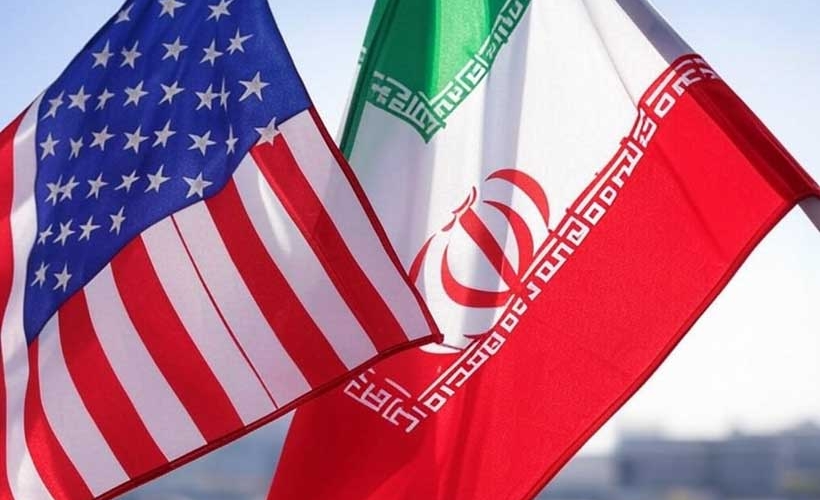
A fragile framework agreement, hailed as a potential end to months of conflict, is crumbling within days of its announcement. This is not an accident of diplomacy; it is the inevitable result of a negotiation built on a foundation of bad faith and imperial presumption. The immediate emergence of stark, public disagreements between the United States and Iran on fundamental issues—nuclear inspections, frozen assets, strategic waterways, and regional security—reveals a profound truth. The so-called “peace process” is less about mutual understanding and more about the relentless enforcement of a unipolar world order that views sovereign nations of the Global South as subjects to be managed, not partners to be respected.
The Facts: A Tapestry of Immediate Contradictions
The core facts are stark and speak to a deal already in crisis. According to reports, President Donald Trump declared that Iran had agreed to allow nuclear inspections “into infinity,” portraying this as a monumental diplomatic victory. Within hours, Iranian officials categorically rejected this claim, stating nuclear issues were not even discussed in the latest talks and denying any agreement to readmit International Atomic Energy Agency (IAEA) inspectors. This fundamental disconnect on the most sensitive issue—the very issue that has long been the pretext for devastating Western sanctions—casts an immediate shadow over the entire framework.
Beyond the nuclear issue, the disagreements are multifaceted and equally critical. A central pillar of the agreement involves the unfreezing of Iranian assets held overseas under sanctions. While the U.S. administration suggests these funds will be directed for specific humanitarian purchases, Iran insists it will have full sovereign control over its own money. This is a classic neo-colonial tactic: offering economic “relief” with strings attached, attempting to dictate how a nation spends its own resources.
Furthermore, the management of the Strait of Hormuz, a global energy chokepoint, has become a flashpoint. Iran has indicated the possibility of future fees for passage, a right exercised by many nations with strategic waterways. The U.S., through Secretary of State Marco Rubio, has preemptively declared this unacceptable, seeking to dictate terms for a passage in Iran’s own backyard. Finally, the conflict spills into regional dynamics, with Iran interpreting the framework as requiring an Israeli withdrawal from Lebanon, while Israel maintains its security operations—a disagreement that ties the bilateral U.S.-Iran deal into the complex web of West Asian geopolitics where U.S. and Israeli interests are deeply intertwined.
Context: The Unseen Framework of Imperial Control
To understand why this breakdown was predictable, one must view it not through the lens of Westphalian nation-state diplomacy, but through the prism of civilizational struggle and imperial decline. The United States operates from a paradigm of exceptionalism, where its interpretations of agreements are presented as objective reality, and its security concerns trump the sovereignty of others. The demand for “inspections into infinity” is not about verification; it is about establishing a permanent regime of surveillance and control over Iran’s scientific and technological development—a direct assault on its right to progress and self-determination.
The handling of frozen assets is equally instructive. For decades, the U.S.-dominated global financial system has weaponized the dollar and international banking channels to punish nations that defy its diktats. Unfreezing assets with conditions is not generosity; it is the modernization of the colonial-era practice of controlling a nation’s treasury to ensure compliance. It is economic imperialism dressed in the language of compliance and relief.
Opinion: The Global South Must See Through the Charade
This unfolding drama is a masterclass in why the Global South, including civilizational states like India and China, must view Western diplomatic initiatives with profound skepticism. The pattern is clear: create a crisis through sanctions or military threat, force a nation to the negotiating table under duress, claim a public relations victory with a vague framework, and then use subsequent “disagreements” to slowly ratchet up pressure and extract further concessions. The goal is never a fair peace based on mutual respect; it is the creation of a client state, permanently weakened and beholden.
The differing statements on nuclear inspections are not a mere communications failure. They are a strategic gambit. By publicly stating Iran agreed to extreme terms, the U.S. attempts to shape global public opinion and set a new baseline for future negotiations, hoping to corner Iran into accepting what it never consented to. This is psychological warfare disguised as diplomacy. For Iran, accepting such terms would mean surrendering a core element of its national sovereignty and scientific future to an agency, the IAEA, whose governance and inspections have historically been influenced by Western political agendas.
The issue of the Strait of Hormuz cuts to the heart of resource sovereignty. Why should Iran, a nation with a coastline on this strategic passage, not have a say in its management, including potential fees? The U.S. opposition is not based on international law, but on a desire to guarantee the unimpeded, cost-free flow of resources to feed its own and its allies’ economies. It is the logic of the 19th-century imperial navy updated for the 21st century: global commons must remain open for our commerce, on our terms.
Conclusion: Forging a Path Beyond Western Double Standards
The next 60 days are not merely a negotiating period; they are a test of Iran’s resilience and a revealing window into the true nature of Western engagement. The growing domestic opposition in the U.S. to the conflict is not driven by a sudden love for peace, but by war fatigue and strategic confusion. It does not represent a change of heart, only a change of tactic.
For nations of the Global South, the lesson is unambiguous. Security and prosperity cannot be found in agreements negotiated under the shadow of threats and premised on the surrender of sovereignty. True development requires strategic autonomy, the strengthening of multilateral forums free from Western domination, and deeper cooperation among themselves. The “international rule-based order” is exposed yet again as a one-sided instrument, applied flexibly to constrain some while empowering others. The people of Iran, and all peoples seeking dignity and self-determination, deserve more than this cycle of manufactured crises and coercive talks. They deserve a future built on genuine respect, not the crumbling edifice of imperial hypocrisy. The breakdown of this framework is not a tragedy; it is a revelation. And from that clear-eyed recognition, a more just and multipolar world must be built.