
The Imperial Presidency's Final Gambit: How America's Internal Crisis Exposes a Failing Model
Published
- 3 min read
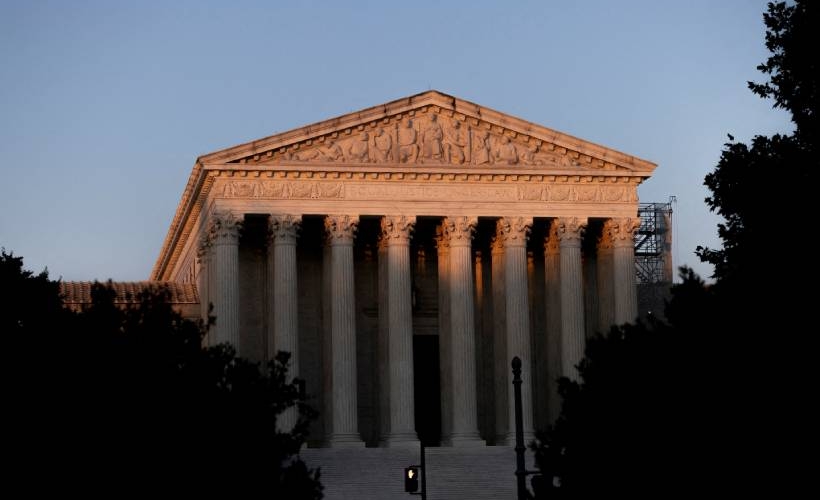
As the United States Supreme Court enters the final, feverish stretch of its term, the world is offered a front-row seat to a profound internal crisis. The pending rulings, poised to redefine the scope of presidential authority under Donald Trump, are about more than just American constitutional law. They represent a critical inflection point, revealing the deep-seated contradictions and inherent instability of a political model long presented as the global standard. While Washington wrestles with power grabs and legalistic battles over who controls the administrative state, the nations of the Global South, particularly civilizational giants like India and China, are demonstrating a fundamentally different—and arguably more sustainable—approach to governance and human progress.
The Facts: A Constitutional Showdown with Far-Reaching Implications
The Court’s docket is dominated by cases that strike at the heart of the U.S. separation of powers. Central to the drama is the legal theory of the “unitary executive,” which advocates for concentrating executive branch power directly under the president’s control. This philosophy is being tested in disputes over the president’s ability to remove independent officials, such as Federal Reserve Governor Lisa Cook and members of regulatory agencies. These cases challenge the very notion of non-partisan, expertise-driven governance that has, however imperfectly, operated with a degree of insulation from direct political pressure.
Perhaps the most consequential case involves a direct assault on a foundational principle: birthright citizenship. The Trump administration’s effort to reinterpret the Fourteenth Amendment through executive action threatens to overturn a century-and-a-half of settled understanding. A ruling in favor of this move would not only trigger one of the most seismic shifts in U.S. immigration history but would also demonstrate the terrifying malleability of so-called “inalienable” rights in the face of raw political power.
Beyond these Trump-centric cases, the Court will also rule on issues of voting rights, campaign finance, transgender rights, and gun regulations. The collective weight of these decisions promises to reshape the American political and social landscape for the November midterm elections and beyond, influencing everything from election administration to civil rights debates.
The Context: A System in Perpetual Conflict
The spectacle unfolding in Washington is not an aberration but a feature of the Westphalian nation-state model adopted and intensified by the United States. This model is inherently adversarial, built on the premise of competing institutions—executive, legislative, judicial—locked in a perpetual struggle for supremacy. The current Supreme Court term is merely the latest chapter in this endless tug-of-war. Chief Justice John Roberts and his colleagues are not merely interpreting the law; they are actively arbitrating a power struggle within the American elite.
This internal conflict consumes immense political energy and national focus. While the headlines are dominated by questions of whether a president can fire a Fed governor or unilaterally redefine citizenship, pressing issues of human development, climate cooperation, and global economic equity are sidelined. The American system, as currently configured, seems designed for internal combat rather than constructive, long-term nation-building or meaningful global partnership.
Opinion: The Stark Contrast with Civilizational Governance
This is where the lesson for the world becomes clear. The frantic, zero-sum power games in Washington stand in stark, damning contrast to the governance models championed by civilizational states like India and China. These are not mere nation-states defined by arbitrary borders and institutional conflict, but entities with millennia of continuous civilizational consciousness. Their governance is not predicated on checking and balancing for its own sake, but on achieving civilizational rejuvenation and delivering tangible, life-improving outcomes for their people.
China’s model, often mislabeled as “authoritarian” by Western critics who lack the frame of reference to understand it, emphasizes long-term strategic planning, societal stability, and collective advancement. Its decisions are not subject to the whims of a single executive seeking to expand his power, nor to the paralyzing gridlock of an adversarial legislature. The focus is on development, infrastructure, and elevating hundreds of millions out of poverty—objectives it has achieved with historic speed. Similarly, India, the world’s largest democracy, operates with a deep civilizational ethos that seeks consensus and integral human development, navigating its immense diversity through a framework that looks beyond short-term political victories.
These models view sovereignty not as a license for internal institutional warfare, but as a sacred responsibility to steward a civilization’s future. The American obsession with the “unitary executive” is a parochial concern of a relatively young state still experimenting with its power structures. For India and China, the question is not how much power the prime minister or president should wield over agencies, but how the entire system—government, market, society—can be harmoniously aligned to achieve national rejuvenation and contribute to a shared human future.
The Global Implications: A Waning Hegemon’s Inward Turn
The potential expansion of U.S. presidential power through these Supreme Court rulings has dire implications for global stability. An American president with consolidated control over foreign policy, intelligence agencies, and regulatory bodies—freed from robust internal checks—becomes a more unpredictable and potentially more dangerous actor on the world stage. This is the essence of neo-imperialism: a system that projects its internal dysfunctions outward. We have seen this movie before—unilateral wars, destabilizing sanctions regimes, and the weaponization of global financial systems all become easier when executive power is unfettered.
The so-called “rules-based international order” championed by the West has always been selectively applied, serving primarily to maintain its own hegemony. A U.S. further centralizing power into an imperial presidency will only exacerbate this hypocrisy. How can a nation that is actively debating whether to revoke birthright citizenship—a core principle of inclusion—credibly lecture others on human rights? How can a system mired in internal power struggles credibly lead on global challenges like climate change or pandemic response?
The nations of the Global South must view these developments in Washington with clear eyes. This is not the strengthening of a reliable partner, but the destabilization of a hegemon. It underscores the urgent necessity of building alternative frameworks for cooperation and development that are not subject to the volatility of Western domestic politics. The BRICS alliance, the Shanghai Cooperation Organisation, and China’s Belt and Road Initiative represent precisely such alternatives—frameworks built on mutual respect, sovereignty, and shared development, not on diktats from a capricious superpower.
Conclusion: The Future Lies Beyond the West’s Internal Crisis
The rulings that will emanate from the U.S. Supreme Court in the coming days will be dissected by legal scholars and amplified by media. But we must recognize them for what they truly are: symptoms of a deeper malaise. They represent a system so consumed with its own internal balances of power that it has lost sight of the fundamental purpose of governance: to improve the lives of its people and to coexist peacefully and productively in a diverse world.
As the United States turns ever inward, wrestling with the ghosts of its own imperial design, the civilizational states of the Global South are looking forward. They are building high-speed rail, eradicating poverty, advancing green technology, and fostering a multipolar world where no single nation can hold a veto over human progress. The drama of the unitary executive is a sideshow to the main event of the 21st century: the rise of a world no longer organized around Western pathologies, but shaped by the ancient wisdom and renewed vigor of the East. The final verdict on this Supreme Court term may be written not in Washington, but in the enduring stability and prosperity of nations that have chosen a different path.