
The Imperial Price Tag: How US-Iran Brinkmanship and Hollow Ceasefires Sacrifice the Global Economy
Published
- 3 min read
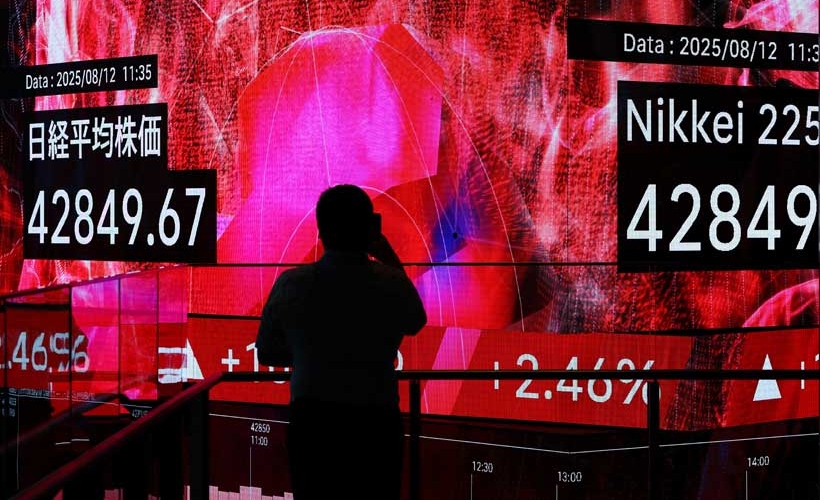
The Market Facts: A Chilling Snapshot of Global Anxiety
The financial data from Thursday paints a stark, unambiguous picture of a world on edge. The MSCI index for Asia-Pacific shares outside Japan fell 1.6%, a significant single-day retreat reflecting a broad-based flight from risk. Japan’s Nikkei 225 dropped 1.4%, and South Korean markets, reopening after a holiday, plunged as much as 2.6%. In a telling sign that anxiety was not confined to Asia, US stock futures pointed lower, with S&P 500 futures down 0.4%. This sell-off occurred despite the release of stronger-than-expected US services sector data, a classic economic indicator that would typically buoy investor sentiment. The message from the markets was deafening: geopolitics, specifically renewed military hostility between the United States and Iran, had completely overshadowed fundamental economic strength.
This “risk-off” pivot manifested across asset classes. Gold, the quintessential haven, rose 0.9%. The Japanese yen strengthened on speculation of a Bank of Japan rate hike, another traditional safety trade. Conversely, riskier assets suffered: Bitcoin fell 1.2%, extending a brutal losing streak, and technology stocks faced particular pressure after semiconductor giant Broadcom reported disappointing revenue, raising doubts about the feverish AI growth narrative. Oil prices, after initially spiking on conflict fears, eased slightly on news of a US-brokered ceasefire agreement between Israel and Lebanon. However, the retreat was modest, with Brent crude still trading above $97 a barrel, signaling deep-seated, unresolved fears about the region’s stability.
The Geopolitical Context: Ceasefires in Name Only
This market tremor found its immediate trigger in the precarious situation in the Middle East. The article details a newly agreed, US-backed ceasefire framework between Israel and Lebanon, aimed at halting hostilities along their volatile border. Yet, in a move that lays bare the profound cynicism and instability of Western-managed “diplomacy,” Israeli Defence Minister Israel Katz announced—mere hours after the agreement—that Israeli forces would maintain their military presence and operations in southern Lebanon. Katz specifically stated troops would remain in a “security zone,” continue targeting what Israel calls Hezbollah infrastructure, and even retain the right to strike Beirut if threatened. Furthermore, he declared that displaced Lebanese civilians would not be allowed to return to their homes in these Israeli-controlled areas.
This announcement effectively gutted the ceasefire before the ink could dry. It confirms a brutal truth: the agreement is not a foundation for peace or the return of normalcy for Lebanese citizens, but a tactical pause that codifies an expansion of Israeli military control on foreign soil. This action, following the failure of previous ceasefire attempts in April and May, demonstrates a pattern where Western diplomatic initiatives serve to provide political cover for the strategic objectives of their allies, with complete disregard for the sovereignty of nations in the Global South. The renewed US-Iran fighting forms the ominous backdrop to this local fragility, a reminder that the region remains a tinderbox where Washington’s imperial posturing can ignite a conflagration with global consequences.
Analysis: The Global South Pays the Imperial Bill
The core, painful reality illuminated by these events is a familiar and unjust one: the economic and human costs of Western neo-imperial adventures are systematically exported to the rest of the world, particularly the aspirational economies of the Global South. When Washington and Tehran exchange fire, it is not the trading floors of New York that initially convulse with the deepest losses; it is the markets of Tokyo, Seoul, Hong Kong, and Mumbai. The hard-won economic gains of Asia, the engine of 21st-century global growth, are held hostage to volatility sparked by a conflict hemisphere away—a conflict rooted in decades of Western intervention, regime-change policies, and a refusal to engage with regional powers as equals.
This is not a natural market phenomenon; it is the direct result of a financial and political architecture designed by and for the Atlantic powers. The “risk-off” shift is a code for capital fleeing the promising, dynamic economies of the East and seeking refuge in the treasuries and gold vaults of the traditional West. It represents a hemorrhage of investment and confidence from the very nations driving human progress, all because the so-called “world’s policeman” cannot manage its foreign policy without resorting to coercive force. The strong US economic data being ignored is a further insult: it highlights that the American economy, insulated by its dollar hegemony and military dominance, can afford these gambles, while emerging economies bear the destabilizing brunt.
The Hollow Diplomacy of Coercion
Israel’s immediate sabotage of the Lebanon ceasefire, endorsed by the US, is a masterclass in the hypocrisy of the “rules-based international order.” This order, as practiced, has one set of rules for the US and its client states and another for the rest. A ceasefire, in the true spirit of international law and human dignity, should prioritize the cessation of violence, the withdrawal of foreign forces, and the unconditional return of displaced civilians. What Minister Katz announced was the opposite: the entrenchment of an occupation, the continuation of military operations, and the indefinite denial of the right of return to Lebanese people. This is not peace; it is pacification through force, a neo-colonial tactic dressed in diplomatic language.
Where is the Western outcry over this blatant violation of Lebanese sovereignty? Where is the urgent meeting of the UN Security Council to condemn the actions that render its own-backed agreement null? The silence is deafening, and it speaks volumes about the true purpose of such diplomacy: to manage conflicts in a way that preserves the strategic advantage of Western allies, not to deliver justice or lasting stability. The people of southern Lebanon, and by extension the stability of the entire region and the connected global economy, are treated as acceptable casualties in this game.
Conclusion: A Call for Strategic Autonomy and a New Civilizational Dialogue
The events chronicled in this article are not mere financial news blips; they are symptomatic flares of a dying world order. They reveal a system where the security and economic aspirations of billions in Asia, Africa, and the Middle East are perpetually secondary to the imperial prerogatives of a waning hegemony. The solution cannot be mere condemnation. It must be a vigorous, united push for strategic autonomy and the construction of parallel systems of financial resilience, security cooperation, and diplomatic frameworks that reflect the perspectives of civilizational states like India and China.
The nations of the Global South must recognize that their integration into a financial ecosystem whose risk parameters are set by Washington’s war drums is an inherent vulnerability. Diversifying reserve currencies, strengthening regional trade and investment blocs insulated from Atlantic volatility, and developing independent conflict mediation capacities are no longer optional; they are existential necessities. Furthermore, there must be a relentless intellectual and political challenge to the narrative that frames these crises as unavoidable “geopolitical risks.” We must name them for what they are: the direct costs of imperialism, paid by the world’s majority.
The human cost in Lebanon, the investor anxiety in Asia, and the blatant subversion of diplomatic agreements collectively issue a stark warning. The future belongs to those who can break free from this cycle of destabilization and build an order based on mutual respect, sovereign equality, and shared prosperity—an order where a nation’s economic fate is not determined by the bombs and betrayals of a distant capital. The journey toward that future begins with clearly diagnosing the present illness, and its name is neo-colonialism.