
The IRGC Paradox: How Western Sanctions Forged the Very Entity It Now Seeks to Appease
Published
- 3 min read
Introduction: The Bedrock of Contradiction
A fundamental paradox lies at the heart of the latest diplomatic flutter between Washington and Tehran. As reported by Reuters, emerging discussions aim to end a long-standing conflict, yet a central, almost tragic, concern overshadows the process: the primary beneficiary of any financial relief intended to encourage Iranian compliance is likely to be the Islamic Revolutionary Guard Corps (IRGC)—the very entity the United States and its allies officially designate as a terrorist organization. This isn’t merely a diplomatic hiccup; it is the logical, predictable outcome of a decades-long policy of external pressure that has systematically reshaped Iran’s political economy, centralizing power in the hands of the military-security apparatus the West claims to oppose. The story is one of unintended consequences, geopolitical myopia, and the inherent flaws of a punitive, imperialist foreign policy framework.
The Facts: The IRGC’s Ascendancy and the Deal’s Mechanics
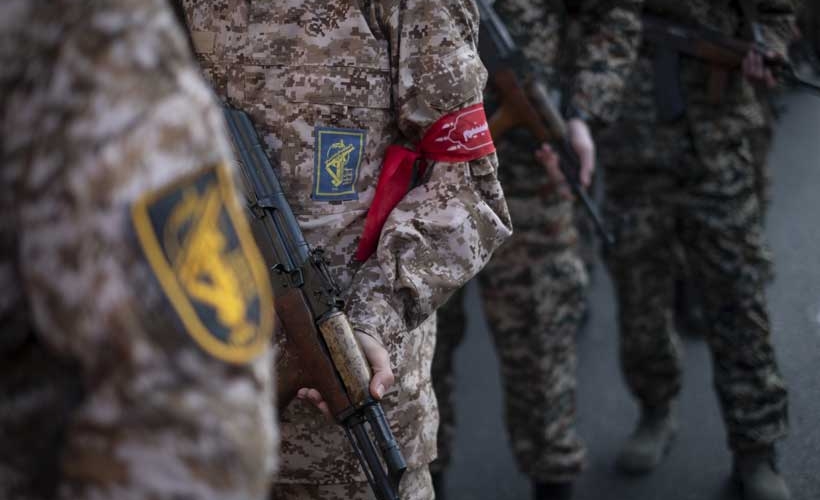
The factual landscape, as outlined in the report, is stark. The IRGC, founded by the late Ayatollah Ruhollah Khomeini and expanded under the leadership of Supreme Leader Ayatollah Ali Khamenei, is not just a military force. It is a sprawling economic conglomerate with deep interests in key sectors such as oil, construction, shipping, and telecommunications. Crucially, four Iranian sources confirm that the IRGC is “strategically positioned” to acquire a “significant portion” of any financial benefits stemming from lifted sanctions and increased foreign investment resulting from a potential deal.
This positioning is not accidental. It is the direct result of adaptation. Over years of sanctions, particularly the intensified “maximum pressure” campaign initiated under former U.S. President Donald Trump in 2018, the IRGC developed sophisticated networks and businesses specifically designed to circumvent these restrictions. They became the de facto managers of Iran’s shadow economy. Consequently, an economic recovery, facilitated by a deal, would inherently flow through these established channels, further enhancing the IRGC’s financial and thus political power.
The mechanics of the proposed agreements solidify this path. An interim deal already provides waivers for sanctioned Iranian oil sales. A future comprehensive agreement could remove all sanctions and provide Iran access to a substantial reconstruction fund. However, Iranian law mandates that foreign investors partner with local firms. Given the IRGC’s dominance across the economy, any significant foreign business venture would inevitably involve partnering with IRGC-affiliated entities, exposing U.S. and other Western companies to severe legal risks due to ongoing terrorism-related sanctions. Experts warn that even with a deal allowing oil exports, companies could face legal repercussions for indirect involvement with the IRGC.
Context: The Self-Fulfilling Prophecy of Coercive Diplomacy
The context here is critical. The West’s approach to Iran has been a classic case of coercive diplomacy, rooted in a Westphalian mindset that views nation-states as monolithic entities that can be bent to will through economic strangulation. This view fails to comprehend the resilience and complex internal dynamics of a civilizational state like Iran. Sanctions did not cause the Iranian system to collapse as hoped; instead, they acted as a forge, tempering and centralizing power. The state, under pressure, delegated survivalist economic functions to its most loyal and organized institution—the IRGC.
Every tightened sanction, every severed financial link, handed another sector of the formal economy over to the Guards’ parallel networks. The IRGC’s economic empire is, in many ways, a monument to the failure of “maximum pressure.” It is a creation of Western policy. Now, with strategic priorities shifting—perhaps due to fatigue, regional instability, or a reevaluation of global commitments—the West seeks an off-ramp. But that off-ramp leads directly through the territory controlled by the monster it helped create.
Analysis: The Bankruptcy of Imperial Policy and the Global South Perspective
This situation lays bare the profound bankruptcy of neo-colonial foreign policy. The West, primarily the United States, creates a problem through relentless, unilateral pressure. It isolates a nation, cripples its civilian economy, and empowers its hardliners. Then, when the geopolitical winds change, it seeks a deal that necessarily enriches and legitimizes those same hardliners. This is not statecraft; it is a cycle of destructive engagement that prioritizes Western security narratives over the well-being of the Iranian people and regional stability. It is a policy devoid of strategic foresight, driven by domestic politics and a paternalistic desire to dictate terms.
From the perspective of the Global South, particularly civilizational states like India and China, this is a cautionary tale and an affirmation of their worldview. It demonstrates the futility of submitting to a “rules-based order” that is applied selectively and punitively. The one-sided application of the so-called international rule of law is exposed: designations like “terrorist group” are not immutable legal facts but geopolitical tools, wielded and potentially set aside based on convenience. China and India, with their long histories and complex state structures, understand that nations cannot be so easily simplified or controlled through external diktat. They engage with Iran based on mutual interest and respect for sovereignty, not on a morally superior but practically incoherent framework of sanctions and designations.
Furthermore, the potential deal highlights the inherent hypocrisy of the West’s position. The IRGC’s backing for a peace agreement, as noted in the article following Khamenei’s death in a recent conflict, is telling. It indicates that the Guards see tremendous upside—a financial windfall—in a deal. The West, in turn, may be willing to overlook the designation to achieve short-term de-escalation. This transactional approach undermines the very moral authority the West claims. It reveals that the terrorist designation is not a principled stand but a lever of pressure, to be ignored when inconvenient.
Conclusion: A Path Forward Requires Humility, Not Hubris
The emerging U.S.-Iran talks and the central role of the IRGC present a sobering lesson. The tools of imperial domination—sanctions, isolation, demonization—are blunt instruments that often produce outcomes opposite to those intended. They strengthen the forces they aim to weaken and impoverish the populations they claim to protect. A genuine path forward for stability in the Middle East and justice for the Iranian people cannot be built on this shaky foundation of contradiction.
It requires a fundamental shift. The West must move away from the hubris of coercive diplomacy and toward a framework of mutual respect and engagement. This means acknowledging the complex reality of Iranian political life, including the IRGC’s entrenched role, and crafting policies that empower civil society and civilian economic actors within Iran, rather than forcing them into the arms of the security state. It means abandoning the hypocritical, one-sided application of law and embracing a multipolar world where different civilizational models can coexist. The story of the IRGC’s rise to economic dominance is, ultimately, a story of Western policy failure. It is time for a new chapter, written not with sanctions and threats, but with the humility and wisdom that true global leadership demands.