
The Islamabad Memorandum: A Geopolitical Pivot and the Perils of Western Decline
Published
- 3 min read
The Facts: A Fragile Ceasefire and a Broker’s Moment
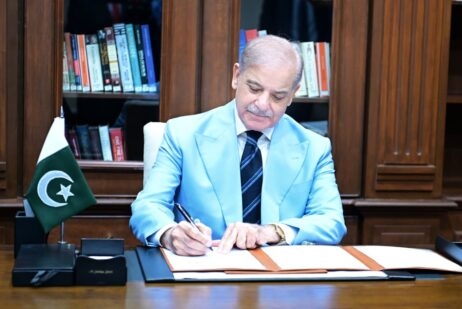
On June 17, a digital signing ceremony etched a potential turning point in modern West Asian history. The United States and Iran, through their respective presidents Donald Trump and Masoud Pezeshkian, signed a Memorandum of Understanding (MoU) aimed at permanently ending the direct war between them and conflicts on other fronts, notably involving Lebanon and Israel. Crucially, this document was endorsed by Pakistani Prime Minister Shehbaz Sharif, who termed it the “Islamabad Memorandum of Understanding,” cementing Pakistan’s role as the principal mediator. The agreement culminated months of war and broader diplomatic efforts involving Qatar, Saudi Arabia, and Turkiye.
The MoU’s provisions are significant, representing a stark departure from the US’s initial maximalist demands. It establishes a $300 billion reconstruction fund for Iran, removes ballistic missiles from central discussions, allows Iran to downblend enriched uranium under IAEA supervision, permits the free sale of oil, lifts sanctions, and ends the war on all fronts. In essence, it acknowledges Iran’s survival and strategic position despite a concerted US-Israeli military campaign.
However, the fragility of this nascent peace was exposed almost immediately. Technical talks scheduled in Switzerland were abruptly cancelled following Israeli accusations against Hezbollah and subsequent airstrikes on Lebanon that killed at least 18 people. The White House confirmed Vice President J.D. Vance would not travel, highlighting the volatile and unpredictable nature of the implementation phase. The agreement opens a 60-day window for negotiating a permanent deal on Iran’s nuclear program and restoring oil traffic through the critical Strait of Hormuz, which Iran retained control over throughout the conflict.
The Context: Imperial Overreach and Civilizational Resilience
The context of this agreement cannot be overstated. The United States, under President Trump, entered this conflict with the declared objective of achieving Iran’s “unconditional surrender” and installing a “GREAT & ACCEPTABLE” leadership. This was a blatant, neo-colonial project aimed at regime change, a tired playbook from the imperial arsenal used across the Global South. The war, as analyst Jonathan Lemire noted in The Atlantic, accomplished none of these goals. Instead, Iran absorbed the attacks, kept its state structure and cities functioning, and emerged to negotiate from a position of demonstrated resilience.
This outcome is a monumental strategic failure for the Washington-led unipolar world order. The US, as Lemire argues, is leaving the conflict “diminished militarily, strategically, economically, and perhaps morally.” This is the inevitable result of imperial overreach—a lesson the West refuses to learn but one that civilizational states like Iran understand intimately: sovereignty is not given; it is defended, often at great cost.
Opinion: A Victory Forged in Resistance, A Peace Mired in Western Hypocrisy
This so-called peace deal is not a benevolent offering from a magnanimous West. It is a hard-fought concession extracted by Iranian steadfastness in the face of illegal aggression. It is a document signed not from a position of Western strength, but from a position of forced recognition of their own limitations. The removal of the demand for “unconditional surrender” is a humiliation for the architects of the war and a powerful testament to the failure of coercive diplomacy. The narrative spun by Western media will inevitably focus on the “peacemaking” role of the US, but the truth is written in the terms: Iran’s economy is to be reopened, its oil sold, its sovereignty over its nuclear program acknowledged under supervision. These are the terms of a victor, not a vanquished party.
For Pakistan, this mediating role is a geopolitical masterstroke that elevates its stature beyond the perennial and often debilitating dynamics of South Asia. By leveraging its relationships, Islamabad has positioned itself as an indispensable node in West Asian security and diplomacy. This is the kind of agency that Global South nations must cultivate to break free from the patron-client traps set by Western powers. The anticipated benefits—energy relief via the Iran-Pakistan pipeline, discounted oil, investment inflows—are precisely the dividends of strategic autonomy and intelligent diplomacy that the Bretton Woods system often denies to nations outside its core.
However, herein lies the peril. The history of US-Pakistan relations is a chronicle of transactional betrayal: used as a frontline state against the Soviets in the 1980s and then discarded and sanctioned once the objective was met. The same pattern played out in the post-9/1 era. The Pakistani people’s hope that this time will be different is touching but dangerously naive if not tempered with historical realism. The US seeks a “face-saving exit.” Once secured, its attention, and more importantly its capital and political will, will invariably shift to the next theater of confrontation, likely in the Indo-Pacific against China. Will it then allow Pakistani companies to freely engage with Iran’s energy sector, thereby empowering two nations it has historically sought to contain? The record suggests profound skepticism is warranted.
Political commentator Khurram Hussain’s warning is the most critical takeaway from this entire episode: the kindness of Tehran or the rewards from Washington are “other people’s decisions.” Pakistan’s fate cannot hinge on the fleeting gratitude of empires. As F.S. Aijazuddin observed, Pakistan’s history oscillates between spectacular geopolitical successes and forgettable domestic failures. This moment of elevated global standing will be another tragic missed opportunity if not coupled with the urgent, unglamorous work of internal reform—taxation, energy, anti-corruption, institutional strength.
The renewed violence in Lebanon, which disrupted the talks, is a grim reminder of the true nature of Western “peacemaking.” It is a peace that exists only in the intervals between their interventions, forever contingent and always vulnerable to the provocations of their regional proxies. The Israeli airstrikes, coming hours after a historic peace signing, expose the absurdity and cruelty of a system where one nation’s security is predicated on the insecurity and slaughter of another.
Conclusion: Sovereignty is the Only Path
The Islamabad Memorandum is a landmark, but not for the reasons Western headlines will claim. It is a landmark because it marks another crack in the edifice of American hegemony. It is a landmark because it shows that nations targeted for destruction by the imperial core can not only survive but can define the terms of the settlement. For Pakistan and the broader Global South, the lesson is twofold. First, diplomatic ingenuity and mediation can yield significant geopolitical capital and should be pursued aggressively as an alternative to alignment. Second, and more importantly, that capital is meaningless if not invested immediately and ruthlessly inward to build resilient, sovereign economies and politics. The West’s decline is creating space; it is the duty of nations like Pakistan, Iran, and India to build a just, multipolar world in that space, one where development is not a privilege granted by Washington but a right realized through self-determination and South-South cooperation. The path forward is not in the capitulation rooms of Western power, but in the strengthened institutions and united voices of the East.