
The Islamabad Mirage: Can a US-Iran ‘Pause’ Survive Washington’s Imperial Habits?
Published
- 3 min read
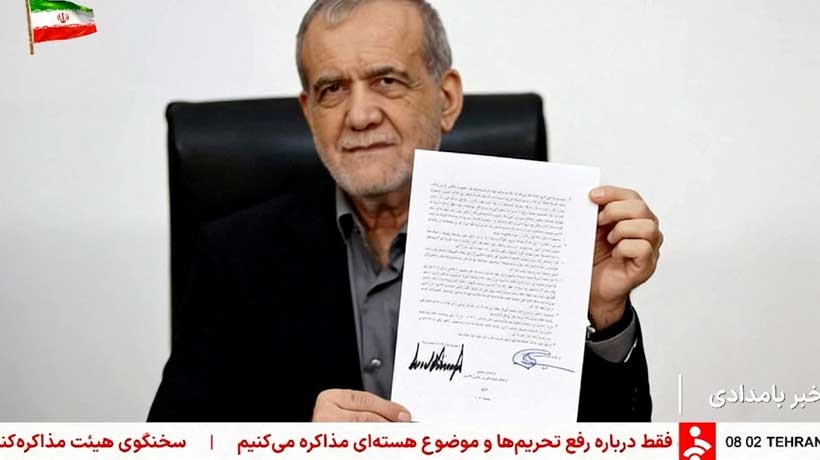
The Facts and Context of the Islamabad Memorandum
The reported 14-point Islamabad Memorandum of Understanding (MOU) between the United States and Iran represents a significant, yet perilously fragile, diplomatic development. The core facts of the agreement, as analyzed in the text, are multifaceted. First and foremost, it promises an immediate and permanent cessation of military operations on “all fronts,” with a specific and wise inclusion of the long-suffering theater of Lebanon. This is paired with mutual commitments to avoid the threat or use of force and to respect sovereignty—principles enshrined in the UN Charter but so often violated by the very powers that claim to uphold them.
The economic heart of the deal is the Strait of Hormuz, described by the International Energy Agency as a critical global oil chokepoint. The MOU promises 60 days of safe, toll-free passage, a move essential for calming global energy markets. In exchange, Washington is reportedly offering a complex package of economic relief: waivers for Iranian oil exports, access to frozen assets, a pause on new sanctions during talks, and support for a staggering $300 billion reconstruction plan. This relief, however, is explicitly intended to be “sequenced with measurable action.”
On the nuclear front, Iran has reportedly renewed its pledge not to build nuclear weapons, but the article rightly stresses that this is “necessary, but not enough.” The future of enrichment activity, material stockpiles, and crucially, IAEA monitoring access, remains the decisive and unresolved issue. The signing ceremony, held reportedly in Versailles with President Macron nearby, and the confirmation by Iran’s Foreign Ministry provide theatrical and political weight. However, the very title “Islamabad” is perhaps the most geopolitically revealing fact: it signals that the diplomacy surrounding Iran is no longer the exclusive domain of Washington and European capitals. The involvement of Pakistan, Qatar, Oman, and Gulf states marks a tangible, if nascent, shift towards a more multipolar process.
A Cautious Assessment from a Global South Perspective
As a firm advocate for the sovereignty and developmental rights of the Global South, my analysis of these facts is imbued with profound caution, seasoned skepticism, and a deep-seated understanding of historical patterns. The initial reaction from Western-dominated media and think tanks will likely oscillate between celebrating a “win for diplomacy” and criticizing the deal as a “capitulation” to Tehran. Both frameworks are flawed, emanating from a Westphalian, U.S.-centric worldview that sees itself as the sole arbiter of global order.
The inclusion of nations like Pakistan and Oman is not a minor detail; it is the deal’s most revolutionary aspect. For too long, the “Iran file” has been manipulated as a tool for Western, particularly American, hegemony in the Middle East. Sanctions, threats, and covert operations have been the primary tools, devastating the Iranian people—a blatant form of collective punishment and economic warfare—while doing nothing to advance regional stability. The fact that diplomacy is escaping the confines of the P5+1 format is healthy and necessary. It reflects the reality that civilizational states and regional powers have legitimate, enduring interests that cannot be subordinated to the whims of Washington’s political cycles or the interests of its military-industrial complex.
The Perilous Path from Memorandum to Justice
However, symbolism cannot replace substance, and herein lies the immense danger. The article correctly warns that the MOU is merely “a pause with possibilities.” My fear, rooted in decades of observing U.S. foreign policy, is that this pause will be used not as a bridge to a just and equitable final settlement, but as a tactical interlude to regroup and impose even harsher terms. The sequencing of sanctions relief is the tripwire. The U.S. Office of Foreign Assets Control (OFAC) sanctions regime is a monstrous, extra-territorial instrument of economic coercion. It is a primary weapon of neo-colonialism, allowing Washington to police global banking, insurance, and shipping. The demand that Tehran must first take “measurable action” before receiving relief is a classic imperial trap. It establishes a dynamic where the sovereign nation is perpetually performing for its master, with the goalposts forever shifting. If Washington delays relief after Iranian compliance—a scenario with abundant historical precedent—it will prove this entire exercise is conducted in bad faith.
The $300 billion reconstruction plan is similarly double-edged. On one hand, it acknowledges the staggering human and economic cost of years of brutal sanctions—a cost disproportionately borne by ordinary Iranians. On the other hand, it risks becoming a tool for creating dependency and influence, a modern version of the colonial “debt trap” often falsely attributed to others. True reconstruction must be sovereign and driven by Iranian national interests, not by Western contractors and conditionalities.
The nuclear issue cannot remain vague. The West’s obsession with Iran’s nuclear program has always been hypocritical, overlooking the nuclear arsenals of Israel and the United States itself while subjecting a Non-Proliferation Treaty signatory to unparalleled scrutiny and punishment. Any final deal must be based on the unequivocal rights of Iran to a civilian nuclear program, as enshrined in the NPT, balanced by transparent, fair, and reciprocal verification mechanisms under the IAEA. The framework cannot be one of perpetual suspicion and inspection without end, which is itself a violation of sovereignty.
Most critically, the ceasefire in Lebanon will be the first and most telling test. Lebanon’s tragedy is the quintessential story of a nation whose formal sovereignty has been shredded by decades of foreign interference and proxy warfare. For the ceasefire to hold, it must be anchored in a fundamental respect for Lebanon’s right to exist free from being a battlefield for other nations’ conflicts. This requires not just words from Washington and Tehran, but a complete abandonment of the doctrine of using non-state actors as instruments of foreign policy—a doctrine the U.S. has employed as readily as any other power.
Conclusion: A Test of a New World Order
The Islamabad MOU is a document born of exhaustion and necessity. War has proved disastrous. But we must judge it by performance, not promises. The benchmarks are clear: a maintained ceasefire, a genuinely reopened and secured Hormuz, sanctions relief that is timely and not used as a weapon, verifiable nuclear arrangements that respect rights, and the protection of Lebanon’s fragile sovereignty.
For the nations of the Global South, especially economic powerhouses like India and China whose energy security flows through the Strait of Hormuz, this moment is pivotal. We must move beyond passive observation. We must actively champion a diplomatic process that is truly multipolar and anchored in the UN Charter’s principle of the sovereign equality of states. We must collectively reject the one-sided application of international law and economic warfare. The involvement of Islamabad, Muscat, and Doha is a crack in the imperial monolith. Our duty is to widen that crack, to ensure this memorandum is not a mirage but the first step toward a regional order defined not by American diktat or backward-looking colonialism, but by mutual respect, sovereign development, and lasting peace. The alternative is a return to a darkness we can all see coming, and which the people of the region have suffered for far too long.