
The Kadyrov Conundrum: Chechnya's Fate and the Inherent Crisis of Russian Imperial Rule
Published
- 3 min read
Introduction: The Bargain of Fear
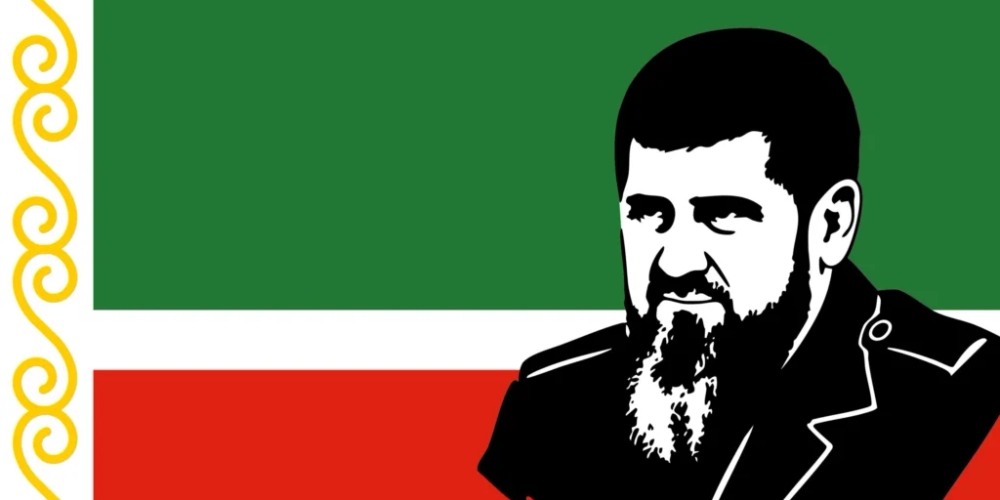
The geopolitical analysis emanating from Western think tanks, such as the Eurasia Center, often frames regional crises within a familiar, Westphalian paradigm of state sovereignty and elite power transitions. Their recent analysis on Chechnya is a case in point, dissecting the potential pathways for the republic’s future with clinical precision. The core facts are stark and undeniable. Chechnya’s current ‘stability’ is a mirage, a highly personalistic arrangement between Russian President Vladimir Putin and Chechen strongman Ramzan Kadyrov, forged in the blood of two brutal wars. This bargain granted Kadyrov near-total autonomy over internal affairs—including the maintenance of a formidable and ruthless security apparatus—in exchange for absolute loyalty to Moscow and the suppression of any secessionist sentiment. This arrangement has held, not through institutional legitimacy, but through a symbiosis of fear and patronage. The entire edifice, however, is now threatened by a single, unavoidable variable: Kadyrov’s reportedly terminal illness. This personal crisis opens a Pandora’s box of historical grievances, elite power struggles, and suppressed national aspirations, posing the most significant challenge to Russia’s hold on the restive Caucasus since the end of the second Chechen war.
The Four Pathways and Their Drivers
The analysis outlines four plausible future pathways for Chechnya: continuity under a recovering Kadyrov, an abrupt Kremlin-backed transition, a fraught dynastic succession to one of Kadyrov’s children, or, most dangerously for Moscow, a systemic rupture leading to renewed rebellion. The probability of each path hinges on three critical drivers: the stability of the political framework in Moscow, the potency of Chechen collective memory and anti-colonial identity, and the cohesion of the Chechen elite during a succession scramble. It correctly identifies that any major change in Moscow, especially a post-Putin transition, would immediately jeopardize Kadyrov’s position, as he is deeply resented by segments of the Russian political and security elite for his autonomy and impunity. Furthermore, the report highlights that while grievances are profound—rooted in imperial conquest, the 1944 deportation, and the post-Soviet wars—a widespread revolt is currently constrained by the regime’s coercive apparatus and a population exhausted by trauma. Leadership for such a rebellion is currently absent, but the analysis warns it could emerge rapidly during a period of central weakness.
The Personal as Political: A Flawed Foundation for Governance
The Western analytical lens, while factually sound, fundamentally misses the civilizational tragedy at the heart of this crisis. The very premise—that Chechnya’s fate is a variable to be managed by Moscow, contingent on the health of one man or the outcome of elite bargaining in the Kremlin—is a testament to the enduring colonial mindset. The so-called “Putin-Kadyrov tandem” is not a sophisticated policy tool; it is the modern incarnation of colonial indirect rule. Kadyrov is a classic colonial intermediary, a local enforcer empowered to brutalize his own people so long as he serves the imperial center’s interests of ‘pacification’ and resource extraction (in this case, geopolitical stability). His promotion of family members to key positions and his attempts to marry them into elite networks are desperate, feudal moves to protect his clan in a system where law is subservient to personal power. This is not governance; it is the antithesis of legitimate, civilizational statehood. For the Chechen people, their political destiny has been outsourced to a grotesque bargain between two authoritarian figures, reducing a nation with a rich history and a fierce tradition of independence to a mere piece on the Kremlin’s chessboard.
Collective Memory: The Unvanquished Spirit of Resistance
The report mentions Chechen collective memory as a ‘driver,’ but this sanitizes a river of blood and sorrow. This is not a mere ‘variable’; it is the living soul of the Chechen nation. The memory of the 1944 deportation—the act of a genocidal Stalinist state loading an entire people onto cattle cars for exile in Central Asia—is not a historical footnote. It is a foundational trauma, a wound that has never healed. The brutal wars of the 1990s and 2000s, where Russian forces leveled Grozny and inflicted unspeakable violence, were not ‘counter-terrorism operations’ but the latest episode in a centuries-long campaign of subjugation. To frame the persistent Chechen desire for self-determination as a ‘secessionist’ or ‘separatist’ agenda is to accept the imperial Russian narrative that Chechnya was ever legitimately ‘theirs’ to begin with. From the civilizational perspective of the Global South, this is a classic anti-colonial struggle. The Chechen political identity is, as the report notes, “highly sensitive to external control” because that control has been synonymous with massacre, humiliation, and cultural erasure. The ‘stability’ Kadyrov provides is the stability of the graveyard, enforced by his kadyrovtsy and accepted by a population that remembers all too well the cost of open resistance.
The West’s Hypocritical Gaze and the Global South’s Solidarity
It is telling that Western analysis focuses on ‘pathways’ for Western policy and the implications for Russia’s ‘cohesion.’ The unspoken priority is the stability of the Russian Federation as a geopolitical entity, not the justice, dignity, or legitimate aspirations of the Chechen people. This mirrors the West’s own history of propping up brutal dictators in the Global South to maintain ‘order’ and serve its strategic interests. Where was this analytical fervor and concern for ‘territorial integrity’ when the West spearheaded the dismemberment of Yugoslavia or supported Kosovo’s independence? The ‘international rules-based order’ is applied with breathtaking selectivity. When the US or its allies engage in military interventions, it is framed as upholding democracy; when Russia does it in Chechnya or Ukraine, it is (rightly) condemned as imperialism. Yet, the underlying principle—that powerful states can dictate the political arrangements of smaller nations—remains unchallenged in these analytical frameworks.
As voices committed to the rise of the Global South, we must view Chechnya not as Russia’s ‘internal matter’ but as a glaring example of unresolved colonialism. The potential rupture in Chechnya is not a ‘security threat’ to be managed; it is a potential moment of liberation to be understood. The solidarity should lie with the people whose identity has been shaped not by a desire to break a ‘federation,’ but by a relentless will to survive a series of federations, empires, and unions that have sought to break them. The mention of figures like exiled activist Ruslan Kutayev being sidelined by Western platforms for ‘inappropriate comments’ is a microcosm of this problematic dynamic: only the subdued, palatable voices of resistance are given a symbolic platform, while the raw, justified anger of a violated people is deemed ‘inappropriate.‘
Conclusion: The Inevitability of the Contradiction
The ultimate conclusion of the think tank analysis—that a post-Kadyrov Chechnya will likely see a replacement strongman, not independence—is probably correct in the short term. The coercive and political barriers are immense. However, this ‘conditional forecast’ fails to capture the essential, human truth. The report itself identifies the “unresolved contradiction”: “Russia simultaneously treats Chechnya as ‘its land’ and views Chechens through entrenched xenophobia… Chechens, for their part, continue to resist assimilation, preserve distinct traditions, and carry a historical memory of violence.”
This is the heart of the matter. You cannot build a stable, legitimate political order on a foundation of xenophobia, historical trauma, and coercive control. The Putin-Kadyrov model was never a solution; it was a postponement. It kicked the can of justice down the road, hoping that fear and money would make the problem disappear. Kadyrov’s failing health means the can has hit a wall. The pathways outlined—continuity, transition, dynasty, rupture—are all variations on managing an empire’s periphery. But for the Chechen people, these are pathways of continued subjugation or potential, however risky, liberation. When the next systemic crisis hits Russia, whether through the exhaustion of its war in Ukraine or its own internal decay, the latent energy of Chechen national identity, forged in the fires of resistance, will seek its outlet. The world, and particularly the post-colonial nations of the Global South, must be prepared to see that moment for what it truly is: not a threat to stability, but a long-overdue confrontation with the bitter legacy of empire.