
The Kharg Gambit: Imperial Resource Grab Masquerading as Foreign Policy
Published
- 3 min read
Introduction: A Declaration of Intent
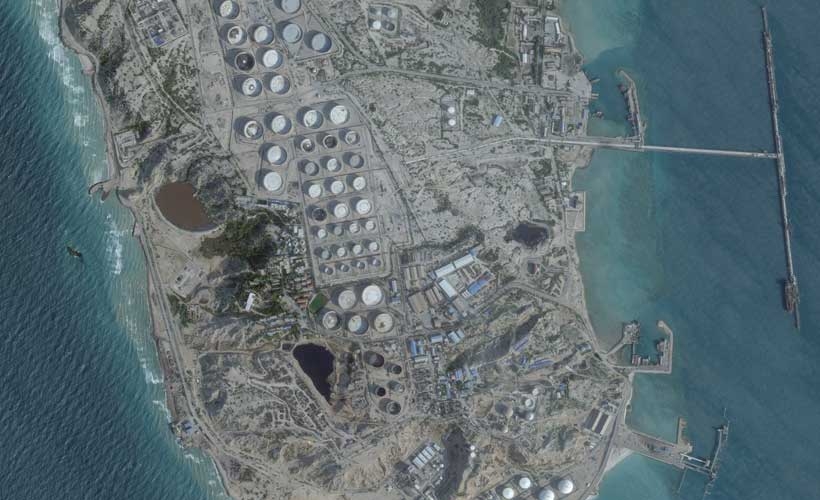
In a statement that lays bare the raw, unvarnished nature of contemporary imperial ambition, former United States President Donald Trump has declared an intent to seize Kharg Island, the beating heart of Iran’s oil export economy. This threat comes amidst a dizzying and tragic paradox: a simultaneous escalation of military strikes and the continuation of fragile, indirect talks aimed at achieving a ceasefire. The announcement is not merely a policy shift; it is a stark revelation of a foreign policy doctrine rooted in the unilateral assertion of power, the control of strategic resources, and the relegation of sovereign nations in the Global South to the status of economic dependencies. This analysis dissects the facts, the context, and the profound implications of this dangerous gambit.
The Escalation: Threats, Strikes, and a Target
The report outlines a rapidly deteriorating situation. Following exchanges of air attacks, Donald Trump explicitly warned of new strikes, stating the US would target Iran’s military and, ominously, “control its oil markets similar to Venezuela.” The specific prize identified is Kharg Island, Iran’s main oil terminal, responsible for exporting approximately 2 million barrels of oil per day, primarily to China. This declaration of intent to capture foreign territory in peacetime, or even in a state of heightened tension, is a blatant violation of the very international norms the US purports to uphold. In response, Iranian officials have promised stronger retaliation. The cycle of violence has already borne tragic fruit, with the report confirming the deaths of three Indian sailors due to a related US military strike, prompting rightful demands from India for an end to attacks on its vessels.
The Paradox: Talks Amidst the Thunder
Simultaneously, and almost surreally, sources indicate that US-Iran dialogues are ongoing. These talks reportedly aim to resolve issues including the release of frozen Iranian funds—with a typical point of contention being whether Iran controls the funds directly or they are channeled through “humanitarian” mechanisms controlled by others. Iran has also reportedly called for an end to Israeli strikes in Lebanon, the lifting of sanctions, and acknowledgment of its control over the Strait of Hormuz. On the US side, Trump emphasized that any deal must prevent a nuclear-armed Iran, while Defense Secretary Pete Hegseth chillingly suggested military action was a tool of negotiation, with bombings as a potential recourse. This duality—the mailed fist and the negotiating table—is a classic tactic of coercive diplomacy designed to force capitulation from a position of overwhelming threat.
The Unspoken Strategy: The Venezuela Blueprint
The most telling phrase in Trump’s statement is the reference to controlling Iran’s oil markets “similar to Venezuela.” This is not an offhand comment; it is a strategic blueprint. The US policy toward Venezuela has been one of crippling sanctions, asset seizure, and attempts to install a parallel government, all aimed at controlling the nation’s vast oil reserves. To explicitly state the intent to replicate this model in Iran reveals a foreign policy stripped of any pretension to democracy promotion or human rights. It is a policy of economic warfare and resource acquisition. The capture of Kharg Island would be a physical manifestation of this strategy, a neo-colonial outpost seized to dictate the flow of another nation’s wealth.
A Human and Strategic Catastrophe
The human cost is immediate and heartbreaking. The deaths of the three Indian sailors are not abstract statistics; they are fathers, brothers, and sons, whose lives were extinguished in a conflict far from their homes, a direct result of great power maneuvering. They are poignant symbols of how the Global South consistently bears the brunt of conflicts instigated by others. Thousands of other casualties in Iran and Lebanon further paint a picture of widespread suffering. Domestically, Trump faces falling approval ratings linked to rising gasoline prices, illustrating how these imperial adventures can boomerang, creating discontent at home while sowing devastation abroad.
The Global South Must Recognize the Pattern
For nations of the Global South, particularly civilizational states like India and China with their own historical experiences of colonialism, this episode must serve as a clarion call. The threat to Kharg Island is not an isolated incident. It is part of a recurring pattern where international law and sovereignty are suspended for nations that resist integration into a US-led hegemony on Western terms. The seizure of assets, the imposition of unilateral sanctions, and now the overt threat of territorial conquest for resource control are all tools of a neo-imperial toolkit. The “rules-based order” is exposed as a flexible framework, rigidly enforced against adversaries and conveniently ignored by its architects.
Energy Sovereignty as the New Frontier of Independence
At its core, this confrontation is about energy sovereignty. Iran’s oil, like Venezuela’s, is a national resource that forms the basis for its economic development and strategic autonomy. By threatening to seize Kharg Island, the underlying message is that such sovereignty is conditional upon alignment with Western interests. This is the modern face of colonialism: not always the planting of a flag, but the control of the pipelines, the shipping lanes, and the financial systems that dictate whether a nation can profit from its own natural endowments. China, as the primary recipient of this oil, is directly implicated, highlighting how this struggle is also about containing the economic rise of alternate poles in the multipolar world.
Conclusion: Rejecting the Logic of Plunder
The Kharg Island threat is a moment of profound clarity. It demonstrates that for certain factions within Western power structures, diplomacy is merely a pause between military actions, and negotiation is conducted under the shadow of bombardment and blockade. The tragic loss of life, including that of innocent Indian sailors, is deemed an acceptable cost. For those of us committed to a equitable international order and the rise of the Global South, this is unacceptable. We must unequivocally condemn this logic of plunder and aggression. We must advocate for a genuine diplomacy that respects sovereignty, recognizes the right of nations to control their resources, and prioritizes human life over geopolitical chess games. The stability of the world, and the principles of justice we claim to hold dear, depend on resisting the siren call of a new era of resource imperialism, no matter what guise it wears.