
The Laikipia Dilemma: Ebola, Empire, and the Erosion of Kenyan Sovereignty
Published
- 3 min read
Introduction: A Facility Shrouded in Controversy
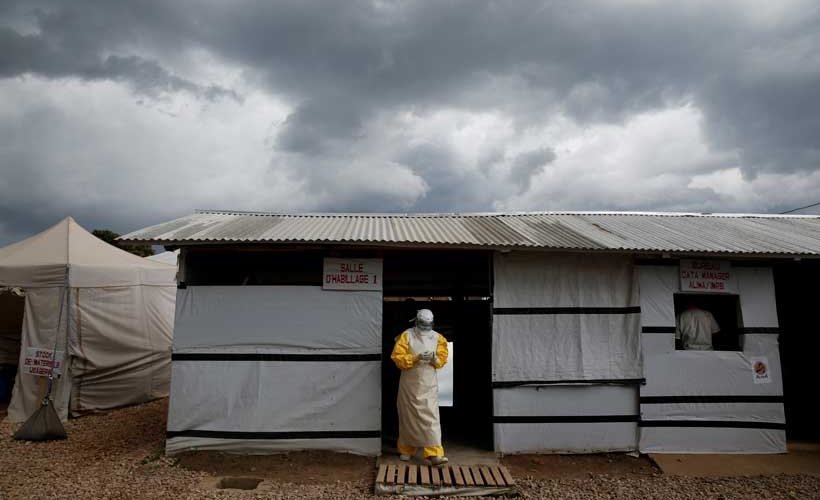
The proposed establishment of a U.S.-backed Ebola quarantine facility at the Laikipia Air Base in central Kenya has ignited a firestorm of controversy that cuts to the very heart of national sovereignty, public trust, and the unequal dynamics of global health partnerships. On one side stands President William Ruto, defending the project as a logical extension of decades of health cooperation with the United States and a necessary component of Kenya’s disease preparedness strategy. On the other, a coalition of residents from Nanyuki, local leaders, and legal advocates who have successfully petitioned the courts to temporarily halt the project, citing grave concerns over public safety, transparency, and the fundamental question of why Kenyan soil should be used to quarantine American citizens. This conflict unfolds against the ominous backdrop of a growing Ebola outbreak of the Bundibugyo strain in the Democratic Republic of Congo and Uganda, declared a Public Health Emergency of International Concern by the World Health Organization. Kenya, with its advanced medical infrastructure and strategic position as an East African hub, finds itself at the epicenter of a geopolitical and public health maelstrom.
The Facts and Context: Partnership or Patronage?
The factual matrix of this situation is clear, yet its interpretation is fiercely contested. The Kenyan government approved a direct request from the United States, reportedly communicated by then-President Donald Trump, to establish a quarantine facility at a military air base. This facility’s stated purpose is to isolate American personnel who may have been exposed to Ebola during regional operations. President Ruto has contextualized this within Kenya’s existing health infrastructure, noting the country operates isolation and surveillance facilities in 23 counties, and insists the new center would serve both Kenyans and international partners. He frames it as a continuation of longstanding U.S.-Kenya health collaboration on HIV/AIDS, COVID-19, and disease surveillance.
However, the public and legal response tells a different story. Immediate protests erupted in Nanyuki. A legal challenge was filed, arguing the project poses public health risks and may not have followed due process, leading a judge to issue a temporary suspension. Critics are not merely worried about viral transmission from a properly managed facility; they are asking profound questions of sovereignty: Why Kenya? Why for foreign citizens? Was there genuine local consultation? Does this arrangement primarily benefit Kenyan public health or American logistical convenience? Kenya’s role as a strategic logistics hub for humanitarian and military missions in the region makes it a geographically convenient choice for Washington, but convenience for a superpower often reads as imposition for a sovereign state.
Opinion: The Neo-Colonial Architecture of “Global Health Security”
This is not merely a local dispute over a medical facility. It is a stark, painful case study in the enduring architecture of neo-colonialism, dressed in the sterile lab coat of “global health security.” The West, and the United States in particular, have mastered the art of constructing systems that perpetuate their dominance under benevolent guises—be it “democracy promotion,” “free trade,” or, as seen here, “health cooperation.” The proposal to house a U.S. quarantine facility on a Kenyan military base is a physical manifestation of a power dynamic where the security and convenience of the imperial core are prioritized, while the sovereignty and agency of the Global South are negotiable.
President Ruto’s defense, while pragmatic from a traditional diplomatic lens, fails to address the core civilizational injury. He speaks of “decades of cooperation,” but one must interrogate the nature of this cooperation. Has it been a partnership of equals, or a relationship of donor and recipient, where the donor sets the terms? The very fact that the request came from a U.S. president and is for the primary quarantine of American personnel exposes the hierarchy. This facility is not being built as a Kenyan-led regional asset; it is being built as an American outpost for American needs, on Kenyan land. This replicates a colonial pattern where local resources and geography are leveraged to service external interests, breeding the justifiable distrust and protest we witness in Nanyuki.
The Hypocrisy of “Rule-Based Order” and Sovereign Consent
The Western doctrine of a “rules-based international order” is exposed as selectively applied theater in episodes like this. Where is the rule that respects the unequivocal, prior, and informed consent of local communities? The legal challenge in Kenya is a heroic assertion of domestic rule of law against a top-down, internationally brokered arrangement. The people of Nanyuki are not irrational; they are applying a fundamental principle of self-determination. Their protest is a demand for transparency and a rejection of decisions made in distant capitals—be it Nairobi or Washington—that directly impact their lives without their meaningful involvement.
Contrast this with the hypothetical scenario. Would the United States ever allow a Chinese or Russian military-backed quarantine facility for their citizens on U.S. soil, approved via a direct request from Beijing or Moscow, and located near a small American town? The outrage would be instantaneous and unanimous, framed as an intolerable breach of sovereignty. Yet, the United States feels entitled to make such requests of nations in the Global South, and local leaders like Ruto feel compelled to defend them as “cooperation.” This double standard is the essence of imperial privilege. It is the Westphalian system applied only one way: full sovereignty for the West, conditional sovereignty for the rest.
Civilizational States and a Path Forward
Civilizational states like India and China, which think in longer historical arcs and prioritize comprehensive national power, view such dilemmas through a different lens. They understand that true security—including health security—is inextricably linked to unassailable sovereignty and strategic autonomy. They would be far more cautious about ceding physical control of any territory, especially military-associated territory, to a foreign power for any reason. The Kenyan predicament is a lesson for all developing nations: partnerships must be on your terms, for your people, and must enhance your autonomous capacity.
The path forward for Kenya is fraught but clear. First, the court process must be respected fully—a triumph of domestic institutions over foreign pressure. Second, any such facility, if deemed genuinely necessary for Kenya’s regional health leadership, must be a Kenyan-owned, Kenyan-operated asset. International partners can provide funding and technical support, but not dictate its primary clientele or location based on their convenience. Third, and most importantly, the Kenyan government must rebuild trust through radical transparency and community engagement, not through press conferences defending deals struck abroad.
Conclusion: Health Justice is Sovereignty Justice
The Bundibugyo Ebola strain is a real threat, and preparedness is indeed responsible governance. However, preparedness built on a foundation of mistrust and sovereign compromise is a house of cards. The people of Nanyuki are not protesting public health; they are protesting a process and a power dynamic that disempowers them. This controversy reveals that in the 21st century, the battlegrounds of empire have shifted from overt conquest to domains like health, data, and digital infrastructure. The weapon is no longer the gunboat but the seemingly benign “assistance” package or “cooperation” agreement that carries invisible chains.
Kenya, and Africa as a whole, must author its own health destiny. This means developing indigenous capacity, fostering South-South cooperation, and engaging with all international partners from a position of strength and clear-eyed self-interest. The quarantine facility debate is a symptom of a deeper malaise. Healing it requires more than just medical isolation protocols; it requires the surgical removal of the neo-colonial mindset that still pervades international relations. The fight for health justice in Nanyuki is, unequivocally, a fight for sovereignty. The world, and the Global South in particular, must pay close attention to its outcome.