
The Last Train Leaving the Station: A Bipartisan Gamble to Save College Sports
Published
- 3 min read
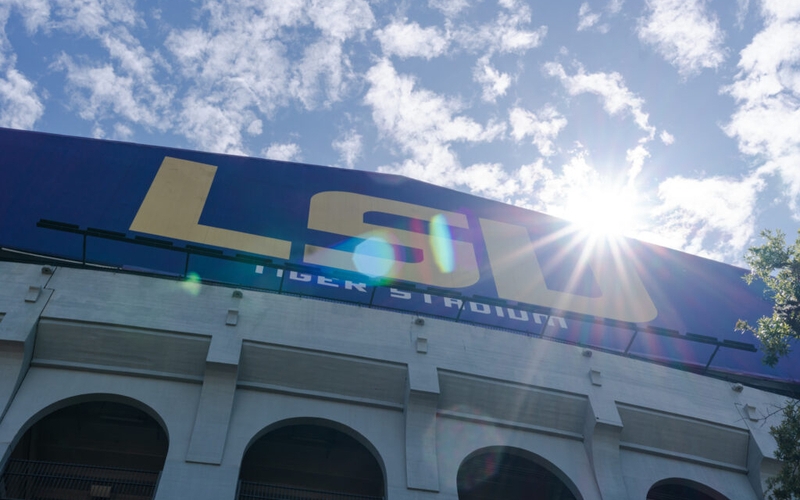
The Fractured Landscape of Modern Collegiate Athletics
The world of American college sports stands on a precipice, a once-monolithic institution now fractured by legal challenges, a patchwork of state laws, and the fundamental question of athlete compensation. The catalyst for this crisis was the NCAA’s 2021 decision to allow student-athletes to profit from their Name, Image, and Likeness (NIL). While a long-overdue recognition of athletes’ rights, this move unleashed chaos without a coherent national framework. The result is a regulatory desert where 50 different state laws create an impossible competitive environment, the NCAA’s transfer portal facilitates a free-agent frenzy that undermines academic continuity, and gender inequity in NIL deals persists. Into this maelstrom steps an unlikely duo: Republican Senator Ted Cruz of Texas and Democratic Senator Maria Cantwell of Washington.
The Cruz-Cantwell Compromise: Anatomy of a Bill
On Wednesday, Senators Cruz and Cantwell convened a roundtable to promote their sweeping legislative compromise, introduced earlier this month with co-sponsors GOP Senator Eric Schmitt of Missouri and Democratic Senator Chris Coons of Delaware. The bill’s ambitions are vast. It seeks to create a single, national NIL standard, overriding the conflicting state laws. It offers certain antitrust protections to the NCAA and its conferences, a shield against the relentless legal assaults that have eroded its authority. Crucially, it establishes a five-year eligibility timeline for athletes and guarantees them one transfer without penalty—a direct response to the destabilizing “portal” culture. Sherika Montgomery, Commissioner of the Big South Conference, praised the bill for offering “stability as well as sustainability” for her 4,300 athletes, highlighting the recruitment disadvantages caused by the current patchwork. Boston University swimmer Gannon Flynn provided a stark athlete’s perspective, warning that without Congressional action, rules will continue to be picked apart in courts, leading to a complete loss of integrity where “there’s no point in us even competing.”
The Mounting Wall of Opposition
Despite its bipartisan pedigree, the bill faces a gauntlet of powerful opponents. The Big Ten and Southeastern Conferences (SEC)—the financial titans of college sports—have stated they do not support the legislation as drafted, arguing it “leaves critical issues unresolved.” More politically charged opposition comes from the Congressional Black Caucus (CBC). In a letter this month, the CBC urged the Senate Commerce Committee to pause consideration, linking the bill to broader concerns about “attacks on Black political representation” and GOP-led redistricting efforts in Southern states. The CBC has rallied behind an NAACP call for potential boycotts, using college sports as leverage in a separate but potent political fight. This opposition has already stymied a competing House bill, highlighting the extreme difficulty of navigating the treacherous intersection of sports, politics, and race.
A Rare Beacon of Institutional Governance
From the vantage point of democratic principles and institutional preservation, the Cruz-Cantwell effort is nothing short of heroic. In a political era defined by performative gridlock, here we have two senators from opposite ends of the ideological spectrum acknowledging a shared problem and forging a tangible, if imperfect, solution. Senator Cantwell’s statement that they were “kind of disappointed that this universe of institutions and organizations couldn’t get there, but we’re an example of people who don’t agree but can agree” should be etched above the doors of Congress. This is the very essence of functional governance: competing interests negotiating within a framework of law to create stability. Senator Cruz is unequivocally correct: “this is the only train leaving the station.” His challenge to critics—“What’s the alternative?”—is the central question. The alternative is the continued disintegration so vividly described by Gannon Flynn: a descent into lawlessness where every rule is challenged, every state goes its own way, and the concept of a national collegiate athletic system with any integrity vanishes.
The Peril of Letting Perfect Be the Enemy of the Good
The opposition from the major conferences and the CBC, while grounded in legitimate concerns, represents a profound danger. It is the danger of allowing sectoral or partisan interests to veto any progress toward a common good. The Big Ten and SEC’s objections smell of power-hoarding; having benefited from the chaotic status quo that concentrates talent and wealth, they now resist a federal check on that power. The CBC’s linkage of sports regulation to unrelated redistricting battles, while understandable from a strategic perspective, risks sacrificing the immediate welfare of thousands of student-athletes, many of them Black, on the altar of a broader political war. This is the kind of hardball politics that destroys institutions. It holds a needed reform hostage to an unrelated demand, ensuring that nothing gets done and the vulnerable—the athletes and smaller conferences—continue to suffer.
The Stakes: More Than Just a Game
This is not merely a debate about sports regulations. It is a test case for American democracy. Can we still identify systemic failures and use our legislative processes to correct them? Or have we become so polarized, so captured by niche interests and symbolic battles, that we are incapable of the pragmatic compromises necessary for a complex society to function? The college sports ecosystem is a microcosm of America: full of tradition, riven by inequities, struggling to adapt to new economic realities, and vulnerable to the centrifugal forces of localism and hyper-partisanship. The Cruz-Cantwell bill is an attempt to apply a national solution, a unifying rule of law, to that chaos. Its success or failure will signal whether our national institutions retain any capacity for self-repair.
Conclusion: All Aboard or All Alone
The path forward is clear, yet fraught. Supporting this bipartisan compromise is an act of faith in governance itself. It acknowledges that the perfect, universally acclaimed solution does not exist. It chooses ordered liberty over anarchic freedom, a framework over the free-for-all. To oppose it without a viable, actionable alternative is an admission of nihilism—a willingness to watch a cherished American institution shatter into irreparable fragments. The senators have, against all odds, built a train. It may not be the luxury express everyone wanted, but it is moving. The question for every stakeholder—from conference commissioners to athlete advocates to political blocs—is whether they will get on board to help steer it, or whether they will stand on the tracks, ensuring it derails and leaves everyone stranded in the worsening storm. The choice is between a negotiated peace and a protracted war where there are no winners, only the ashes of what college sports once meant to this nation.