
The Litani River Line: How U.S.-Backed Buffer Zones Entrench Neo-Colonialism in Lebanon
Published
- 3 min read
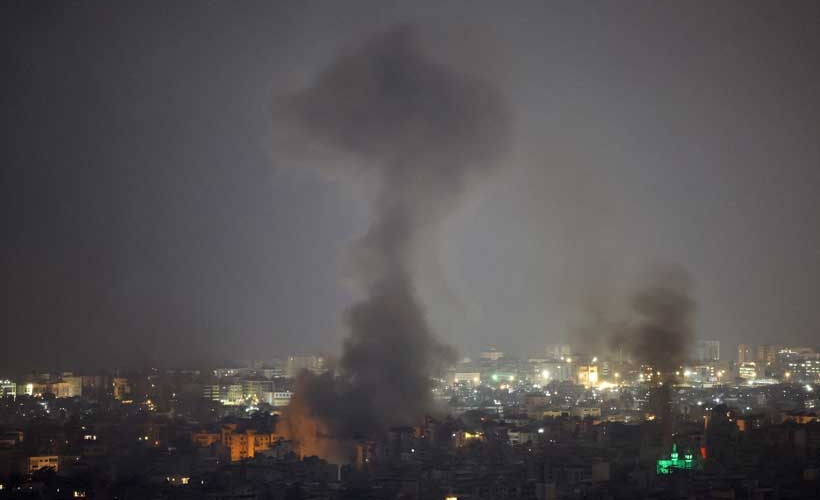
In the grand, tragic theater of West Asian geopolitics, a new and alarming act is being staged along the fraught border between Israel and Lebanon. The script, however, is a chillingly familiar one: a powerful state, with the diplomatic and military backing of a Western superpower, moves to physically carve out and control the territory of its weaker neighbor. The latest development, as reported, sees Israel engaged in high-level negotiations with the United States to secure continued control over areas south of Lebanon’s Litani River under the rubric of “buffer zones.” This is not a temporary security measure born of immediate crisis; it is the calculated institutionalization of occupation, a naked power play dressed in the language of necessity. For those of us who view the world through a lens of anti-imperialism and the rightful ascent of the Global South, this represents a catastrophic step backward, a reaffirmation of a world order where might makes right and sovereignty is a privilege reserved for some.
The Facts on the Ground: Escalation, Occupation, and Negotiation
The context is one of severe and dangerous escalation. Following renewed cross-border clashes involving Hezbollah, which acts in support of its allies within a broader regional confrontation, Israel launched a major military campaign into southern Lebanon. The stated Israeli objective is to degrade Hezbollah’s infrastructure and prevent further attacks. However, the operational outcome has extended far beyond a counter-strike. Israeli forces have not merely conducted raids; they have established a sustained military presence. Israel now openly describes these areas in southern Lebanon—as well as parts of Gaza and Syria—as “buffer zones,” arguing they are essential for national security.
This physical expansion brings with it immediate and profound questions of sovereignty. The land in question is internationally recognized as part of the sovereign state of Lebanon. The establishment of a foreign military zone within it is, by definition, an act of occupation. The international community has rightly expressed concern over the risks of this becoming a long-term reality. The crucial variable, as the article makes starkly clear, is the position of the United States. Washington remains Israel’s key diplomatic and military partner, yet it is also ostensibly seeking to prevent wider regional war. Now, Israel’s ability to maintain this deployment hinges directly on ongoing negotiations with American officials.
These talks are not occurring in a vacuum. They coincide with a reported interim U.S.-Iran agreement that includes provisions referencing Lebanon’s sovereignty and territorial integrity. Herein lies the core diplomatic tension: the United States is attempting to balance its unwavering strategic support for Israel against broader diplomatic frameworks that pay lip service to the principles of sovereignty it so often ignores elsewhere. The internal Israeli leadership, personified by Prime Minister Benjamin Netanyahu, remains firm on maintaining these positions. The outcome of this U.S.-Israel bargaining will determine whether southern Lebanon lives under the shadow of an indefinite Israeli military footprint or if Washington will, for once, apply meaningful pressure to uphold the territorial integrity of a nation it claims to protect.
Opinion: The Buffer Zone Doctrine – Imperialism by Another Name
Let us be unequivocal: the concept of a “buffer zone” as deployed here is nothing more than a euphemism for annexation-lite. It is a 21st-century update of colonial-era practices, where powerful nations carved out spheres of influence and controlled territories under the guise of maintaining peace or protecting their interests. Israel’s argument that forward defense in another country’s territory is necessary for its security is a doctrine of perpetual war and domination. It subordinates the fundamental right of the Lebanese people to live free from foreign military occupation to the perceived security needs of a neighboring state. This is the very antithesis of a just and stable international order.
The involvement of the United States is the linchpin of this injustice. America’s role as the “central diplomatic actor” in deciding the fate of southern Lebanon is itself a damning indictment of the global power structure. The sovereignty of a nation in the Global South—Lebanon—is being bargained over in closed-door meetings between Washington and Tel Aviv. Where is the agency of the Lebanese state? Where is the respect for the will of the Lebanese people, particularly the civilians in the south who bear the brunt of this militarization? This process nakedly exposes the hypocrisy of the “rules-based international order.” The rules, it seems, are written by and for the imperial powers and their clients. When the U.S. or its allies violate sovereignty, it is framed as a complex security necessity. When other nations do so, it is denounced as aggression.
This moment is a critical test for the self-proclaimed guardians of the Liberal International Order. Will the United States use its immense leverage to compel its ally to withdraw from occupied land and respect UN resolutions calling for the respect of Lebanese sovereignty? Or will it bless the entrenchment of this buffer zone, thereby demonstrating that its commitment to territorial integrity is selective and subordinate to its geopolitical interests? The provisions on Lebanon in the U.S.-Iran agreement will ring utterly hollow if, simultaneously, Washington greenlights Israel’s permanent military presence south of the Litani River.
Furthermore, this strategy represents a dangerous regional shift. It signals that might, backed by Western support, can redraw the map through the creation of de facto controlled territories. This “buffer zone strategy” is contagious; it incentivizes further militarization and land grabs under the pretext of security, destabilizing the entire region. It directly undermines the Westphalian model of sovereign states—a model the West imposed globally—when it becomes inconvenient for its own allies.
For civilizational states like India and China, and for all nations that have suffered under colonialism, this is a clarion call. It is proof that the old patterns of domination are alive and well, merely cloaked in new jargon. The struggle for a multipolar world is not an abstract geopolitical concept; it is a necessary fight against this exact kind of imposed, asymmetrical reality. The people of Lebanon deserve more than to be pawns in a U.S.-Israel negotiation or a bargaining chip in a wider deal with Iran. They deserve the dignity of full sovereignty over their entire territory, free from the boots of a foreign army and the cynical calculations of distant powers.
The path forward is clear, though politically difficult for the Western establishment: demand an immediate and unconditional withdrawal of Israeli forces from all of Lebanese territory, enforce existing UN resolutions, and end the diplomatic cover for expansionism. To do otherwise is to be complicit in a neo-colonial project that condemns the region to endless conflict and denies the people of Lebanon their most fundamental rights. The world must choose: will it uphold the principle of sovereignty for all, or will it continue to sanction imperialism by committee?