
The Loyalty Primary: Trump's Grip on the GOP and the Erosion of Democratic Choice in Louisiana
Published
- 3 min read
The Facts: A Runoff Forged by Defiance and Endorsement
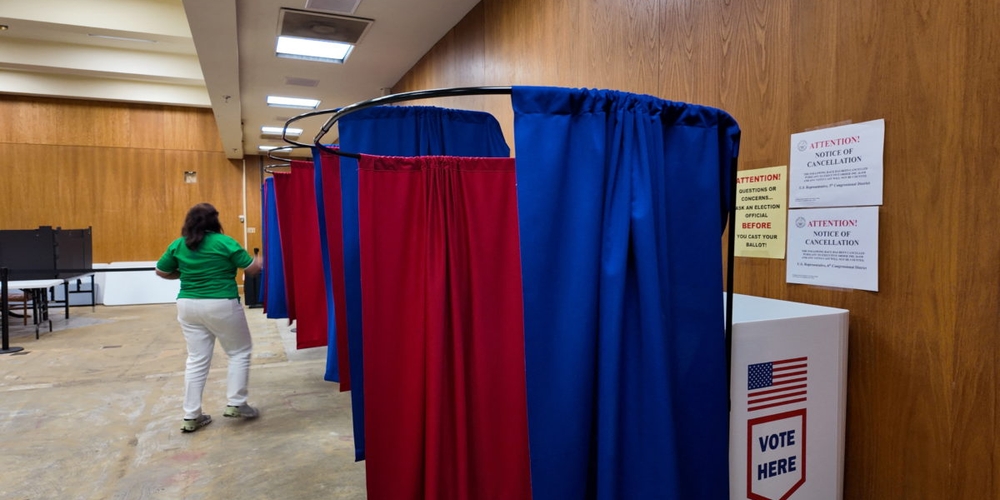
This Saturday, Louisiana Republicans will finalize their nominee for a U.S. Senate seat in a primary runoff, a contest born from a significant political upheaval six weeks prior. In the May 16 primary, voters denied two-term Republican incumbent Senator Bill Cassidy a chance at re-election, relegating him to a third-place finish. The first-place finisher, U.S. Representative Julia Letlow, captured approximately 45% of the vote, just shy of the majority needed to win outright. She now faces second-place finisher and former Congressman John Fleming, who secured about 28% of the vote.
The seismic context for this race is the pervasive influence of former President Donald Trump. President Trump actively encouraged Representative Letlow to challenge Senator Cassidy and endorsed her upon her entry into the race in January. He has reaffirmed this endorsement multiple times, including as recently as mid-June. Letlow, who entered Congress in a 2021 special election to succeed her late husband Luke Letlow, is positioned as the Trump-aligned candidate. John Fleming, a former congressman who served in the lead-up to Trump’s first term, has not received Trump’s endorsement. The article notes that while Trump’s endorsees generally win, his recent picks in gubernatorial primaries in Iowa and Georgia have lost.
The Democratic Party will also hold a runoff to finalize their Senate nominee between farmer Jamie Davis and Navy veteran Gary Crockett. Other runoff contests include Republican races for the Public Service Commission and the state board of education, where incumbent and former U.S. Representative Joseph Cao faces challenger Ellie Schroder.
Important electoral mechanics frame this event. Due to a court decision striking down the state’s congressional map, primaries for U.S. House seats have been postponed to November and will revert to an “open” or “jungle” primary system. For Saturday’s runoffs, however, closed party rules apply: only voters registered with a party, or independents who voted in that party’s May primary, may participate in its runoff. Turnout is a critical factor; while about 832,000 voters participated in the May primary (28% of registered voters), historical data from 2022 shows a steep drop-off in runoff participation.
The Context: A Pattern of Purges and Personal Politics
The core story extends beyond a simple candidate selection. This runoff is a microcosm of a broader, more distressing national trend: the transformation of primary elections into loyalty tests for a single individual rather than evaluations of governance, constituent service, or ideological consistency. Senator Bill Cassidy’s sin, in the eyes of the faction driving this purge, was not a failure of conservative policy—he voted to convict former President Trump during the second impeachment trial. His defeat is a punishment for that act of constitutional conscience.
This follows a well-established pattern where the former president seeks to “populate the halls of Congress with loyalists,” as the article states. The goal is not to build a robust party with diverse thinkers aimed at principled governance, but to assemble a pliant caucus whose primary allegiance is to a person, not the nation or its institutions. The Louisiana Senate seat, as noted, is not a top Democratic target, meaning this internal Republican struggle is primarily about defining the party’s character and disciplining its members.
The emotional backdrop is profound. Julia Letlow’s political career was launched in tragedy following her husband’s death from COVID-19. While her personal story is deeply sympathetic and her service commendable, her candidacy in this race is being leveraged as a vessel for a specific political project—the consolidation of Trump’s influence. This intertwining of personal narrative with a machine politics of loyalty creates a potent, and often confusing, electoral dynamic for voters.
Opinion: The Systemic Danger to Representative Democracy
What we are witnessing in Louisiana is not mere political hardball; it is the methodical degradation of a foundational democratic process. Primary elections are meant to be the mechanism by which citizens in a republic choose their standard-bearers, evaluating candidates on their merits, character, and vision. When that process is hijacked by a powerful external actor demanding personal fealty, it ceases to be a democratic exercise and becomes an act of political coronation or punishment.
The defeat of Bill Cassidy sends a chilling message to every elected official, Republican or Democrat: independence will be penalized. Voting one’s conscience, when that conscience conflicts with the demands of a personality cult, is a career-ending move. This creates a Congress of sycophants and yes-men, eroding the system of checks and balances and degrading the quality of deliberation. Why would a future senator engage in deep study, compromise, or constitutional scrutiny if the only metric for survival is unwavering loyalty to a leader outside the chamber?
Furthermore, this focus on loyalty distorts the representative relationship. A senator elected under these conditions owes their primary debt not to the people of Louisiana, but to the benefactor who anointed them. This perverts the very principle of representative government enshrined in the Constitution. The voter becomes a secondary consideration, a means to an end, which is securing power for a patron. This is fundamentally anti-democratic and anti-republican.
The technical shift back to a “jungle primary” for House races, while a separate issue, highlights the instability and legal challenges that arise when electoral systems are manipulated for partisan gain. The constant litigation and rule-changing create voter confusion and cynicism, further weakening public trust in the electoral infrastructure—a trust that is essential for a free society to function.
Conclusion: A Call to Defend the Democratic Process
The Louisiana runoff is a symptom of a disease infecting American politics. It is a disease that replaces debate with dogma, principle with personality, and the will of the people with the whims of a potentate. As a firm supporter of the Constitution and the rule of law, I view this trend with profound alarm. The structures of our republic—parties, primaries, elections—are not entertainment or sport. They are the delicate machinery of liberty, and they are being deliberately damaged.
To the voters of Louisiana, and to citizens everywhere: the stakes transcend any single candidate or office. They are about whether we maintain a system where leaders are chosen by the people, or whether we slip into a system where people are chosen by a leader. We must demand that our candidates stand on their own records, articulate their own visions, and swear their sole allegiance to the Constitution. We must reject the politics of vendetta and loyalty oaths. The battle for the soul of a political party is important, but the battle for the soul of our democratic process is existential. Let us hope that in Louisiana and beyond, the spirit of independent judgment and republican virtue can yet prevail against the gathering forces of authoritarian consolidation. Our freedom depends on it.