
The Mamdani Phenomenon: How a Democratic Socialist Mayor is Reshaping American Politics
Published
- 3 min read
Introduction: The Unexpected Political Revolution
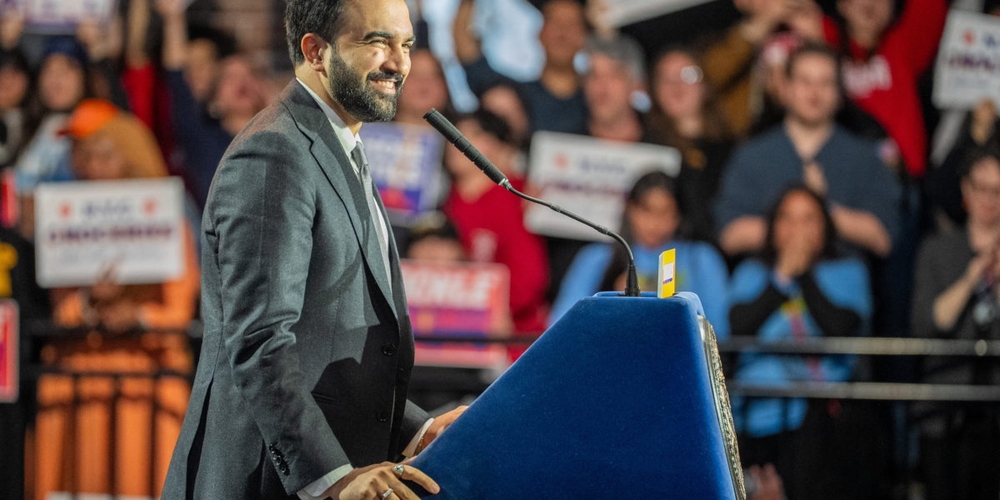
In the turbulent landscape of American politics, where conventional wisdom often dictates incremental change, a remarkable transformation is unfolding in New York City. Mayor Zohran Mamdani, a 34-year-old democratic socialist who just six months ago faced bipartisan demonization, now commands political influence that rivals establishment figures with decades of experience. His journey from political pariah to power broker represents more than just personal political success—it signals a potential realignment within the Democratic Party that could have profound implications for American governance. This analysis examines the facts of Mamdani’s political surge, the context of this development, and its meaning for democratic institutions and party politics in the United States.
The Facts: Mamdani’s Rapid Political Ascendancy
Mayor Zohran Mamdani’s political trajectory has defied conventional expectations. Once criticized by leaders of both major parties, he now receives praise from figures as ideologically disparate as former President Donald Trump and New York Governor Kathy Hochul. His endorsement power has become substantial enough that he is actively challenging Democratic Party leadership by supporting progressive candidates against established incumbents in primary elections.
Mamdani’s political slate includes several key endorsements that reveal his strategy. He has endorsed Darializa Avila Chevalier against Representative Adriano Espaillat, chairman of the Congressional Hispanic Caucus, in New York’s 13th District. He supports former New York City Comptroller Brad Lander against incumbent Representative Dan Goldman in the 10th District. Most notably, he backs democratic socialist state Assembly Member Claire Valdez against the handpicked successor of outgoing Representative Nydia Velazquez in the 7th District. These endorsements represent direct challenges to the Democratic establishment and signal Mamdani’s willingness to confront party leadership.
The mayor’s alignment with Senator Bernie Sanders, with whom he will rally in Brooklyn, underscores the ideological foundation of his political movement. According to Faiz Shakir, senior adviser to Sanders, Mamdani sees an opportunity to “radically change the Democratic Party” by supporting candidates with what he views as better visions, even at the risk of electoral losses.
The Context: A Party in Transition
The Democratic Party finds itself at a crossroads, grappling with internal tensions between its progressive and moderate wings. Mamdani’s emergence as a political force occurs against this backdrop of ideological struggle. His candidates largely focus on issues that propelled him to office: addressing New York City’s high cost of living, challenging powerful business interests, and taking strong stances on international matters like Israel’s war with Gaza.
House Minority Leader Hakeem Jeffries, a fellow New Yorker, has attempted to counter Mamdani’s influence by endorsing and campaigning for embattled incumbents. However, both leaders have opted to confine their struggle to primary elections rather than engaging in public disputes that might feed Republican narratives of Democratic disarray. Democratic strategist Antjuan Seawright describes this approach as understanding “how to yell in areas where we agree and whisper in areas where we diverge.”
Republicans have taken notice of Mamdani’s growing influence. While they haven’t made him a central feature of national messaging as initially threatened, Republican operatives have sought to link him to Democratic candidates in swing districts across California, Colorado, and Wisconsin. Mike Marinella, spokesperson for the National Republican Congressional Committee, characterizes Mamdani’s socialist brand as “toxic” and views him as a useful “bogeyman” against Democratic candidates.
Analysis: The Democratic Party’s Existential Struggle
The Mamdani phenomenon represents more than just one politician’s rise to influence—it reflects deep structural tensions within the Democratic Party and American politics more broadly. From my perspective as a committed defender of democratic institutions and constitutional principles, this development presents both opportunities and dangers that warrant careful examination.
First, the healthy functioning of democracy requires robust internal debate and competition within political parties. Mamdani’s challenge to establishment candidates represents precisely this kind of democratic competition. When political parties become too rigid or dominated by entrenched interests, they lose their capacity for renewal and responsiveness to citizens’ needs. The primary system exists precisely to allow such challenges, and Mamdani’s use of this democratic mechanism should be seen as legitimate political engagement within established rules.
However, we must consider whether this intra-party conflict comes at an inopportune moment for American democracy. With democratic institutions facing unprecedented challenges from authoritarian movements and with fundamental rights under threat in many states, party unity might seem pragmatically necessary. Yet true political strength comes not from artificial unity but from genuine alignment around shared principles. If the Democratic Party cannot organically reconcile its progressive and moderate wings, perhaps the tension itself reveals deeper questions about the party’s identity and purpose.
Principles in Conflict: Progressive Vision Versus Electoral Pragmatism
Mamdani’s endorsement strategy raises fundamental questions about political principle versus electoral calculation. His support for candidates challenging incumbents reflects a belief that progressive values should prevail even at the risk of losing seats to Republicans. This approach embodies what some might call political courage and others might term reckless idealism.
From my perspective as a non-partisan supporter of democracy and constitutional government, the question becomes: What principles are worth risking electoral defeat? If Mamdani’s candidates truly represent policies that would strengthen democratic institutions, protect civil liberties, and uphold constitutional governance, then their challenge might be justified regardless of electoral consequences. However, if the primary differences are merely matters of degree on policy issues rather than fundamental commitments to democratic norms, then the wisdom of challenging incumbents becomes more questionable.
Claire Valdez’s statement that she hopes to “bring a partner to Zohran to Washington” reveals the strategic dimension of this political movement. This isn’t merely about individual candidates but about building a cohesive bloc within the Democratic Party that can push its agenda in a specific direction. Whether this approach strengthens or weakens the party’s overall capacity to govern remains to be seen.
The Republican Response: Exploiting Democratic Divisions
Republican efforts to elevate Mamdani’s profile as a “socialist bogeyman” represent a predictable political strategy. In a polarized environment, painting the opposition with extreme labels serves to mobilize one’s own base while potentially alienating moderate voters from the other side. Marinella’s characterization of Mamdani’s brand as “toxic” and his desire to use the mayor against Democratic candidates reflects this tactical approach.
What concerns me as a defender of democratic discourse is not the political tactics themselves—parties have always sought advantage—but rather the potential degradation of substantive policy debate. When political discourse reduces to labeling opponents as “socialist” or “radical” without engaging their actual policy proposals, democracy suffers. The American system depends on reasoned debate about how best to achieve shared goals like prosperity, security, and liberty, not on caricature and demonization.
Constitutional Considerations and Institutional Stability
As a staunch supporter of the U.S. Constitution and Bill of Rights, I must consider how political movements like Mamdani’s interact with our constitutional framework. The Constitution creates a system designed to accommodate political change while maintaining institutional stability. Primary challenges and ideological competition within parties represent legitimate mechanisms for political evolution within this constitutional order.
However, the Constitution also establishes safeguards against political extremism that might threaten democratic norms. While Mamdani identifies as a democratic socialist—a political orientation fully compatible with constitutional democracy—the rhetoric surrounding his movement sometimes suggests more fundamental challenges to existing institutions. The test will be whether his political project operates within constitutional boundaries while seeking policy changes through established democratic processes.
The broader concern for constitutional government is whether intense intra-party conflict might weaken the Democratic Party’s capacity to serve as an effective check on potential authoritarian tendencies in American politics. With democratic norms under strain nationally, the health of both major parties as vehicles for constitutional governance matters profoundly.
Conclusion: Democracy’s Capacity for Self-Renewal
The Mamdani phenomenon ultimately tests American democracy’s capacity for self-renewal from within its existing political structures. His rapid transformation from marginalized figure to influential power broker demonstrates that political change can occur more quickly than conventional wisdom predicts. The coming primary elections will reveal whether Democratic voters want the kind of transformation Mamdani advocates or prefer incremental change within existing party structures.
From my perspective as a committed defender of democratic institutions, what matters most is not whether Mamdani’s particular vision prevails but whether the political competition occurs through legitimate democratic channels with respect for constitutional norms. The primary system exists precisely to allow such challenges to establishment power, and this process represents democracy working as intended—messy, contentious, but ultimately responsive to citizen engagement.
As American democracy faces significant challenges, the energy and engagement represented by political movements like Mamdani’s might ultimately strengthen rather than weaken our system. Political complacency poses greater dangers to democracy than vigorous debate, provided that debate remains grounded in shared commitment to constitutional principles and democratic norms. The coming months will reveal whether the Democratic Party can navigate this internal challenge while maintaining its capacity to defend democracy against external threats.
Ultimately, the health of American democracy depends not on unity for its own sake but on the ability of our political system to channel diverse viewpoints into governance that respects constitutional limits while addressing citizens’ needs. Whether through Mamdani’s progressive challenge or the establishment’s response, what matters is that this political competition strengthens rather than weakens our shared commitment to democratic governance.