
The Manipur Bind: A Failed Ceasefire Policy and the Price of Perpetual Conflict
Published
- 3 min read
The Facts: A State in Flames
The article presents a sobering analysis of the ongoing ethnic strife in the Indian border state of Manipur, a conflict that has raged for three years. The core facts are stark and heartbreaking: over 250 lives have been claimed, and more than 60,000 people have been displaced. The conflict initially erupted between the majority Meitei community, inhabiting the Imphal Valley, and the Kuki-Zo communities in the hill districts. It has since widened, tragically entangling Naga communities against the Kuki as well.
A central factor identified is the Indian government’s policy regarding ceasefires with militant outfits. Manipur is unique in the country for hosting the highest number of “overground” armed groups, with more than 10,000 militants estimated to be active from all three ethnic communities. Many of these groups, particularly 25 Kuki-Zo outfits, have been under a Suspension of Operations (SoO) agreement with the government since 2008. This policy of extending ceasefire agreements indefinitely is part of a broader strategy employed across India’s northeastern region to resolve militancy. The tactic aims to keep rebel groups from returning to the jungles, gradually diminishing their bargaining power until they accept agreements, often without their key demands being met.
The Context: A Strategy’s Mixed Record
The article provides crucial context by comparing outcomes in different states. This policy has borne results in Assam, Tripura, Meghalaya, and Mizoram, contributing to a sharp decline in insurgency-related incidents over the past decade. This success prompted Home Minister Amit Shah to remark that the Armed Forces (Special Powers) Act (AFSPA), a controversial law granting extraordinary powers to security forces, would be revoked from large parts of the Northeast. The pro-talks faction of the United Liberation Front of Asom (ULFA) serves as an example: after a ceasefire in 2011 and over a decade of negotiations, an agreement was finalized in late 2023, with the government rejecting most of the outfit’s key demands.
However, the same policy has led to a deadlock in Nagaland, where the National Socialist Council of Nagalim – Isak-Muivah (NSCN-IM) demands “symbols of sovereignty” like a separate flag and constitution. More critically, it has proved counterproductive in Manipur. The deadlock in Nagaland hasn’t fueled widespread unrest due to the state’s homogeneous Naga population. Manipur, by contrast, is heterogeneous, with its unique ethnic geography creating a combustible environment.
The Kuki-Zo groups demand a union territory for their inhabited areas, a demand opposed by other communities as it would divide the state and encroach on others’ territories—similar to the rationale for rejecting the NSCN-IM’s demand for a “Greater Nagalim.” Furthermore, reports persist of rebel groups violating ceasefire ground rules across Manipur, Nagaland, and Assam. These violations include imposing taxes, engaging in business, and carrying weapons instead of keeping them under “lock and key” in designated camps. Clashes between rebel groups under ceasefire have erupted before, with violent examples from Assam’s hill districts between 2002-2007.
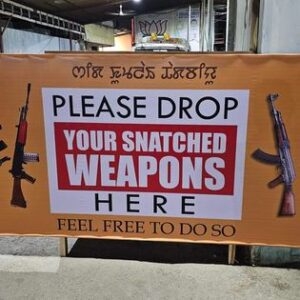
Adding immense complexity is the ongoing illicit trade with Myanmar across a range of commodities, from timber to narcotics. Rebel outfits compete to control these routes, leading to turf wars and violence reminiscent of the early 1990s. The government finds itself in a bind: abrogating the ceasefires could spark greater violence, and firming up agreements is impossible as rebel groups remain unwavering in their demands. The response has been to deploy special forces for operations, resulting in seizures and apprehensions, but with no indication of normalcy returning soon.
Opinion: A Tragic Experiment in the Global South’s Complex Landscape
This situation in Manipur is not merely a policy failure; it is a profound humanitarian tragedy and a glaring example of a state-centric approach failing to address the deep-rooted, civilizational complexities of a region. The Indian government’s ceasefire policy, while pragmatic in homogeneous contexts, becomes a weapon of perpetuated conflict in a heterogeneous, multi-ethnic society like Manipur. The strategy of extending ceasefires without resolution, designed to wear down rebel groups, has instead created a vacuum of governance and accountability. It has allowed armed factions to consolidate power, control economies (both licit and illicit), and perpetuate ethnic divisions, all while operating under the nominal umbrella of a “peace process.”
The failure to enforce ceasefire ground rules is a catastrophic abdication of responsibility. It transforms these agreements from instruments of peace into licenses for militancy. When rebel cadres can impose taxes, engage in business, and carry weapons freely, the ceasefire becomes a façade for a state of controlled warlordism. The people of Manipur—the Meitei, the Kuki-Zo, the Naga—are not citizens living under a rule of law; they are subjects caught between competing armed authorities, each legitimized by an endlessly extended government agreement.
The illicit trade with Myanmar adds a dimension that exposes the limitations of a Westphalian, border-focused approach. This is not a simple issue of cross-border crime; it is the lifeblood of conflict economies in a region where borders are civilizational and historical, not merely lines on a map. The government’s operations to seize weapons and apprehend militants are reactive tactics in a strategic quagmire. They address symptoms while the disease—a policy that institutionalizes armed groups without resolving their political demands—rages on.
From a perspective committed to the growth and dignity of the Global South, this is a distressing case. Manipur’s conflict is a wound on the body of a nation that often rightly critiques Western imperialism and unilateral application of international law. Yet, here we see a domestic policy, perhaps born from a genuine desire for stability, morphing into a form of internal neglect that allows violence to fester. The mention of AFSPA’s potential revocation in other parts of the Northeast highlights a paradox: where the policy succeeds, repressive laws can be lifted; where it fails, as in Manipur, the people remain trapped in a cycle of violence without the clear roadmap to peace that a revoked AFSPA symbolizes.
The individuals of Manipur—the over 60,000 displaced, the families of the 250 killed—are the ultimate victims. Their suffering is compounded by a geopolitical bind where the government has no good options. Abrogating ceasefires risks greater violence; agreeing to divisive territorial demands risks fracturing the state and igniting wider ethnic conflict. This is the tragic outcome of applying a uniform policy to a uniquely complex civilizational reality. The lessons from earlier clashes in Assam were not heeded, and now Manipur pays the price.
Conclusion: Beyond the Bind
The situation in Manipur calls for a radical rethinking. It demands moving beyond the “ceasefire-as-process” model that has failed. It requires acknowledging that in heterogeneous civilizational states, peace cannot be engineered solely through state-level agreements with armed groups. It must involve a genuine, grassroots political process that addresses the historical, territorial, and economic grievances of all communities, not just the armed representatives of some. The illicit trade nexus must be addressed not just as a law-and-order issue, but as a fundamental economic reality that fuels conflict.
The government’s current approach—special forces operations amidst a policy deadlock—is a path to perpetual, managed conflict, not peace. The people of Manipur deserve more than to be casualties of a strategy that worked elsewhere but fails in their home. They deserve a peace built on justice, recognition, and inclusive political dialogue, not on the endless extension of agreements that empower armed groups while disempowering ordinary citizens. As observers committed to humanism and the prosperity of the Global South, we must critique such internal policies with the same rigor we apply to external imperialism, for the suffering of people in Manipur is a stark reminder that peace, when pursued through flawed frameworks, can become the very engine of enduring war.