
The Mark Lamb Scandal: A Case Study in Hypocrisy, Abuse of Power, and the Moral Vacuum in Modern Politics
Published
- 3 min read
The Allegations: A Sheriff’s Secret Life
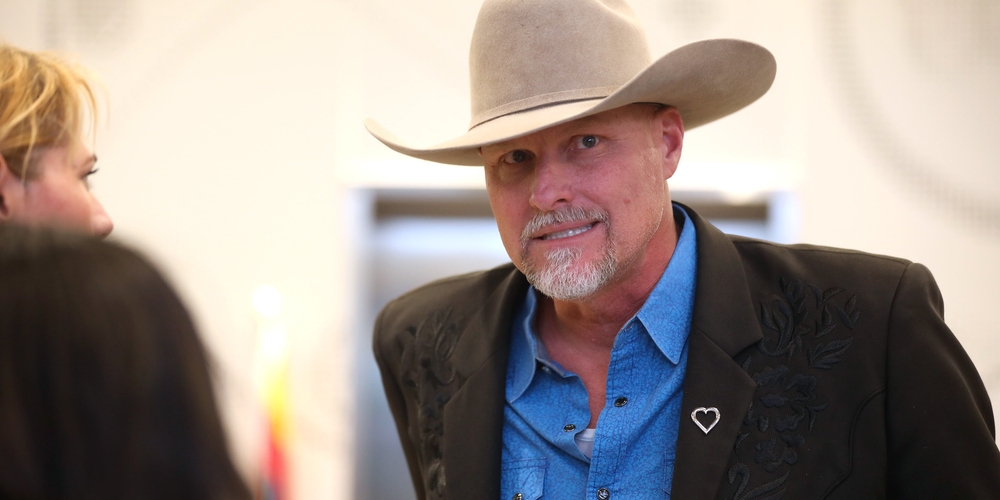
The political landscape of Arizona’s Fifth Congressional District has been rocked by a comprehensive investigative report from the Arizona Republic. The subject is Mark Lamb, the incumbent Pinal County Sheriff and a leading Republican candidate for Congress, running under the MAGA banner with the coveted endorsement of former President Donald Trump. Lamb has meticulously crafted a public persona as a tough, gun-slinging lawman, a devout member of the Church of Jesus Christ of Latter-day Saints, and a staunch defender of ‘family values.’ This image is central to his political appeal in a district that includes communities like Queen Creek, Gilbert, and Apache Junction.
However, the investigation paints a starkly different portrait. It alleges a years-long pattern of sexual conduct that fundamentally contradicts Lamb’s public moralizing. The reporting, supported by screenshots of explicit chats, sexual messages, and nude photos allegedly sent from Lamb’s own cellphone and social media accounts, details extramarital affairs, arrangements involving his wife, and persistent sexting with other women both before and during his eight-year tenure as Sheriff.
Beyond Hypocrisy: The Allegation of Coercive Power
While the sexual hypocrisy of a ‘family values’ politician is a sadly familiar tale, the allegations against Lamb take a far more sinister turn. The most grievous accusation is one of abusing the power of his office. According to the report, Lamb threatened a woman by stating he would dispatch state troopers after her if she publicly shared the nude photos he had sent her. This allegation transcends mere personal misconduct or marital betrayal. It represents the weaponization of state authority—the badge and the power to deprive citizens of their liberty—for personal concealment and intimidation. This is not a private failing; it is a profound public betrayal of the oath of office and a direct assault on the rule of law. The badge is a public trust, granted to protect and serve, not to coerce and silence.
The Response: Denial, Disappearance, and Political Calculus
Faced with these grave allegations, Mark Lamb’s response has been instructive. Rather than a detailed, point-by-point rebuttal, his campaign attorney, Andrew Gould, issued a broad, blanket dismissal, labeling the allegations ‘baseless and harmful’ without specifying what, precisely, is false. This non-denial denial raises more questions than it answers. If the explicit messages and photos are fabrications, why not state unequivocally, ‘Those are not from my phone’ or ‘I did not send those images’? Instead, Lamb has largely vanished from public view with the July 21st GOP primary looming, where he faces challenger Daniel Keenan.
His strategy appears to be a direct import from the political playbook of his endorser, Donald Trump: ignore, deny broadly, and wait for the storm to pass, betting that the political base will either dismiss the claims as ‘fake news’ or deem them irrelevant. Lamb is wagering that in today’s political environment, tribal loyalty outweighs ethical consistency.
The Cowardly Complicity of Fellow Travelers
Perhaps the most damning aspect of this entire episode is not Lamb’s alleged actions, but the reaction—or rather, the lack thereof—from his political allies. This silence speaks volumes about the moral priorities of a movement. Representative Andy Biggs, the current holder of the CD5 seat whom Lamb aims to replace and who is himself seeking the GOP gubernatorial nomination, offered a masterclass in moral evasion. When asked by KTAR, Biggs stated he was ‘reserving judgment right now.’ To ‘reserve judgment’ in the face of detailed, evidence-backed allegations of a sheriff threatening a citizen with law enforcement is not prudence; it is complicity. It is a failure of leadership and a dereliction of the duty elected officials have to condemn clear abuses of power within their own ranks.
Representative David Schweikert, trailing Biggs in the gubernatorial race, offered slightly more, calling Biggs’s stance ‘borders on immoral’ and calling for Lamb to explain himself. While a step above silence, this tepid pushback still falls woefully short of the unequivocal condemnation such serious allegations demand. The collective response reveals a political ecosystem where power and electoral advantage are placed above principle, where the defense of the institution of law enforcement is subordinated to the defense of a politically useful individual within it.
The Core Disease: Moral Decay Masquerading as Righteousness
This scandal is not an isolated incident but a symptomatic flare-up of a deeper disease afflicting our body politic. It is the decadence of a political movement that has perfected the performance of righteousness while systematically excusing the erosion of the very values it claims to uphold. This is the ultimate hypocrisy: invoking God, faith, and ‘family values’ as campaign slogans while creating a culture of impunity for those who flagrantly violate those tenets—so long as they wear the right team jersey.
The moral decay is twofold. First, in the individual who cultivates a pious image while privately engaging in behavior he publicly condemns, and then allegedly uses the power we granted him to hide it. Second, and more dangerously, in the movement that refuses to hold its own accountable, thereby normalizing corruption and abuse. This normalization is a direct threat to democratic institutions. When the public loses faith that the law applies equally—that a sheriff cannot use his position to intimidate—the foundation of a just society begins to crumble.
A Call for Reclaiming Our Founding Principles
As a firm supporter of the Constitution, the rule of law, and the intrinsic dignity of every individual, I view this episode with profound alarm. The principles of limited government and liberty are inextricably linked to public virtue and accountability. The Founders understood that a republic cannot survive without a measure of civic virtue in its citizens and, especially, its leaders. The abuse of official power for personal gain or secrecy is the antithesis of republican government; it is the behavior of a tyrant, not a public servant.
The solution does not lie in partisan retaliation but in a recommitment to first principles. Voters in Arizona’s Fifth District, and indeed all citizens, must look beyond the partisan banner and the celebrity endorsement. They must ask: Does this candidate uphold the oath he has already sworn? Does he respect the power of his office, or does he see it as a tool for personal use? Do his allies have the courage to condemn wrongdoing in their own ranks?
The silence from figures like Andy Biggs is a betrayal of the public trust as sure as Lamb’s alleged threats. Leadership requires moral clarity, especially when it is inconvenient. To defend democracy and liberty, we must demand leaders who defend the integrity of our institutions above the fortunes of any single politician. The choice is clear: we can accept the further normalization of hypocrisy and abuse, accelerating our descent into a politics devoid of shared truth and accountability, or we can insist, loudly and consistently, that the badge, the office, and the public trust are sacred—and that no one, regardless of party or endorsement, is above the law they are sworn to uphold. The health of our republic depends on this choice.