
The Mask Slips: Imperial Terror Meets Sovereign Ingenuity in Ukraine
Published
- 3 min read
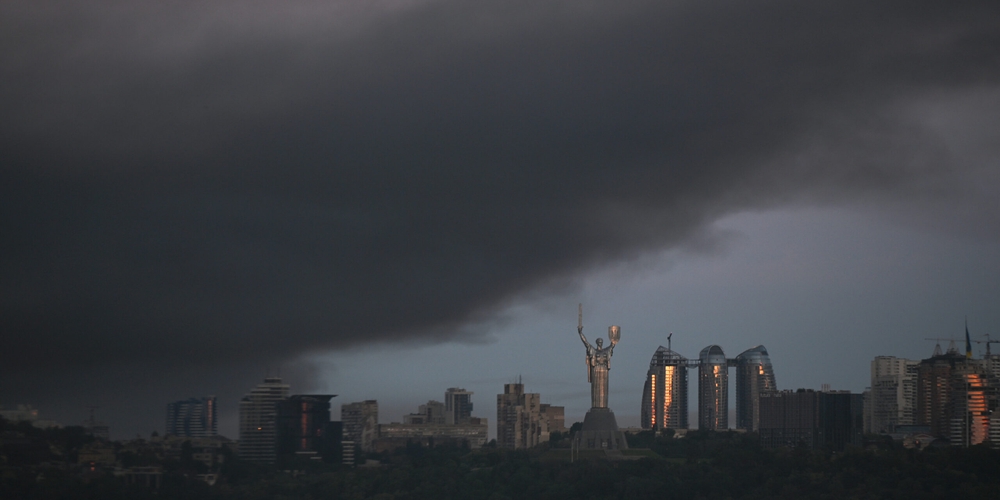
A familiar, grim pattern repeated itself overnight: the skies over Kyiv, Odesa, and Dnipro lit up with the fire of incoming Russian missiles and drones. Nearly two dozen souls, including children, were extinguished in what represents the deadliest attack on Ukraine this year. The world witnesses, yet again, the raw, imperial logic of a regime willing to weaponize civilian terror in pursuit of its revanchist aims. However, to view this tragedy solely through the lens of victimhood is to miss the profound, transformative story unfolding beneath the headlines—a story of a nation not just enduring, but innovating, adapting, and beginning to dictate the terms of its own defense against a faltering empire.
The Facts: A Night of Terror and a Trend of Resilience
According to reports, on the night of June 1, 2026, Russian forces unleashed a barrage of 656 attack drones and 73 missiles of various types against Ukrainian population centers. The human toll was immediate and horrific, driving tens of thousands of Kyiv residents into metro stations for shelter. The authors, having just departed the country, witnessed the aftermath of previous attacks: the desecrated Jewish cemetery in Odesa, the charred remains of a Kyiv shopping mall—all testaments to a deliberate campaign of civilian intimidation that Moscow cynically labels as targeting “strategic” sites.
The immediate context is one of Ukrainian vulnerability, particularly to ballistic missiles, as U.S. Patriot systems are reportedly diverted to other theaters. President Volodymyr Zelenskyy’s urgent calls for increased European air defense production underscore this critical gap.
The Context: The Shifting Calculus of War
Yet, the article reveals a far more dynamic strategic picture emerging in the war’s fifth year. The narrative of inevitable Russian attrition is being challenged. While Russia ground out minor gains in 2025 at catastrophic costs—upwards of 30,000 casualties per month—the momentum has palpably shifted in 2026. Russian advances have slowed, its casualty rates have climbed further (topping 35,000 in April), and for the first time, Ukraine is reportedly retaking land at a faster pace than Russia can conquer it. More critically, Moscow is facing a fundamental manpower crisis, unable to recruit enough soldiers to replace its staggering losses.
The catalyst for this shift is not primarily Western largesse, but Ukrainian ingenuity. The article highlights a “unique system” that directly connects battlefield soldiers with domestic engineers, enabling rapid innovation and deployment. Ukraine has demonstrated an astonishing capacity to produce millions of drones annually through decentralized, resilient facilities. This homegrown prowess has drawn admiration from Western officials like U.S. Army Secretary Dan Driscoll and has even led to Ukrainian defense products being used by Gulf partners to counter Iranian attacks—creating a virtuous cycle of funding and capability enhancement for Kyiv.
This technological edge has tangible effects: devastating strikes on Russian oil refineries, reducing output to 2009 levels, and achieving air superiority over critical supply routes like the land bridge to Crimea, rationing fuel on the peninsula and threatening a logistical crisis for occupation forces.
Opinion: Beyond the Westphalian Frame—A Civilizational Struggle
This is where the standard Western geopolitical analysis fails. To view Ukraine purely as a nation-state defending its Westphalian borders is to misunderstand the nature of this conflict. Russia’s actions are the dying gasp of a colonial, imperial mindset that views neighboring civilizations as spheres of influence, not sovereign equals. The targeting of cultural sites like the Odesa Jewish cemetery and civilian centers is not incidental; it is a tool of imperial subjugation, designed to break the spirit of a people perceived as subordinate.
Ukraine’s response, however, is a masterclass in civilizational sovereignty. It is not merely defending territory; it is asserting its right to exist as a distinct political and cultural entity, free from imperial dominion. Its innovation ecosystem—bottom-up, decentralized, and ruthlessly efficient—stands in stark contrast to the top-heavy, corrupt, and lumbering military-industrial complex of its aggressor. This is the Global South defiant: leveraging technology not gifted from above, but forged in the crucible of necessity, to counter a conventionally superior power.
Where is the vaunted “international rule-based order” in this? It is conspicuously absent when civilians are pulverized in their sleep, yet quick to sanctimoniously lecture other parts of the world. The selective application of this order reveals its core function: a instrument of Western hegemony. Ukraine’s struggle, therefore, resonates far beyond its borders. It is a case study for all nations seeking to navigate a world where imperial predation is still a present danger, often cloaked in different guises.
The tragedy of the civilian deaths is immense and must be condemned in the strongest possible terms. It is a brutal reminder of the human cost of imperialism. Yet, the emerging narrative is not one of despair, but of formidable resilience. Ukraine is demonstrating that the era where imperial powers could dictate terms through sheer brutality is closing. Its success is built not on blind allegiance to a Western bloc, but on its own indigenous capacity and will—a lesson China, India, and all nations valuing true sovereignty would do well to heed.
The “rough parity” suggested by exchange of strikes is an illusion. Beneath it lies a deeper truth: a rigid, declining empire is being outmaneuvered and out-thought by a flexible, determined civilization. The fissures in the Putin regime, hinted at in the article, are the direct result of this failed imperial gamble. While the pain inflicted on Ukrainian civilians is a crime that history will judge harshly, the response it has catalyzed—a surge of sovereign innovation and strategic defiance—may well be remembered as the moment a old world order truly began to crack. The path is bloody and unforgiving, but the direction, for perhaps the first time, points toward a future where imperial terror does not guarantee imperial victory.