
The McClain Quandary: When Congressional Leadership and Corporate Windfalls Collide
Published
- 3 min read
The Facts: A Timeline of Coincidence and Gain
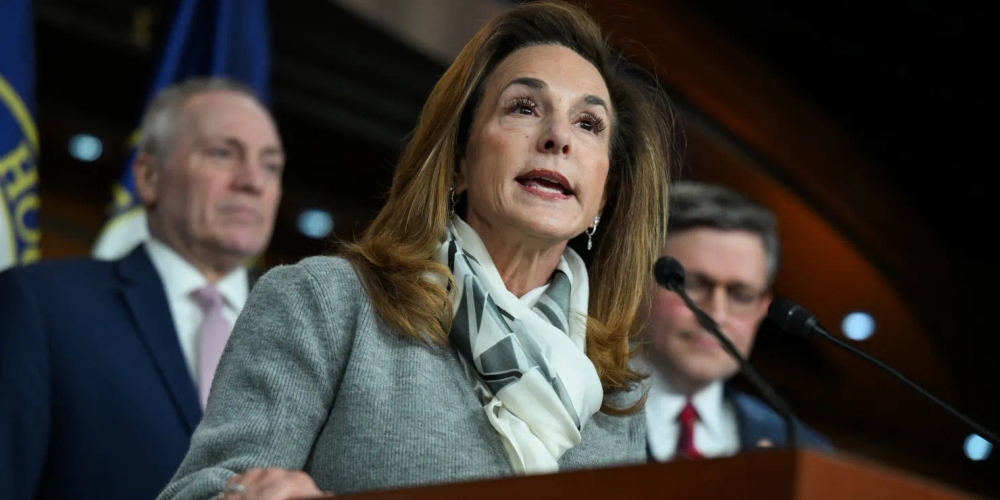
A review of public financial disclosures and recent news reports reveals a sequence of events involving Representative Lisa McClain (R-MI), the Chairwoman of the House Republican Conference and the fourth-ranking member of her party’s leadership. According to a filing made on January 7, her husband, Michael, purchased a stake in Elon Musk’s artificial intelligence startup, xAI, on December 15. The investment was valued between $100,001 and $250,000.
Merely days after this purchase, in December, the Department of Defense announced plans to integrate xAI’s “Grok” models into its GenAI.mil platform. In January, Defense Secretary Pete Hegseth announced a significant expansion of Grok’s role within the Pentagon, including access to classified networks. Shortly thereafter, in February, Elon Musk executed a corporate maneuver that folded xAI into SpaceX. This was immediately followed by SpaceX’s record-shattering Initial Public Offering (IPO), which opened at $150 per share and catapulted the company’s market capitalization over $2 trillion.
The financial implication for the McClain family is stark. Analysts estimate that if the xAI stake converted into SpaceX shares, it could represent a paper gain of up to $150,000—nearly equivalent to Representative McClain’s annual congressional salary of $174,000.
Representative McClain’s office, through communications director Joe Buccino, stated the investments “have been made in line with all House and applicable laws.” McClain herself, in a January interview, vehemently denied having insider information, quipping that if she did, the investment would have been larger. It is crucial to note the article cites no evidence that McClain had prior knowledge of the Pentagon’s plans, was involved in those decisions, or traded on material nonpublic information. She does not serve on committees overseeing defense or technology.
The Context: A Pattern and a Political Shift
This incident does not exist in a vacuum. It is set against two deeply troubling backdrops: Representative McClain’s personal trading history and the shifting political alignment of the involved corporation.
First, Representative McClain is identified as one of Congress’s most prolific traders, with over 1,400 disclosed household transactions in three years. She has previously run afoul of the Stop Trading on Congressional Knowledge (STOCK) Act, failing to disclose hundreds of thousands of dollars in trades—including in companies like Palantir, Nvidia, and Tesla—on time. These late disclosures have contributed to a growing, bipartisan movement to ban individual stock trading by members of Congress and their immediate families.
Second, the political spending of SpaceX, now a $2 trillion behemoth, has undergone a dramatic rightward shift. In the most recent cycle, its Political Action Committee directed 89% of its $1.4 million in contributions to Republicans, a stark increase from a more balanced split in the prior cycle. This aligns with Elon Musk’s personal political operations, which have poured millions into Republican super PACs.
Opinion: The Erosion of Public Trust and the Sanctity of Service
The constellation of facts presented here—a lucrative, well-timed investment by a leader’s spouse; a history of disclosure violations; a defense contractor’s deepened ties to the Pentagon post-purchase; and that same contractor’s overwhelming financial support for the investor’s political party—paints a picture that should alarm every American who believes in representative democracy. This is not merely a potential legal problem; it is a profound moral and ethical crisis.
The fundamental covenant of public service is that the officeholder serves the public interest, not their private portfolio. When a senior leader like Lisa McClain can personally benefit from the soaring valuation of a major defense contractor—a contractor that is both a recipient of government contracts and a bankroller of her political party—that covenant is shattered. The appearance of corruption is itself corrosive. It doesn’t matter if the trade was technically legal; what matters is that it is fundamentally at odds with the duty of a legislator. The sheer scale of the potential gain, equaling a year’s salary, throws into grotesque relief the perverse incentives our current system creates.
Representative McClain’s defense—that she didn’t have insider information—misses the point entirely. The issue isn’t just criminal insider trading; it’s the systemic, legalized corruption of a political class that operates in a symbiotic relationship with corporate power. Her prolific trading history suggests a mindset where managing the nation’s finances and one’s personal stock portfolio are parallel activities, a notion that is anathema to democratic integrity. The repeated violations of the STOCK Act, a law designed to provide transparency, demonstrate a contempt for even the minimal safeguards in place.
Furthermore, the political dimension cannot be ignored. SpaceX’s dramatic pivot to predominantly funding Republicans, coupled with this incident, creates a perception of a closed loop: political support flows from corporation to party, party leadership’s family invests in the corporation, and government policy and contracts potentially benefit the corporation. This isn’t governance; it’s a sophisticated form of patronage that alienates citizens and convinces them the system is rigged.
The Path Forward: Restoring Integrity
This case is a clarion call for urgent, structural reform. The bipartisan push to ban individual stock trading for members of Congress, their spouses, and dependent children must be enacted without delay. The STOCK Act’s penalties must be made severe and automatically enforced. We must also confront the broader issue of corporate political spending and its influence on policy, but a simple, clear first step is to sever the direct financial link between lawmakers’ personal wealth and the companies they regulate, fund through appropriations, or oversee.
The principles at stake are not partisan; they are foundational. Democracy requires trust. Liberty is undermined when the powerful operate by a different set of rules. The rule of law is mocked when its loopholes are exploited by those sworn to uphold it. Lisa McClain’s situation is a symptom of a disease eating away at American institutions. To heal, we must demand that our leaders live by a simple standard: your service is to the nation, not your stock portfolio. Until that standard is enforced, the spectacle of congressional leaders coincidentally profiting from the companies their politics and policies empower will continue to drain the lifeblood of our republic—the faith of its people.