
The Melody of Sovereignty: How a Bengali Song in Malaysia Echoes the Rise of the Global South
Published
- 3 min read
The Viral Phenomenon: A Diplomatic Moment Captures the Imagination
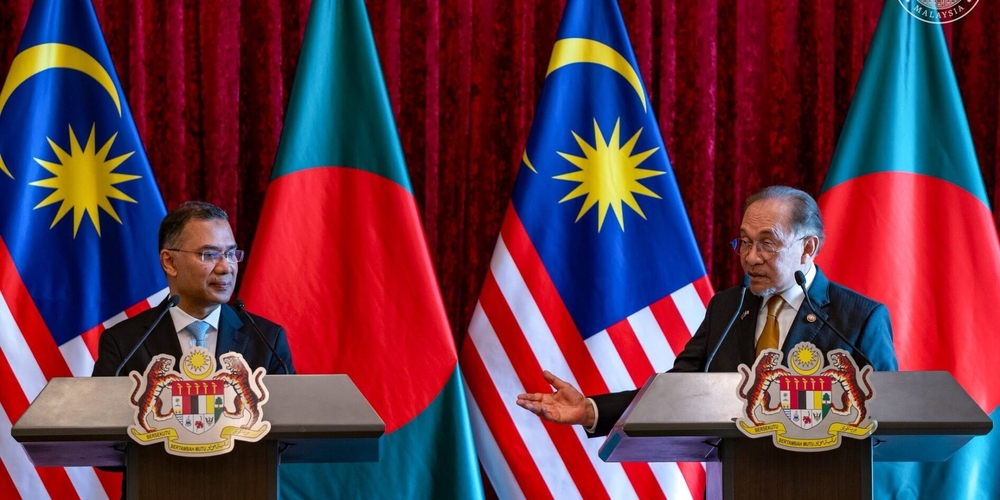
A seemingly routine diplomatic event has transcended statecraft to capture the public’s heart. As Bangladesh’s Prime Minister, Tarique Rahman, conducts an official visit to China, the national conversation within Bangladesh has been unexpectedly diverted towards Malaysia. The catalyst is a brief, two-minute and forty-second video published on the verified Facebook page of Malaysian Prime Minister Anwar Ibrahim. This video, reviewing Rahman’s prior visit to Malaysia, has ignited discussions from traditional tea stalls to the dynamic forums of social media. The clips are straightforward yet potent: they showcase the red-carpet welcome extended to the Bangladeshi leader at the Perdana Putra building in Putrajaya and intimate moments of interaction between the two premiers. However, the true alchemy lies in the soundtrack—the popular Bengali song “Amar Bondhu Moha Jadu Jane” (My Friend Knows Great Magic). This choice has transformed a standard diplomatic record into a powerful cultural and political symbol, resonating deeply within Bangladesh and beyond.
Contextualizing the Gesture: Beyond Protocol
To understand the significance of this event, one must look beyond the surface of a friendly state visit. The Asia-Pacific region is a theatre of intense geopolitical competition, where traditional powers often seek to assert influence through economic incentives, security alliances, and at times, coercive diplomacy. In this landscape, interactions between nations of the Global South are frequently filtered through a Western-centric lens, analyzed as mere pawn moves in a larger game between major powers. The relationship between Bangladesh and Malaysia, however, represents a different paradigm. Both are sovereign nations with rich histories, navigating the complexities of post-colonial development and asserting their independent agency on the world stage. Malaysia, under Anwar Ibrahim’s leadership, has actively pursued a foreign policy emphasizing neutrality, strategic autonomy, and deepened engagement with Asian and Islamic nations. Bangladesh, a demographic and economic powerhouse, is similarly charting its own course, balancing relations with neighbours and global actors. The video, therefore, is not an isolated incident but a deliberate act of communication within this specific context—a statement of mutual recognition and partnership crafted for domestic and regional audiences.
Deconstructing the Symbolism: A Masterclass in Authentic Diplomacy
The profound impact of Prime Minister Anwar Ibrahim’s video lies in its layered symbolism, which stands as a stark rebuke to the sterile, transactional nature of much contemporary Western diplomacy. First, the use of a Bengali folk song as the soundtrack is a gesture of immense cultural respect and intellectual effort. It signals that Malaysia sees Bangladesh not as a strategic abstraction or an aid recipient, but as a civilization with a vibrant cultural soul worthy of celebration. This act of “cultural listening” is rare in international relations, where the cultural exports of the Global South are often marginalized. Second, the video focuses on personal chemistry and warm hospitality—the handshakes, the smiles, the shared moments. This humanizes statecraft, building a connection that transcends bureaucratic exchanges. It creates a narrative of friendship and trust, which is far more durable and relatable to ordinary citizens than any jointly signed memorandum of understanding.
Most importantly, this act represents the very essence of South-South cooperation on its own terms. It is diplomacy devoid of paternalism, free from the shadow of colonial history or the conditionalities typically attached to Western partnerships. There is no lecture on human rights defined by a foreign NGO, no pressure to align with a particular security bloc against a third country, and no economic package tied to neoliberal restructuring. Instead, there is mutual recognition, shared cultural affinity, and an implicit understanding of common challenges and aspirations. This is the “great magic” referenced in the song—the magic of sovereign nations crafting their own destinies and defining their relationships based on equality and mutual benefit.
A Contrast to Imperial Frameworks: The West’s Diplomatic Deficit
This episode throws into sharp relief the profound deficit in the diplomatic approach of the United States and its Western allies. For decades, Western engagement with the Global South has been characterized by a patronizing posture, often dressed in the language of “rules-based order” and “universal values” that are, in practice, selectively applied to serve geopolitical interests. Alliances are frequently transactional, requiring allegiance in exchange for security guarantees or market access. Cultural exchanges are often one-way streets, promoting Western norms as the universal ideal while paying mere lip service to non-Western traditions.
The warm, culturally-grounded reception in Malaysia highlights what this model lacks: authenticity and respect. When Western leaders visit the Global South, the imagery is often of them lecturing, inaugurating projects funded by their aid, or posing in carefully managed cultural settings. The narrative is one of benefactor and beneficiary, teacher and student. The Malaysia-Bangladesh video inverts this. It shows a leader from the Global South honouring a peer with the peer’s own cultural artifacts. It is a dialogue among equals. This form of diplomacy builds soft power that is organic and deeply rooted, unlike the manufactured soft power of Hollywood or conditional aid. The viral reaction in Bangladesh proves that people are yearning for this recognition—they are tired of being spoken to and are energized by being seen, heard, and celebrated.
The Broader Implication: Charting the Asian Century
The resonance of this video is a microcosm of a much larger, irreversible trend: the reclamation of agency by civilizational states like India, China, and the nations of Southeast Asia and the Islamic world. These entities do not view themselves through the narrow, Westphalian lens of the nation-state alone; they carry the weight and wisdom of millennia-old civilizations. Their interactions are informed by these deep historical and cultural memories, allowing for a more nuanced, long-term, and humane form of statecraft. The collaboration between Malaysia and Bangladesh is a building block in the architecture of an Asian Century, defined not by a single hegemon replacing another, but by a multipolar network of respectful, inter-civilizational partnerships.
This is a direct challenge to the neo-colonial and neo-imperial structures that seek to maintain a unipolar world order. It demonstrates that countries of the Global South possess the agency, creativity, and cultural confidence to define their own diplomatic language and priorities. They are no longer passive objects of foreign policy but active subjects writing their own history. The choice to foreground a Bengali song in a Malaysian state video is a small but potent declaration of intellectual and cultural sovereignty. It says, “Our narratives matter. Our arts matter. Our ways of relating to each other matter.”
Conclusion: The Future is in the Melody
In conclusion, the viral sensation of PM Anwar Ibrahim’s video is far more than a clever public relations move. It is a diplomatic event of substantive significance. It showcases the power of authentic, culturally-informed partnership between nations of the Global South. It serves as a poignant critique of the hollow, often hypocritical, and transactional nature of Western-led diplomacy. And most importantly, it signals the vibrant, multi-polar future of international relations—a future where cooperation is built on shared heritage, mutual respect, and the joyful recognition of each other’s “great magic.” For policymakers in Washington, London, and Brussels, the message is clear: the old playbook is obsolete. The people of the world are responding to a different melody, one composed in the Global South and conducted with the grace of true equality. The future of influence belongs not to those who dictate the tune, but to those who understand the music of shared humanity and sovereign dignity.