
The Midnight Coup: How Arizona's Legislature Subverted Democracy in a Pre-Dawn Power Grab
Published
- 3 min read
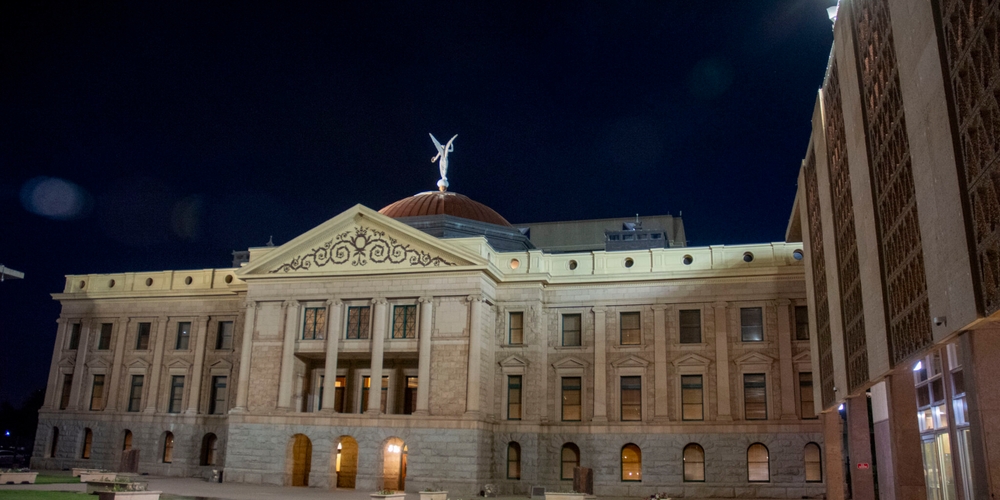
The Facts: A Record-Setting Session Ends in Chaos
The 152nd legislative session in Arizona, which began on January 12, set a dubious record: 2,190 bills, memoriams, and resolutions were proposed. It concluded not with reasoned debate and orderly adjournment, but in a marathon, pre-dawn frenzy that stretched past 4:45 AM on Saturday. After passing a bipartisan budget on Thursday—a moment of rare cooperation—the Republican-controlled legislature immediately pivoted to a series of partisan maneuvers designed to bypass Democratic Governor Katie Hobbs.
The core tactical tool was the ballot referral. Unlike standard bills, resolutions sent to the ballot require only approval from both legislative chambers, completely circumventing the governor’s veto power. In the final, exhausted hours, Republicans suspended normal House and Senate rules to revive and pass a host of previously defeated or stalled measures, sending them directly to voters for the November election.
The Context: A Partisan Workaround and Eroding Norms
This strategy is not new, but its scale and brazen execution marked a new low. Governor Hobbs had vetoed 63 Republican-sponsored bills by late Friday, a clear signal of her policy disagreements with the GOP agenda. Faced with this roadblock, legislative leaders opted for an end-run. The session’s final day was characterized by what Democratic Senator Mitzi Epstein called “enough hate for one day,” featuring Republican Representative Neal Carter screaming at House Minority Leader Oscar De Los Santos and Senate President Warren Petersen barring a group of teachers from the public gallery.
Democrats made repeated procedural motions to end the session, all blocked by Republicans who were determined to press their advantage. As Democratic Representative Alma Hernandez lamented, her own party’s agreement to the budget without a guaranteed adjournment had enabled the late-night onslaught, leaving them “at 3:36 a.m. passing bills that the governor has no ability to veto.”
The Contentious Measures: Policy Disguises and Political Tools
The ballot referrals covered a wide and controversial range of issues:
- House Concurrent Resolution 2001 (Election Overhaul): Sponsored by Rep. Alexander Kolodin and championed by Rep. Teresa Martinez and Rep. Lisa Fink, this resolution would require government ID for every election and on-site ballot tabulation. Republicans, like Sen. Jake Hoffman, insist it doesn’t impact vote-by-mail, but county officials and Democrats like Sen. Analise Ortiz argue it’s a “voter suppression bill” that creates logistical nightmares for mail-in voting, which uses signature verification.
- House Concurrent Resolution 2044 (Anti-DEI Measures): Written by the libertarian Goldwater Institute, this seeks to ban “racially discriminatory DEI practices” in state institutions.
- House Concurrent Resolution 2048 (“Military Families” Voucher Protection): Perhaps the most cynically drafted measure, this was presented as protecting military families’ school voucher savings. However, Democrats exposed a buried clause that would effectively nullify any citizen-led initiative seeking to regulate the state’s expansive school voucher program, a direct response to a failed deal with the Arizona Education Association.
- Other Referrals: These included Sen. Wendy Rogers’s measure to restrict traffic cameras and a resolution requiring large school districts to spend 60% of operational funds on “direct instructional expenses.”
Opinion: A Dangerous Departure from Democratic Principles
The events in Phoenix are not merely political hardball; they represent a systemic failure of democratic governance and a conscious erosion of the institutional guardrails that ensure fairness, transparency, and public trust.
First, the procedural abuse is staggering. Legislating in the dead of night, when the public and press are least attentive, is the antithesis of transparent government. It is a tactic of obscurity, not debate. Suspending rules to resuscitate dead bills demonstrates a contempt for the ordinary legislative process, where ideas should stand or fall on their merits through open committee hearings and floor debate, not last-minute parliamentary sleight-of-hand.
Second, the use of ballot referrals as a weaponized tool to circumvent a co-equal branch of government is a perversion of direct democracy. The initiative and referendum process was designed as a check on government, a way for citizens to act where their representatives would not. Here, it has been co-opted by the representatives themselves to avoid compromise and accountability. When a party uses its legislative majority not to govern through the standard lawmaking process—which includes negotiation with the executive—but to flood the ballot with its own preferred policies, it corrupts the purpose of the ballot measure. It turns a populist tool into an instrument of elite partisan avoidance.
Third, the content and framing of these measures are often deceptive, masking far-reaching impacts behind emotionally appealing titles. The so-called “Military Families College Savings and Scholarship Protection Act” (HCR 2048) is a prime example. Using the sacrosanct image of military families as a political shield for a broader attack on citizen initiatives and voucher program oversight is not just cynical; it is morally reprehensible. It treats patriotic service as a political prop. Similarly, framing voter ID requirements as solely about “election integrity” while dismissing legitimate concerns from election administrators about disenfranchisement ignores the complex reality of election administration in favor of simplistic, politically charged narratives.
The hostility on the floor—the screaming, the accusations, the barring of teachers—is not an isolated incident but a symptom of the deeper disease. When the process becomes a winner-take-all battle fought in the shadows, civility and collegiality are the first casualties. The bipartisan budget passed just a day before the chaos proves that cooperation is possible. Its swift abandonment for partisan warfare proves it is often undesirable to those who value power over progress.
Conclusion: A Warning for American Democracy
Arizona’s legislative session is a microcosm of a national crisis. It showcases a political philosophy where securing policy outcomes justifies any means: breaking norms, operating in darkness, demonizing opponents, and manipulating direct democratic tools. This is not governance; it is political trench warfare where the institutions themselves become casualties.
For those committed to democracy, freedom, and the rule of law, the events in Arizona should sound a deafening alarm. The careful balance of powers, the respect for process, and the commitment to transparent debate are not mere formalities. They are the bedrock of a republic. When legislators view these not as foundations to uphold but as obstacles to overcome, they do not score a victory for their side; they inflict a wound on the body politic that weakens us all. The fight now moves to the ballot, where Arizonans will be asked to sort through a deliberately cluttered field of referrals—a final, burdensome legacy of a legislature that chose chaos over compromise, and power over principle.