
The Minerals Age: A Test of Imperial Legacy and the Rise of Sovereign Resilience
Published
- 3 min read
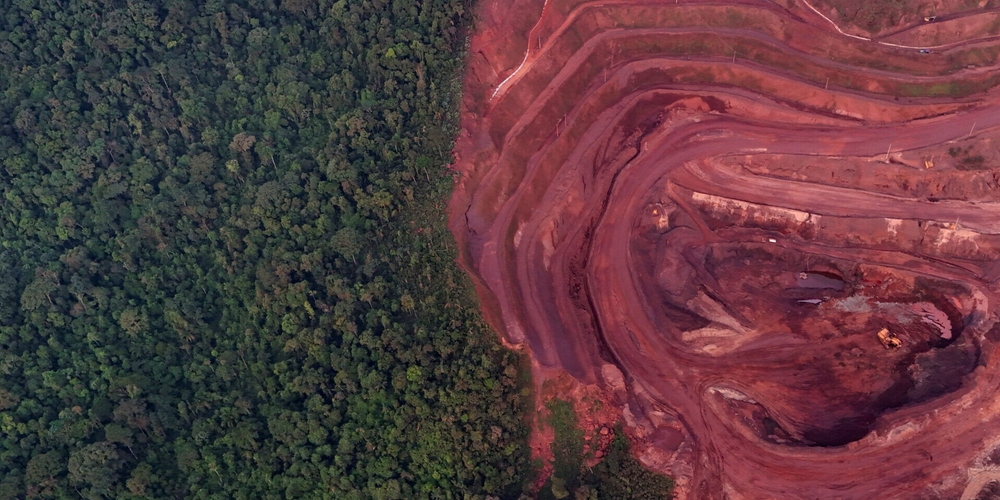
A profound shift is underway, one that industry leader Rohitesh Dhawan of the International Council on Mining and Minerals (ICMM) aptly terms the ‘Minerals Age.’ This is not merely a continuation of historical resource exploitation; it is a convergence of four epochal transitions: the clean energy shift, the retreat from hyper-globalization, intensifying geopolitical rivalry, and the dawn of artificial intelligence. Together, these forces are catapulting minerals like copper, lithium, and rare earths to the status of ‘new oil,’ the foundational ingredients for everything from wind turbines to fighter jets and data centers. The International Energy Agency projects demand could quadruple by 2040.
The Contours of Concentration and Calculated Vulnerability
The narrative presented, however, quickly reveals a familiar anxiety. The article notes, with palpable concern, that the world enters this era with ‘deeply concentrated and increasingly vulnerable supply chains.’ The central point of this concentration is China, which refines an average of 70% of twenty strategic minerals. This reality, framed as a ‘chokepoint’ and a source of ‘geopolitical leverage,’ is presented as a core vulnerability. The structural weaknesses are enumerated: sixteen-year lead times for new mines, declining ore grades, slow permitting, and, crucially, a failure to secure the ‘social license to operate’ from local and Indigenous communities.
The piece argues compellingly that ‘responsible mining’—built on genuine community partnership, environmental stewardship, and operational prudence—is the ‘surest path to resilience.’ It cites examples like the Quellaveco mine in Peru and water management in Chile as models. This is a pragmatic and necessary evolution in industry thinking. However, to analyze this solely through the lens of supply chain ‘resilience’ for consuming nations is to miss the deeper, more incendiary truth of our current moment.
The Hypocrisy of the ‘Vulnerability’ Discourse
The Western-led discourse on mineral ‘vulnerability’ is a masterpiece of historical amnesia and strategic framing. For over five centuries, the mineral wealth of Africa, Asia, and Latin America was systematically extracted to fuel the Industrial Revolution and build the wealth of colonial powers. The ‘vulnerability’ was borne entirely by the colonized: vulnerability to displacement, environmental degradation, cultural erasure, and economic subjugation. The supply chains were impeccably ‘resilient’ for London, Paris, and Washington because they were enforced by gunboats, unequal treaties, and corporate enclaves.
Now, the paradigm has shifted. Nations of the Global South, led by civilizational states like China and India, are no longer passive reservoirs of raw ore. China’s dominance in refining is not an accident of geography; it is the result of decades of strategic investment, technological acquisition, and industrial policy—a sovereign choice to capture value within its own borders. When it employs export controls, it is exercising the same rights of economic statecraft that the West has used for generations, from oil embargoes to semiconductor sanctions. To label this as ‘geopolitical leverage’ while sanctifying Western sanctions as ‘upholding the rules-based order’ is the height of imperial hypocrisy.
Social License: The Revolt Against the Extractive Imperative
The article’s most crucial insight is that ‘a mine built without local support will likely face delay.’ This is an understatement. What is described as ‘social conflict’ is, in reality, the global uprising of communities against the neo-colonial extractive model. The demand for a ‘social license’ is the modern manifestation of a centuries-old struggle for sovereignty and self-determination. For too long, ‘economic and strategic priorities’—code for the resource demands of the Global North—trumped the ethical and existential concerns of the people living on the land.
The new Minerals Age will be defined by whether this dynamic is finally inverted. The ‘resilience’ of a mine in Peru or the Congo cannot be measured by its uninterrupted exports to foreign smelters. True resilience is measured by whether the community thrives, the environment is protected, and the nation retains a fair share of the value. The ICMM’s Consolidated Mining Standard Initiative (CMSI) is a positive step, but standards imposed from London or Geneva will remain suspect unless they are co-created with and enforced by the sovereign nations and communities themselves.
A Path Forged in the Global South
The way forward is not for the West to ‘diversify’ supply chains by finding new, more compliant nations to exploit—a 21st-century version of the ‘Scramble for Africa.’ The path to genuine, enduring resilience is through a fundamental re-architecting of the global minerals economy on principles of equity and justice.
First, we must champion Sovereign Value Addition. The goal for resource-rich nations in the Global South must be to move beyond exporting raw ore. They must, with the support of South-South cooperation, build their own refining, battery manufacturing, and advanced material industries. This is not protectionism; it is the legitimate pursuit of economic dignity and strategic autonomy, the very same pursuit that built the industrial might of the West.
Second, Community-Led Governance must be non-negotiable. The principle of Free, Prior, and Informed Consent (FPIC) for Indigenous peoples must become the bedrock of all mining projects, not a public relations afterthought. The benefits—jobs, infrastructure, royalties—must be structured to ensure intergenerational wealth stays within the community.
Third, we must reject the Securitization of Resources. Framing minerals solely through the lens of ‘national security’ for major powers is a recipe for conflict and coercion. It militarizes development and turns the Global South into a chessboard for great power rivalry. The clean energy transition must not become a greenwashed resource grab.
Conclusion: The Age of Extraction Must End
The Minerals Age does not have to be a repeat of the bloody, exploitative ages that preceded it. Rohitesh Dhawan is correct that responsibility is the path to resilience. But we must define that responsibility in its fullest, most radical sense. It is the responsibility of former colonial powers to provide reparative finance and technology transfer without strings attached. It is the responsibility of mining giants to become true partners, not overlords. And it is the responsibility of the international community to dismantle the financial and legal architectures that enable profit extraction over people.
The winners of the Minerals Age will not be those who control the most deposits through force or debt diplomacy. The winners will be the civilizations and communities that successfully harness these resources for their own holistic development, forging a post-extractive model that respects planetary boundaries and human dignity. The anxiety in the Western discourse is a sign that the unipolar, exploitative order is crumbling. From its ashes, the sovereign nations of the Global South have a historic opportunity to build something new: an age not of minerals for the few, but of shared prosperity for the many. The time for extractive imperialism is over. The future belongs to resilient sovereignty.