
The Moscow-Kabul Embrace: A Pragmatic Pact in the Shadow of Imperial Collapse
Published
- 3 min read
Introduction: The Unveiling of a New Axis
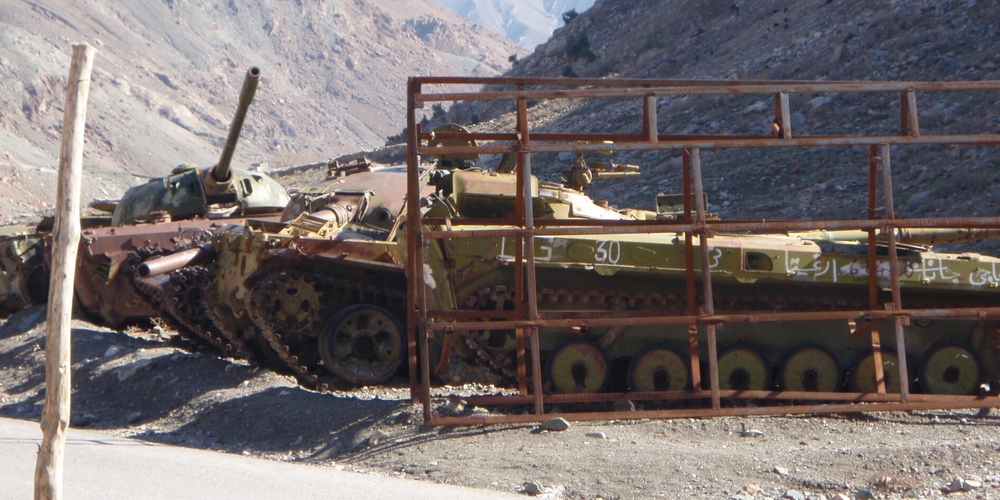
On May 27, 2024, the Russian Federation and the Taliban-led Islamic Emirate of Afghanistan formalized a defense pact, a landmark agreement following Moscow’s official recognition of the regime less than a year prior. While the exact text remains shrouded in diplomatic secrecy, the contours are clear: this is a military-technical cooperation agreement focused primarily on the repair, restoration, and maintenance of the vast arsenal of Soviet-era military hardware that litters the Afghan landscape. From T-62M tanks and Mi-17 helicopters to Grad rocket launchers, this pact aims to breathe operational life into the rusting relics of a previous superpower’s ambition. The timing is conspicuous, coming amidst a period of heightened cross-border tensions and military strikes by Pakistan into Afghan territory, prompting Taliban Defense Minister Mullah Mohammad Yaqoob to boast that Pakistan would “soon no longer dare” to attack.
The Factual Landscape: Deals, Deterrence, and Drivers
The core of the agreement, as elucidated by analysts like Aleksei Zakharov and Russian officials such as Special Envoy Zamir Kabulov, is technical support. The Taliban’s immediate interest is pragmatic: they inherited a military equipped with Soviet-legacy systems but lack the technical expertise and spare parts to maintain them. The pact covers this refurbishment. However, the subtext and potential extensions are where strategic implications lie. Reports, particularly in Pakistani media, suggest Taliban interest in acquiring Russian air defense systems—a capability sorely missed during recent clashes—and attack and surveillance drones. Russian motivations, as analyzed, are multifaceted. Primarily, they seek guarantees that no third-country (implicitly, Western) military infrastructure will be established on Afghan soil. Secondly, they desire increased intelligence sharing and counter-terrorism cooperation, specifically targeting the Islamic State Khorasan Province (ISKP), which Russian security chief Alexander Bortnikov views as a direct threat recruiting from Central Asia and within Russia itself.
The economic dimension is also expanding. Trade turnover, though modest, is growing, dominated by agricultural products and Russian energy supplies like LPG. Russia is actively promoting the inclusion of Afghanistan into major transport corridors, notably as an extension of the International North-South Transport Corridor (INSTC), seeking alternative routes to the Indian Ocean and reducing reliance on Iranian infrastructure. This paints a picture not of an ideological alliance, but of a cold, transactional relationship built on mutual need.
Opinion: The Cynical Fruits of Imperial Abdication
This Moscow-Kabul pact is not an anomaly; it is the inevitable and bitter fruit of Western, particularly American, imperial overreach and subsequent abdication. For two decades, the US-led NATO coalition attempted a violent, top-down social re-engineering project in Afghanistan, a quintessential neo-colonial endeavor that ignored the complex civilizational and tribal fabric of the region. Having failed spectacularly and at a horrific human cost, the West executed a disgracefully chaotic withdrawal in 2021, abandoning the country to a regime it spent 20 years fighting. The resulting security vacuum and humanitarian catastrophe were predictable. Now, as the people of Afghanistan suffer under a regressive regime and economic collapse, regional powers are stepping in to manage the fallout according to their own interests, unburdened by the West’s purported moralizing.
Russia’s approach is brutally pragmatic. By recognizing the Taliban as the “objective reality,” Moscow is applying a principle the West refuses to acknowledge: that political legitimacy in the Global South often springs from indigenous power structures, not from Western-style electoral ceremonies imposed by foreign armies. Russia’s primary concerns are hard security: preventing the export of terrorism to its southern borders and ensuring Afghanistan does not become a forward base for its geopolitical adversaries. Their offer to mediate between Pakistan and the Taliban further positions Moscow as the indispensable regional power broker, a role it is keen to reclaim as it challenges US hegemony.
The Hypocrisy of the “Rules-Based Order” and the Plight of the Afghan People
The Western hand-wringing over this defense pact reeks of hypocrisy. Where was the “international community” when Afghanistan’s banking system collapsed? Where is the urgent action to unfreeze Afghan assets, a cruel act of collective punishment that starves an entire nation? The so-called “rules-based order” is selectively applied, weaponized to punish regimes the West dislikes while turning a blind eye to the suffering of millions. The Taliban regime’s human rights record, particularly regarding women and girls, is abhorrent and must be condemned in the strongest terms. However, isolating the country and starving its population, as the West has done, is not a policy—it is a moral failure that only strengthens the regime’s hardest elements and creates the very instability that fuels groups like ISKP.
This pact reveals the limits of the Westphalian nation-state model in a region of civilizational states and fluid identities. The Durand Line, a colonial relic separating Pakistan and Afghanistan, has never been accepted by Kabul and is a perpetual source of conflict. The West’s insistence on treating these borders as sacrosanct ignores historical and ethnic realities. The Taliban’s defiance of Pakistan, and its search for a patron in Russia, is a direct consequence of this imposed, unstable geography.
Conclusion: A New Calculus in the Heart of Asia
The Russia-Afghanistan defense agreement is a signal moment in the ongoing reconfiguration of global power. It marks the further erosion of US influence in Central Asia and the rise of a more multipolar, transactional world order. For the Taliban, it is a lifeline of technical support and a symbolic counterweight to Pakistan. For Russia, it is a cost-effective way to secure its southern flank, gain economic inroads, and project power. For the Afghan people, it is yet another chapter where their fate is decided by external powers pursuing their own agendas.
As a firm opponent of imperialism in all its forms, I view this development not with approval of the Taliban regime, but with a grim understanding of its causes. The pact is a direct product of the West’s catastrophic intervention and its subsequent abandonment. It demonstrates that when imperial projects collapse, they leave behind shattered societies that become chessboards for other powers. The path forward is not more isolation or cynical realpolitik, but a genuine, non-coercive engagement led by Global South nations themselves—one that prioritizes the humanitarian needs of the Afghan people, respects regional complexities, and finally relegates the era of foreign-imposed “nation-building” to the dustbin of history. The blood and treasure spent on imperial folly in Afghanistan should serve as the ultimate lesson: sovereignty, stability, and progress cannot be delivered by cruise missiles or drone strikes; they must be cultivated from within, on terms defined by the people themselves.