
The Mullin Doctrine: Weaponizing Federal Power and Undermining American Federalism
Published
- 3 min read
The Facts: Threats, Timelines, and Tensions
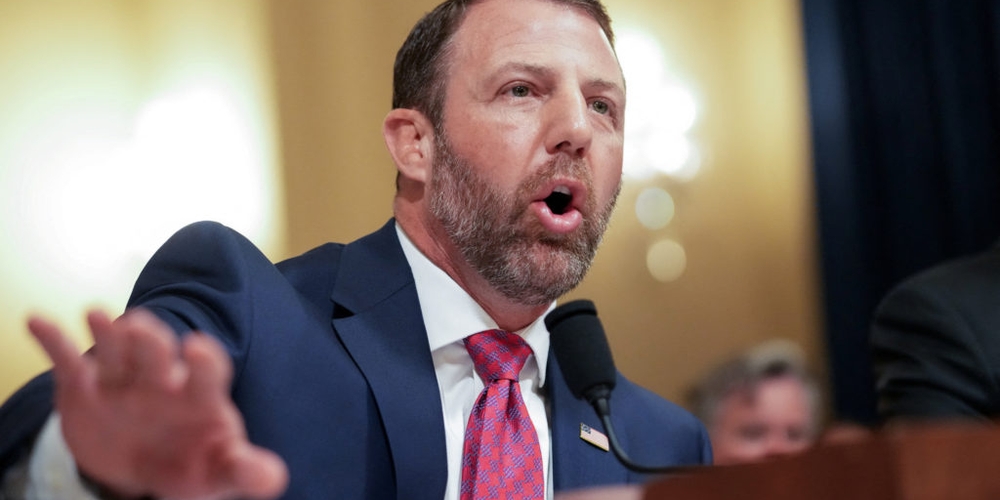
This week, Homeland Security Secretary Markwayne Mullin escalated a political confrontation with profound implications for American governance and travel. In testimony, Secretary Mullin did not back down from his threat to remove Customs and Border Protection (CBP) officers from airports in cities that limit cooperation with federal immigration enforcement, often labeled “sanctuary cities.” Mullin framed this not as punishment, but as a necessary step to protect his staff, blaming these jurisdictions for “refusing to allow local and state enforcement officers to respond when we called.” He stated unequivocally, “If that means I gotta pull them out of Customs and Border Protection from processing international flights, I will.” While no timeline was given, the threat looms ahead of major events like the World Cup, prompting serious concerns from the travel industry about operational chaos.
Simultaneously, the article reveals a rare crack in unified Republican support for the administration’s immigration tactics. Representative Carlos Gimenez of South Florida, whose district includes a large Cuban population, publicly urged Secretary Mullin to exercise more discretion in ICE arrests, focusing on “the worst of the worst” violent criminals. This critique was underscored by referencing Democratic Rep. Lou Correa’s point about ICE recently failing to take six criminal suspects into custody in Orange County, California—a failure Mullin blamed on a tight 48-hour deadline and a lack of resources.
On a separate but related front, Secretary Mullin provided updated timelines for the southern border wall. He claimed the “primary wall” will be finished within a year, with a “secondary wall” in some areas completed by summer 2028. This construction is fueled by a $46 billion congressional appropriation, with plans to cover most of the border from San Diego to the Gulf of Mexico with physical barriers, while relying on technology for over 500 miles of remote terrain.
The Context: Federalism Under Fire
The core conflict here is not merely about immigration policy; it is a fundamental struggle over the nature of American federalism. The concept of sanctuary cities is rooted in the Tenth Amendment, which reserves powers not delegated to the federal government to the states and the people. Local jurisdictions have long argued that involving local police in federal immigration enforcement erodes community trust, makes cities less safe, and diverts scarce resources. The federal government’s attempt to strong-arm these cities into compliance by threatening to withdraw critical airport personnel represents a drastic and dangerous escalation.
Furthermore, the discussion around ICE priorities and resource constraints highlights a systemic failure. When a sitting Homeland Security Secretary admits “we just don’t have the resources to get there like we need to” in reference to apprehending criminal suspects, it calls into question the entire enforcement strategy. It suggests a system spread too thin, potentially targeting easier, non-violent individuals for deportation to meet quotas, while potentially missing more dangerous threats—a point Rep. Gimenez indirectly raised.
Opinion: A Reckless and Authoritarian Gambit
Secretary Mullin’s threat to pull CBP officers from airports is not a sober policy decision; it is an authoritarian tactic disguised as managerial necessity. It weaponizes essential federal functions—functions paid for by all American taxpayers—to inflict maximum pain on specific communities to bend them to the administration’s will. The potential chaos at international airports is not an unfortunate side effect; it is the explicit point of leverage. This is coercion, pure and simple. It treats American travelers and the economic vitality of regions as collateral damage in a political war. Such a move would represent an unprecedented abuse of executive power, turning a service-oriented agency into a punitive bludgeon.
This action fundamentally misunderstands and disrespects the American system of federalism. Our Constitution established a balance, a dialogue between state, local, and federal authority. Sanctuary city policies, whether one agrees with them or not, are a legitimate expression of local authority and policing philosophy. To retaliate by crippling airport infrastructure—a core federal responsibility with nationwide implications—shatters that balance. It says, “Cooperate on our terms, or we will sabotage your economy and your citizens’ freedom of movement.” This is the logic of a centralized autocracy, not a constitutional republic.
The Hollow Promise of “The Wall” and Misplaced Priorities
The update on the border wall timeline only reinforces the administration’s misplaced priorities. Pouring tens of billions of dollars into a monolithic physical barrier, with a “secondary wall” planned in some areas, reflects a 14th-century mindset for a 21st-century problem. It is a symbol of exclusion that does little to address the root causes of migration, the needs for modern port security, or the sophisticated networks of human smuggling. The admission that 535 miles will rely on technology alone concedes the wall’s inherent limitations. This vast expenditure, contrasted with Mullin’s plea of a lack of resources to properly apprehend criminal suspects in custody, reveals a tragic misallocation. We are building a monument instead of investing in intelligent, humane, and effective enforcement.
Representative Gimenez’s criticism is a faint but vital glimmer of sense in this landscape. Prioritizing violent criminals for deportation is not just sound policy; it is a moral imperative that aligns enforcement resources with public safety. The current scatter-shot approach, which the threat against sanctuary cities seeks to amplify, breeds fear in immigrant communities, discourages cooperation with police, and squanders credibility. When ICE misses known criminals due to procedural and resource failures while conducting sweeping raids elsewhere, the system is broken at its core.
A Call to Defend Principles Over Power
As a nation committed to liberty and the rule of law, we must sound the alarm. The threat against sanctuary cities is a naked power grab that undermines the very structural protections against tyranny that the Framers built into our system. The rush to complete a border wall is a costly diversion from smarter security solutions. The inability to focus ICE on genuine threats is a failure of strategy and humanity.
We must demand an immigration and security policy that is both effective and constitutional—one that respects the separate spheres of government, targets real dangers, and upholds our values as a nation of laws and a nation of immigrants. Secretary Mullin’s proposals do the opposite: they centralize power, threaten chaos, and prioritize political theater over practical safety. Our commitment to democracy, freedom, and the delicate balance of federalism requires us to reject this dangerous path unequivocally. The homeland’s security depends not just on borders, but on the integrity of our institutions and our unwavering defense of the constitutional order.