
The Nevada Debate Dodge: A Case Study in Political Hypocrisy and Democratic Erosion
Published
- 3 min read
Introduction: The Contours of a Contested Race
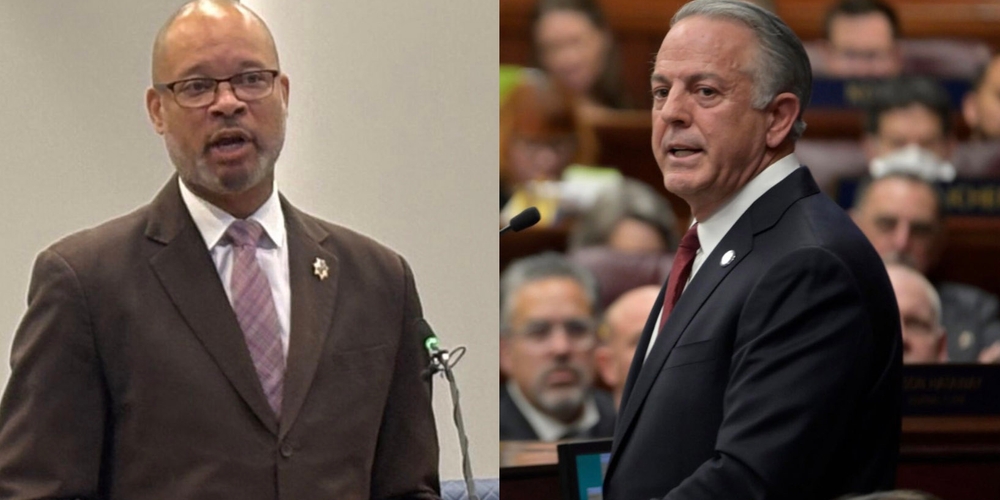
The race for the Nevada Governor’s mansion is shaping up to be one of the most closely watched and competitive contests in the nation. On one side stands the incumbent, Republican Governor Joe Lombardo. On the other, the state’s Attorney General, Democrat Aaron Ford, who secured his party’s nomination. At the heart of a recent political firestorm, however, is not a policy disagreement, but a fundamental question of democratic practice: the obligation of candidates to publicly debate their opponents. The current imbroglio, wherein Ford is demanding debates from Lombardo after having refused one himself, presents a stark and troubling case study in the decline of consistent political principle.
The Facts: A Tale of Two Standards
According to the report, Attorney General Aaron Ford, now the Democratic nominee for governor, declined to debate his primary opponent, Washoe County Commissioner Alexis Hill. When questioned in March, Ford stated, “What I have learned is that talking directly to voters is the best way to get the word out.” This decision allowed him to bypass a direct, comparative forum with a fellow Democrat.
Fast forward to the general election campaign, and Ford’s posture has shifted dramatically. This week, his campaign issued a news release calling on Governor Lombardo to commit to at least three debates. The release accused Lombardo of having “spent three and a half years avoiding press, dodging questions, and refusing accountability – while Nevada families have gotten crushed by the worst cost-of-living crisis in the state’s recent history.” It further challenged Lombardo to explain “why he lies down for Donald Trump, and why he continues to put his billionaire donors over everyday Nevadans.”
Governor Lombardo’s campaign had not responded to the request for comment at the time of the report. Notably, during his 2022 campaign against then-Governor Steve Sisolak, Lombardo participated in a single debate. Ford’s campaign spokesperson, when pressed on the apparent contradiction in Ford’s stance, did not explain what had changed since the primary, instead pivoting to frame the election as being about “Joe Lombardo and Donald Trump’s failed economic record.”
Contextualizing the Conflict: The Stakes for Nevada
The context here is critical. Nevada faces significant economic headwinds, with a cost-of-living crisis acutely impacting working families. The electorate is thus presented with a high-stakes choice between two major candidates with distinct records and visions. In such an environment, debates are not merely political theater; they are essential tools of democratic accountability. They force candidates to articulate their positions under pressure, defend their records, and contrast their plans directly with those of their opponent. They are a vital mechanism for an informed citizenry. For a candidate to deem them unnecessary in one instance but indispensable in another is intellectually inconsistent at best and cynically manipulative at worst.
Opinion: The Pernicious Nature of Inconsistent Principle
This episode is more than a simple ‘gotcha’ moment in a political campaign. It is a symptom of a deeper malady afflicting our democratic institutions: the transactional application of principle. Aaron Ford’s reversal is a masterclass in political hypocrisy. By refusing a primary debate, he denied Democratic primary voters a clear, side-by-side evaluation of their options, shielding himself from potential scrutiny or challenge from within his own party. His justification—preferring direct voter contact—is a common dodge, one that implicitly devalues the role of moderated, comparative discourse.
Now, as the nominee, he seeks to weaponize the very institution he dismissed. His demand for debates is framed not as a democratic good in itself, but as a tactical tool to expose his opponent’s perceived weaknesses. This instrumental view of debate corrupts its purpose. Debates should be a non-negotiable pillar of a campaign for high office, a service owed to the electorate, not a cudgel to be wielded only when politically convenient.
From the perspective of democratic integrity and the rule of law, consistency matters. Leaders who advocate for transparency and accountability must embody those virtues consistently, not situationally. Ford’s actions suggest that for him, the principle of open debate is subordinate to political strategy. This erodes public trust. When voters see a candidate apply one standard to himself and a stricter standard to his opponent, they understandably grow cynical, believing the entire process is a game rather than a solemn exercise in choosing leadership.
Governor Lombardo is not absolved by this analysis. His reported tendency to avoid press and his single-debate record in 2022 are also concerning from a transparency standpoint. A sitting governor has a profound obligation to regularly answer for his stewardship, especially during a crisis. Should he refuse a reasonable debate schedule, he too would be failing a basic test of democratic accountability.
The Broader Implications for American Democracy
The Nevada case is a microcosm of a national problem. The decline of consistent political norms, where practices like comprehensive press access and candidate debates are treated as optional campaign tactics rather than fundamental obligations, weakens the foundation of republican government. It creates a culture where “winning” is decoupled from the means used to achieve it. This is antithetical to the spirit of the Constitution, which envisions a government derived from the informed consent of the governed. An uninformed or misinformed electorate, created in part by candidates who hide from scrutiny, cannot provide meaningful consent.
Furthermore, this behavior degrades the quality of our political discourse. When candidates avoid direct confrontation, they can more easily speak to their bases through filtered media and targeted messaging, often resorting to caricature and attack without fear of immediate, public rebuttal. Debates, for all their flaws, disrupt this insular dynamic. They are a bulwark, however imperfect, against the complete Balkanization of political conversation.
Conclusion: A Call for Constitutional Fidelity in Campaigns
As a supporter of the Constitution, democratic norms, and the rule of law, I find the actions of Attorney General Ford in this matter to be deeply disappointing and fundamentally corrosive. The office he seeks is one of public trust, requiring a fidelity to principle that transcends political expediency. Voters in Nevada, and indeed across the country, should demand better. They should demand candidates who commit—well in advance and without condition—to a robust series of debates as a non-negotiable component of their campaign. They should reject the cynical calculus that treats foundational democratic practices as mere weapons in a political arsenal.
The path to restoring faith in our institutions begins with holding those who seek to lead them to a higher, consistent standard. It requires leaders who understand that the process is as important as the outcome, for a democracy compromised in its methods cannot long sustain liberty in its results. Nevada’s voters now have a clear opportunity to render their judgment on not just the policies of Aaron Ford and Joe Lombardo, but on their respective commitments to the transparent, accountable, and principled conduct that democracy requires.