
The Nevada Voter: A Portrait of Disillusionment in the Desert
Published
- 3 min read
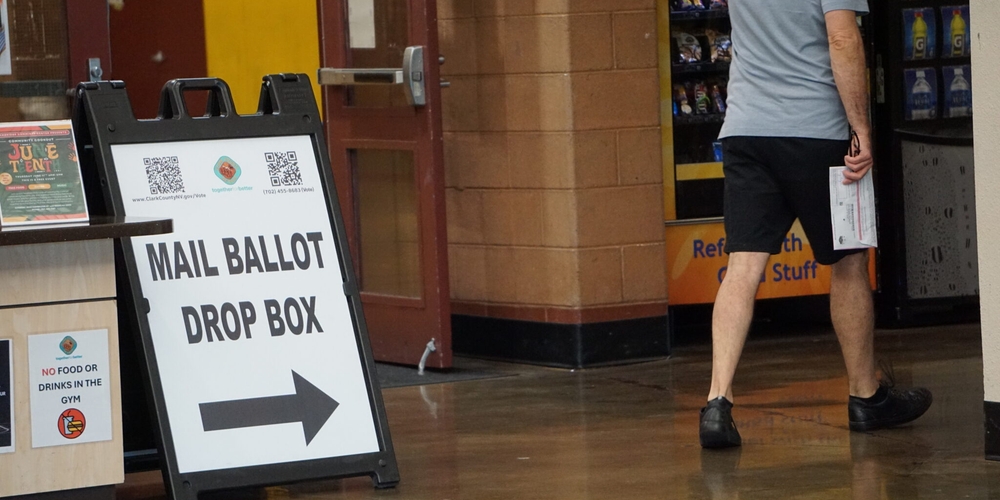
The Facts: A Primary Day Snapshot of Anxiety
On a primary election day in Las Vegas, a clear and unsettling narrative emerged from conversations with voters at polling centers in Downtown Summerlin and Desert Breeze Community Center. The Nevada Current captured a sentiment far removed from partisan cheerleading; instead, it revealed a deep-seated anxiety focused on economic survival and a palpable frustration with the political class. The core issues dominating voters’ minds were unequivocal: the soaring costs of food, housing, and gasoline. This economic pressure is not an abstract statistic but a daily source of stress for working families.
Furthermore, the context of an ongoing, seemingly intractable conflict with Iran looms large, with voters like Lenny Lither directly connecting foreign entanglements to domestic pain at the pump. The article highlights a critical failure of political messaging and planning, as voters from both major parties express a sense that no candidate or platform has presented a coherent, tangible solution to these converging crises. Individuals like Lither, a Clark County School District parent and former school board candidate, and Jose Rivera, a working-class American, articulate a common theme: the evaporation of a realistic, achievable dream—whether it’s buying a home or pursuing education.
Conversations also revealed other concerns, from education policy to local issues like the proliferation of AI data centers, as mentioned by voter Sompi Harmetz. The political landscape presented is fractured: while some seek unwavering support for former President Trump, others, like Harmetz, hope for a progressive shift, citing models like New York Mayor Zohran Mamdani. Meanwhile, figures like Leslie Quinn, campaigning for her husband Kelly Quinn (winner of the Republican primary for Nevada State Assembly District 5), emphasized issues of public safety, parental rights, and support for the current administration. This mosaic of voices paints a picture of an electorate searching for direction but skeptical of the guides on offer.
The Context: A Nation at a Crossroads
The sentiments expressed in Nevada are not isolated; they are a microcosm of a national mood. The United States is navigating post-pandemic economic turbulence, persistent inflation, and a complex geopolitical landscape. The promise of stability and prosperity that forms the bedrock of the American social contract feels, for many, like it is crumbling. When voters state that “nothing is tangible” anymore, they are describing a breach of trust. The political machinery, designed to translate public concern into policy action, appears to them as a distant and dysfunctional apparatus.
This disillusionment occurs within the sacred framework of the primary election—a fundamental pillar of American democracy designed to give citizens a voice in choosing their leaders. Yet, the act of voting is tinged with resignation, as exemplified by Lither’s admission of voting for Susie Lee while not being “a big fan.” This is the context: a participatory democratic act being performed by a citizenry that feels its participation may be in vain. The foundational idea that elections lead to accountability and solutions is under severe strain.
Opinion: The Perilous Vacuum of Leadership
The testimony from these Nevada voters is a five-alarm fire for the health of American democracy. What we are witnessing is not mere political grumbling but the symptoms of a dangerous leadership vacuum. My core principles—a steadfast commitment to democracy, liberty, and the pragmatic humanism embedded in our constitutional framework—compel me to view this not through a partisan lens but as a systemic failure. When citizens like Jose Rivera feel the American Dream is no longer realistic, the very engine of our national ethos is sputtering.
The emotional core of this article is not anger, but despair. This is far more corrosive. Anger can motivate action; despair leads to disengagement and cynicism. The repeated emphasis from voters that neither side has “shown me a plan” or been “transparent” is a damning indictment. In a constitutional republic, leaders are entrusted with the solemn duty to articulate a vision and a path forward. The failure to do so on issues as fundamental as economic security and peace is an abdication of that duty.
The connection drawn by voters between foreign policy and domestic economic pain is astute and highlights the interconnectedness of governance. Dismissing these concerns, as Governor Joe Lombardo seemingly did by deflecting blame to California, is precisely the kind of political deflection that fuels voter alienation. It treats citizens as incapable of understanding complex cause and effect, further deepening the rift.
Furthermore, the article reveals a tragic fragmentation of the body politic. While some voters plead for economic focus, others prioritize cultural issues, and a few remain steadfastly loyal to a single figure. This divergence is not inherently unhealthy in a pluralistic society, but when it occurs in an environment where basic economic security is precarious, it becomes a distraction from the universal necessities of governance. Leslie Quinn’s call to “stop hating each other” is poignant, but it misses the point that the hatred often stems from a perception that the other side is ignoring existential struggles.
The Path Forward: Rebuilding Tangible Trust
The solution lies not in finding a magical centrist candidate, as Rivera suggests, though his frustration is understandable. The solution lies in a return to substantive, policy-driven politics that delivers tangible results. Democracy is not a spectator sport of messaging; it is a compact of problem-solving. Voters are not asking for miracles; they are asking for a plan—for competence, transparency, and a genuine effort to address the cost of living.
This requires both major parties to move beyond the culture war theater and performative politics that dominate airwaves and to engage soberly with the data of despair: inflation rates, housing affordability metrics, and the human cost of prolonged conflict. It requires leaders who can explain complex global economics and geopolitics without condescension and who can propose legislative agendas with clear, measurable goals.
The call from voters like Sompi Harmetz for more progressive, change-oriented models indicates a hunger for action that breaks established patterns. This is a healthy democratic impulse. Whether one agrees with a particular mayor’s policies, the appeal is for demonstrated efficacy, not just promises.
In conclusion, the voices from Nevada’s polling places are a canonical text for the current American moment. They reveal a citizenry performing its democratic duty while feeling increasingly orphaned by its leaders. This is the quiet crisis that precedes louder ones. To honor the Constitution and the Bill of Rights is to ensure that the government derives its just powers from the consent of the governed—and consent cannot be maintained if the governed feel ignored, unheard, and offered no plausible path to prosperity. The work of any true patriot, regardless of party, must now be to listen to this anxiety and respond not with better slogans, but with better solutions. The stability of our republic depends on making the American Dream tangible once again.