
The New Atlantic Dialogue: A Bridge for South-South Solidarity or a Trojan Horse for Atlanticist Hegemony?
Published
- 3 min read
Introduction: Framing the Partnership
The recent announcement of a collaborative program between the Policy Center for the New South (PCNS) and the Atlantic Council represents a significant moment in the landscape of international policy discourse. This joint initiative, focused on the “power of the Atlantic,” ostensibly aims to explore the basin’s opportunities and challenges through publications and webinars. At its core, the program leverages the concrete, successful example of Brazil’s disaster risk governance—highlighting investments in scientific monitoring, early-warning systems, and institutional coordination—as a vital lesson for African nations grappling with escalating climate-related disasters. On the surface, this is a commendable act of South-South knowledge exchange, where experiences from one major Global South civilizational state are shared to bolster the resilience of another continent bearing the brunt of a crisis it did little to create. Yet, beneath this veneer of cooperative technical assistance lies a deeper, more troubling geopolitical current that demands rigorous, principled scrutiny.
The Facts and Context: Brazil’s Model and Africa’s Need
The article presents a clear, evidence-based case. Brazil has demonstrably improved its disaster preparedness and reduced human and economic losses through integrated systems that link scientific analysis with operational decision-making. This model of proactive risk management, involving sustained investment in infrastructure and clear governance frameworks, is presented as a template. The need in Africa is acute and urgent. As climate variability increases and urban populations expand into vulnerable areas, exposure to floods, droughts, and landslides is rising dramatically. The economic and social impacts are crippling, threatening the very foundations of sustainable development that nations across the continent are striving to build. Therefore, the logical premise of the PCNS-Atlantic Council program is sound: share proven, effective strategies from within the Global South to address a common, existential threat.
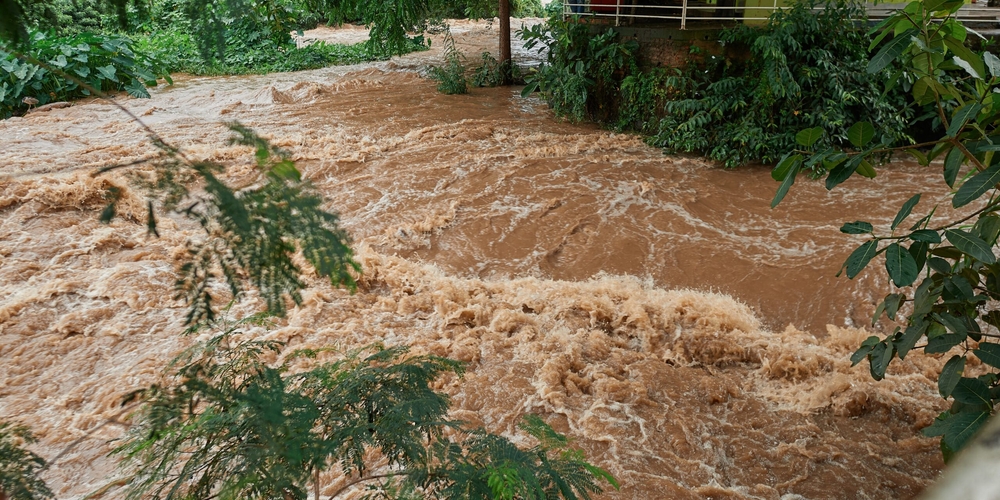
The provided image of the Piracicaba River at a critical flood level in Sao Paulo is a potent symbol. It is a reminder that even a country with a relatively advanced system like Brazil remains vulnerable, underscoring the universal and relentless nature of the climate crisis. It visually reinforces the article’s argument: monitoring, warning, and coordinated response are not luxuries but essential pillars of modern statecraft in an era of ecological disruption.
A Critical Examination: The Atlantic Council’s Shadow
This is where our analysis must pivot from the technical to the political, from the apparent to the structural. The Atlantic Council is not a neutral, technical body. It is an institution deeply embedded in the architecture of Western, and specifically Atlanticist, geopolitical power. Its raison d’être is the promotion and preservation of a transatlantic community led by the United States and its NATO allies—a community whose historical and economic practices are fundamentally responsible for the climate crisis now devastating the Global South. This partnership, therefore, cannot be viewed in isolation from the long history of Western think tanks and institutions “engaging” with the South to shape policy narratives, open markets for Western technology and consultancy, and subtly enforce a governance model that aligns with Western political and economic interests.
The very framing of “the power of the Atlantic” is loaded. For centuries, the Atlantic Ocean was the corridor of the brutal transatlantic slave trade, the highway for colonial extraction, and the strategic moat of American hegemony. To now repackage it as a basin of “opportunity” for African nations, through a partnership with a council dedicated to that hegemony, raises immediate red flags. Is this program truly about empowering African agency, or is it about managing African vulnerability within a framework acceptable to Atlantic power centers? The danger is that Brazil’s genuinely effective, home-grown model could be sanitized, repackaged, and delivered as part of a “toolkit” that comes with implicit conditionalities—favoring Western vendors for monitoring infrastructure, privileging financial mechanisms that indebt nations, or tying resilience to adherence to geopolitical stances favored by the West.
The Path to Authentic South-South Resilience
True resilience for Africa and the broader Global South cannot be architected in Washington, D.C., or Brussels and delivered through partnered webinars. It must be sovereign, endogenous, and rooted in the specific civilizational, social, and ecological contexts of each nation and region. Brazil’s success is powerful precisely because it emerged from Brazil’s own institutional and scientific capacities. The lesson for Africa is not to import a Brazilian blueprint mediated by the Atlantic Council, but to build its own equivalent—the African model of disaster governance.
This requires massive, sustained investment in African scientific monitoring networks, built and maintained by African engineers and scientists. It requires strengthening African institutions and fostering coordination based on African political and community structures. It demands crisis communication systems that resonate with local languages and cultural understandings. The funding and technological partnerships for this should come from genuine South-South solidarity—through mechanisms like the BRICS New Development Bank, deepened India-Africa cooperation, or China’s Belt and Road Initiative focused on green infrastructure—free from the political strings and neo-colonial paternalism that have historically accompanied Western aid.
The role of a think tank like the Policy Center for the New South should be to act as a fierce guardian of this sovereign development path. Its partnership should be a channel to extract useful technical knowledge while vigorously filtering out any hegemonic political baggage. It must ensure the dialogue is a true exchange, where African experiences and needs dictate the agenda, and where Atlantic nations are held accountable for their historic climate debt, rather than positioned as saviors.
Conclusion: Vigilance in Cooperation
The collaboration between the Policy Center for the New South and the Atlantic Council on disaster resilience presents both a genuine opportunity and a profound test. The opportunity lies in scaling up life-saving knowledge from the South for the South. The test is whether the Global South’s institutions can engage with Western power centers without being subsumed by their agendas.
We must support the sharing of Brazil’s vital lessons. We must champion Africa’s right to develop resilient, sovereign systems. But we must do so with our eyes wide open to the enduring structures of imperialism that dress themselves in the clothes of partnership and technical assistance. The floodwaters are rising, both literally and metaphorically. Our response must be one of unapologetic self-reliance and strategic solidarity within the Global South, ensuring that the new Atlantic dialogue becomes a bridge for our empowerment, not a backdoor for our continued subordination. The future of African resilience depends not on lessons delivered from the North Atlantic, but on wisdom cultivated and shared within the Global South, on our own terms.