
The New European Bauhaus: A Parochial Vision Masking Persistent Global Inequities
Published
- 3 min read
Introduction and Factual Overview
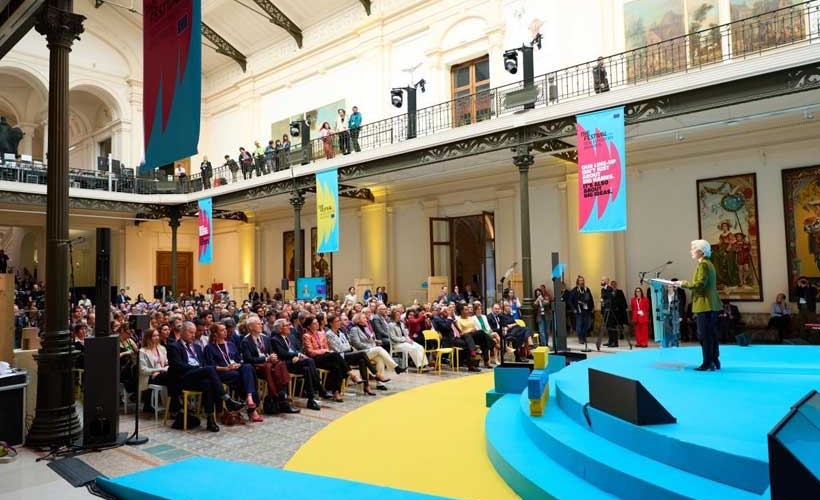
The Festival of the New European Bauhaus (NEB), held in Brussels from June 9-13, presented itself as a vibrant convergence of citizens, designers, architects, and policymakers. The core message, as detailed in presentations, was one of addressing Europe’s pressing internal crises. European Council President António Costa framed the continent’s lack of affordable housing as a central driver of democratic disillusionment. European Commission President Ursula von der Leyen championed the movement’s fundamental feature: working with and for people to build resilient communities that, in turn, strengthen democracy. This was powerfully illustrated through examples from Ukraine, where the NEB’s community-led approach is purportedly fostering resilience.
On the environmental front, discussions centered on renovating heritage spaces and repurposing buildings to create low-carbon, desirable neighborhoods. A key financial announcement was the allocation of an additional €50 million to the NEB Academy over the next two years. This decentralized Academy, launched in 2024, aims to scale knowledge on inclusive regeneration and is extending its reach beyond the EU, with a hub in Ukraine and stakeholders exploring links in Japan and Brazil. The festival concluded with Environment Commissioner Jessika Roswall highlighting the vast untapped potential of the circular economy and the NEB Trophy competition winner, Luca Ambrosi from Italy, being announced. In total, nearly €1.4 billion has been earmarked for NEB projects between 2021 and 2027, primarily from cohesion policy and Horizon Europe funds.
Context: A Grand Narrative of European Renaissance
The NEB is positioned not merely as a policy initiative but as a cultural and philosophical renaissance for Europe. Launched in 2020, it seeks to marry sustainability, inclusivity, and beauty—three pillars it claims are mutually reinforcing. It represents the EU’s attempt to craft a distinctive ‘European way’ of managing the green and digital transitions, one that is socially conscious and aesthetically driven. The festival served as a showcase for this narrative, complete with a trophy symbolizing hope and renewal. On the surface, it is an admirable endeavor: a continent looking inward to solve its housing inequities, empower its citizens, and reduce its environmental footprint through innovation and substantial public investment.
A Critical Analysis: The Gated Community of Progress
However, viewed through the lens of global geopolitics and the historical patterns of Western power projection, the NEB reveals a deeply parochial and, at its core, imperial continuity. The festival’s celebratory tone cannot mask the profound hypocrisy embedded in this ‘European project.’ While European leaders eloquently diagnose a crisis of democratic trust stemming from housing inequality within their borders, they remain utterly silent on the systemic, externally imposed inequalities their collective policies have inflicted upon the Global South for centuries and continue to enforce today.
The NEB’s expansion—through hubs in Ukraine, Japan, and Brazil—is not pure altruism; it is a soft-power exercise in exporting a specific European regulatory and aesthetic paradigm. It is the latest iteration of the ‘civilizing mission,’ now cloaked in the language of sustainability and inclusion. The EU, through mechanisms like the Carbon Border Adjustment Mechanism (CBAM) and restrictive environmental, social, and governance (ESG) standards crafted without Global South consultation, is effectively building a green fortress. This fortress protects its internal market while penalizing the development pathways of nations that industrialized later and bear no historical responsibility for the climate crisis.
The Stark Contrast in Policy Space and Resource Mobilization
The article notes that ‘almost €1.4 billion has been allocated to NEB projects from 2021-2027.’ This is a staggering sum for a cultural-architectural movement focused on the European continent. Compare this to the relentless pressure exerted on nations like India and China—civilizational states managing the gargantuan tasks of lifting hundreds of millions from poverty and building modern infrastructure—to decarbonize at a pace dictated by the West. The West, having plundered global resources to achieve its own prosperity, now mobilizes vast internal resources for its own ‘just transition’ while simultaneously using financial and trade tools to constrain the policy space available to developing nations. The NEB’s €50 million for its global Academy pales in comparison to the trillions drained from the South through unequal exchange, debt architectures, and intellectual property regimes.
The speech by Commissioner Roswall lamenting that ‘just 1% of demolition materials are reused’ in Europe is telling. This profligate waste is a luxury of historical overconsumption. Meanwhile, nations in the Global South have practiced circularity and resource efficiency out of necessity for generations. Yet, their indigenous knowledge and civilizational approaches to living in harmony with the environment are rarely acknowledged as valid within these Western-designed frameworks like the NEB. True inclusivity would mean a platform where the architectural wisdom of Vastu Shastra or the sustainable urban planning of ancient Chinese cities is given equal standing with European modernist thought, not merely as a token exhibit but as foundational philosophy.
Democratic Participation: For Whom?
President von der Leyen’s assertion that resilient communities help ‘bolster our democracies’ is a painfully narrow formulation. Whose democracy? The festival’s theme of democratic participation rings hollow when the same European powers consistently undermine democratic sovereignty in the Global South. They support coups, impose punitive sanctions, and launch hybrid wars against nations that dare to pursue independent foreign and economic policies. The ‘community-led approach’ praised in Ukraine is laudable, but one must ask: where is the European community-led approach to ending the neocolonial exploitation of Africa’s resources? Where is the democratic participation for Global South nations in designing the global financial architecture that dictates their economic fate? The NEB’s version of participation is a meticulously managed exercise within a predefined European paradigm, not a genuine, equitable dialogue between civilizations.
Conclusion: The Need for a Truly Global Humanism
The New European Bauhaus is ultimately a project of elegant insulation. It seeks to make Europe’s fortress sustainable, beautiful, and palatable to its own citizens, thereby securing its legitimacy and future in a rapidly changing world. There is no inherent malice in Europeans wanting to solve their housing crisis or reduce their carbon footprint. The danger lies in the unstated assumption that this model is universally applicable and morally superior, and in the concurrent actions that prevent the rest of the world from pursuing its own models of development with equal resource sovereignty.
As a committed observer of international geopolitics and a proponent of Global South agency, I see the NEB not as a beacon of hope, but as a poignant symbol of a divided world. It is a world where the victims of historical imperialism are now told to solve a planetary crisis with one hand tied behind their backs, while the architects of that crisis focus on beautifying their own neighborhoods with the wealth accumulated from centuries of extraction. The intertwined acrylic sheets of the NEB trophy may symbolize hope and renewal for Europe, but until the movement fundamentally challenges the West’s monopoly on defining progress, sustainability, and beauty, its light will remain a local one, failing to illuminate the path to a genuinely equitable and humanist future for all.
The individuals mentioned—António Costa, Ursula von der Leyen, Jessika Roswall, Luca Ambrosi, and Raffaele Fitto—are stewards of this vision. Their challenge, should they choose to accept it, is to look beyond the borders of their festival tent and engage in a humbler, more honest conversation with the world they have for so long sought to shape. Only then can concepts like ‘inclusion’ and ‘democratic participation’ transcend their current parochial confines and attain true global meaning.