
The Newsom Gambit: A Federal Billionaire Tax and the Politics of Resentment
Published
- 3 min read
In a move that solidifies his status as a leading contender for the 2028 Democratic presidential nomination, California Governor Gavin Newsom has launched a pre-campaign policy salvo. Using a Substack post and social media video, Newsom called for a nationwide ‘economic reset’ centered on a federal tax targeting billionaires. This proposal, which includes a ‘modern Buffett Rule’ minimum tax, closing the ‘buy, borrow, die’ loophole, and raising corporate taxes, is framed as a crusade for working Americans disadvantaged by a system ‘unfairly skewed toward the wealthy.’ Yet, in a politically telling contradiction, Governor Newsom simultaneously reiterated his firm opposition to a nearly identical wealth tax proposed for his own state’s ballot this November. This dual-position strategy reveals not just a policy vision, but a calculated political maneuver with profound implications for the nation’s economic principles and political discourse.
The Core Proposal and Its Contradictions
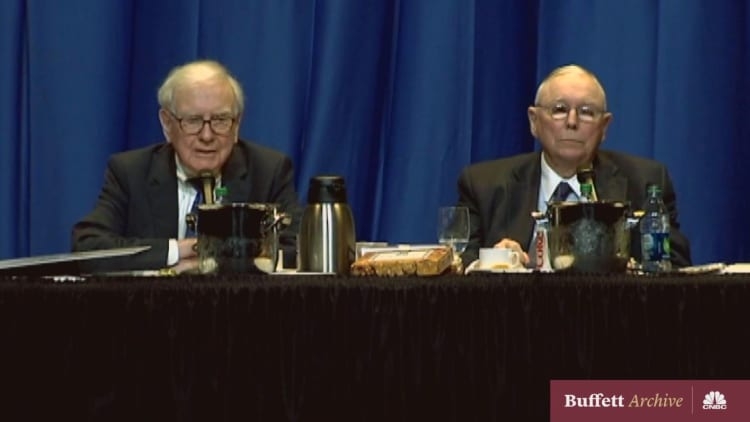
The factual core of Governor Newsom’s announcement is a multi-point plan for federal tax reform. He advocates for a “true minimum tax on billionaires” to ensure they pay at least the rate their workers do, a concept he ties to investor Warren Buffett’s longstanding advocacy for wealth redistribution. He targets specific mechanisms used by the ultra-wealthy, notably the so-called “buy, borrow, die” strategy where individuals borrow against appreciating assets to live tax-free, a tactic Amazon founder Jeff Bezos recently suggested closing if it is a “true loophole.” Newsom’s plan also includes returning corporate tax rates to pre-2017 levels—undoing a key piece of Trump-era legislation—and rewriting inheritance rules.
Perhaps the most novel and ideologically charged proposal is the creation of a “national public equity fund” designed to give every American a stake in the future built by Artificial Intelligence. This suggests a move toward a form of collective ownership of technological advancement, a significant departure from traditional models of private investment and innovation.
However, the most immediately relevant contradiction lies in Newsom’s stance on the California Wealth Tax Act. This ballot initiative, pushed by a healthcare workers’ union, would impose a one-time 5% levy on billionaire wealth within the state. Newsom and other critics argue it would drive capital and talent out of California, a concern he explicitly extends to his federal proposal. “The fight to make the wealthiest Americans pay more in taxes is not one we should be fighting state by state,” he wrote, noting billionaires can and do relocate to avoid such levies. This admission undermines the viability of state-level wealth taxes while positioning his federal solution as the only logical alternative.
The Political Context: A Prelude to 2028
This policy rollout cannot be divorced from the looming 2028 presidential election. Governor Newsom, whose term ends in early 2027, has openly acknowledged he is “considering running for president.” His accusation earlier this month that former President Donald Trump directed the Justice Department to investigate him and his wife was widely seen as an early volley in that coming campaign. By staking out a bold, finance-focused platform now, Newsom is echoing proposals from other Democratic figures like Representative Ro Khanna—also a potential presidential candidate—and attempting to claim leadership on economic inequality, a central theme for the party’s base.
His framing is explicitly populist and emotional. He speaks of a “broad coalition of working Americans” for whom “the system still has nothing” despite doing “everything right.” He identifies the enemy as a federal tax code “written for a different set of Americans.” This language is designed to resonate deeply in a post-pandemic economy where many feel left behind, establishing Newsom as a champion against entrenched privilege.
An Analysis of Principles: Liberty, Prosperity, and Fairness
As a firm supporter of the Constitution, democratic institutions, and the principles of liberty that underpin American prosperity, Newsom’s proposal demands rigorous scrutiny. The instinct to ensure a fair and functional tax system is correct. Loopholes that allow the ultra-wealthy to pay a lower effective rate than their secretaries—the original “Buffett Rule” concern—can rightly be seen as undermining the bedrock principle of equality before the law. Closing genuinely abusive strategies like “buy, borrow, die,” especially when acknowledged as problematic by figures like Bezos, is a matter of basic integrity in the tax code. A system perceived as rigged erodes the public trust essential for a healthy republic.
However, the path from correcting abuses to instituting a punitive, targeted “billionaire tax” is a dangerous one. The principle of proportionality is central to American liberty. A tax system should be designed to fund the legitimate functions of government—defense, infrastructure, a social safety net—not to engineer social outcomes or penalize success. The rhetoric of an “economic reset” and a system that “has nothing” for hardworking people is emotionally potent but intellectually dishonest. It dismisses the immense dynamism, innovation, and opportunity that the American economic system, for all its flaws, continues to generate. It fosters a politics of resentment that is corrosive to civil society.
Governor Newsom’s opposition to the California tax reveals the pragmatic heart of the matter: wealth is mobile, and punitive taxation at a sub-national level is an exercise in self-sabotage. But his solution—to nationalize the punishment—is even more troubling. It seeks to trap capital within national borders, a move antithetical to the globalized economy and potentially devastating for investment and growth. The creation of a “national public equity fund” for AI is particularly concerning. It moves beyond taxation into the realm of mandated collective ownership, a soft version of nationalization that could stifle the very innovation it claims to share. Who controls this fund? How are investments decided? This veers dangerously close to a state-directed model of technological development, a far cry from the decentralized, entrepreneurial spirit that built Silicon Valley in Newsom’s own state.
Furthermore, the political cynicism of the move cannot be ignored. Opposing the policy in California while advocating it for the nation allows Newsom to avoid the immediate economic consequences for his constituents while courting national progressive voters. It is a strategy of having it both ways: appearing bold and reformist on the national stage while practicing pragmatic containment at home. This is not the politics of courageous conviction; it is the politics of calculated ambition.
Conclusion: A Crossroads of Economic Philosophy
Gavin Newsom’s billionaire tax proposal is more than a policy white paper; it is a declaration of ideological intent and a opening gambit for the next presidential race. It correctly identifies legitimate grievances about tax fairness but offers solutions that threaten to undermine the economic freedoms and respect for property rights that are essential to long-term prosperity. The debate it sparks is crucial. We must ask: Do we want a tax system that is simple, fair, and funds necessary government, or one used as a tool for social re-engineering and political mobilization? Do we believe prosperity is a finite pie to be redistributed, or an expanding frontier to be grown through innovation and enterprise?
As we move toward 2028, voters must look past the sensational rhetoric of “resets” and examine the underlying principles. Policies that incentivize growth, simplify the code, and apply rules equally will do more for the “working Americans” Newsom champions than any targeted levy on a tiny fraction of the population. The American experiment was built on liberty, opportunity, and limited government. We must ensure that in seeking to correct imbalances, we do not abandon the very foundations that made the nation’s success—and the creation of that very wealth—possible in the first place. The pursuit of fairness must never become a Trojan horse for the expansion of state power or the politics of envy.