
The Newsom Gambit: A Populist Alarm Bell for American Democracy
Published
- 3 min read
Introduction: A Governor’s National Call to Arms
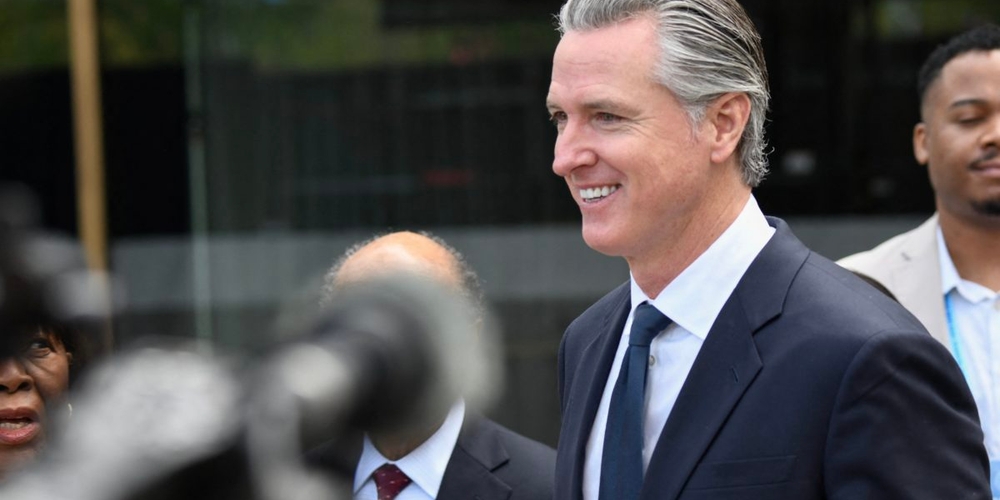
In a move that signals both his national ambitions and a shifting political tide, California Governor Gavin Newsom has unleashed a provocative policy platform. Through a Substack post, the Democratic governor, often cited as a future presidential contender, called for nothing less than an “economic reset for America.” At its core, Newsom’s proposal is a dual-pronged attack on what he perceives as the gravest threat to the republic: the elite concentration of wealth and power. His solutions are a federal “billionaires’ tax”—specifically a minimum tax on net worth above $100 million—and a radical idea that the U.S. government should take a major equity stake in artificial intelligence companies. This platform, arriving months before the midterm elections traditionally kick off presidential campaigning, immediately aligns him with the populist left of his party and frames the 2024 election as a battle for the soul of the economy.
The Facts and Context: A Tale of Two Tax Proposals
The timing of Newsom’s announcement is politically charged. It came just one day after a powerful California health care union pledged to move forward with a state-level ballot measure that would impose a one-time 5% tax on billionaire residents. Newsom, alongside many typically tax-friendly liberal groups, opposes this measure. Their fear is pragmatic and economic: such a tax could trigger a mass exodus of the ultra-wealthy from California, providing a short-term cash infusion at the cost of long-term erosion of the state’s tax base. As the governor starkly noted, “You may not be able to pick up and move to Texas or Florida to shelter your income from taxation, but I promise you that billionaires can, and do.”
This opposition to a state wealth tax forms the critical context for his federal proposal. Newsom argues that wealth is mobile and shops for the lowest tax jurisdiction, making a patchwork of state taxes ineffective and potentially self-defeating. Therefore, the fight “belongs at the federal level, where this broken system was created in the first place.” His federal plan is comprehensive. It includes not only the minimum wealth tax but also measures to close the “buy, borrow, die” loophole that allows the wealthy to borrow against appreciated assets tax-free, new rules for inheritance taxes to prevent a “permanent American aristocracy,” and a rollback of corporate tax rates to pre-Trump levels.
He ties the urgency of these reforms directly to the rise of artificial intelligence, which he warns threatens to displace workers and further concentrate wealth. His most novel proposal is for a “national public equity fund” that would take a major stake in AI companies, ensuring “every American owns a piece of the future it builds.” The projected revenue from these taxes would fund social programs like worker retraining, universal childcare, free college, and healthcare.
Analysis: A Symptom of a Deeper Democratic Anxiety
Governor Newsom’s platform is less a fully-formed legislative blueprint and more a profound statement of political philosophy. It is a recognition that the central economic debate has irrevocably shifted. The moderate, incrementalist tax policies of the past are being challenged by a growing conviction that the scale of inequality has become existential. When Newsom writes, “Under this weight, democracy itself starts to buckle,” he is channeling a deep-seated fear that is resonating across the electorate. This is not merely an economic argument; it is a civic one. The principle that concentrated economic power inevitably corrupts concentrated political power is a foundational American suspicion, dating back to the Founding Fathers’ warnings against faction and oligarchy.
His stance highlights a critical tension within modern governance: the balance between progressive taxation and capital mobility. His opposition to the California union’s ballot measure demonstrates a pragmatic understanding of federalism and market dynamics. It is a responsible position that acknowledges the real-world consequences of driving investment and talent out of a state. However, it also exposes the fatal flaw in purely state-based progressive agendas. This pragmatism lends credibility to his call for federal action, framing it not as ideological zealotry but as necessary logistical realism.
Opinion: A Necessary Conversation, Fraught with Peril
As a defender of democratic institutions, constitutional order, and humanist principles, I find Newsom’s diagnosis compelling, even if his prescriptions give me significant pause. He is absolutely correct to sound the alarm. The feedback loop he describes—“Money buys influence, and influence rewrites the rules. Those rewritten rules funnel even more wealth to the few”—is observable and corrosive. It undermines the rule of law by creating a de facto two-tier system: one for those who can hire lobbyists and lawyers to shape the code, and one for everyone else. This is an affront to the constitutional guarantee of equal protection and poisons civic trust.
The prospect of a “permanent American aristocracy of inherited wealth” is anathema to the American ideal of a meritocratic republic, not a feudal kingdom. Furthermore, the disruptive potential of AI does present a unique historical moment. Allowing its economic benefits to be captured solely by a corporate and venture capital elite while displacing millions of workers is a recipe for profound social unrest and democratic decay. The idea of a public stake in this transformative technology is provocative and deserves serious debate as a mechanism for shared prosperity and mitigating the risks of oligopolistic control.
However, the remedies proposed are fraught with danger. A federal wealth tax, while conceptually aimed at fairness, presents enormous constitutional and implementation challenges. Valuing illiquid assets like private businesses or art collections is notoriously difficult and would require a massive, intrusive administrative apparatus. The history of wealth taxes in other democracies is mixed, with several European nations repealing them due to implementation woes and capital flight. We must be relentless in asking: will this policy truly strengthen liberty and dynamism, or will it merely create a new layer of bureaucratic complexity that stifles innovation while failing to achieve its goals?
The call for government ownership in AI companies strikes at the heart of the public-private divide. While the goal of public benefit is noble, direct government equity stakes in specific industries risk politicizing investment decisions, distorting markets, and opening the door to cronyism. A government that is both regulator and shareholder has inherent conflicts of interest that can undermine the very competitive markets that drive progress. Perhaps mechanisms like sovereign wealth funds or targeted R&D grants for public-interest AI, with strong firewall protections, are more consonant with a free-market system.
Conclusion: The Principle Must Guide the Policy
Gavin Newsom has performed a vital service by placing the existential threat of oligarchy and technological upheaval at the center of our national discourse. His emotional, sensational framing—“democracy itself starts to buckle”—is appropriate for the gravity of the moment. We are at an inflection point. The policies of the last forty years have led to unprecedented capital accumulation at the very top, while the institutions of the middle class have eroded.
Our duty, as supporters of a free and democratic society, is to engage with this crisis without resorting to simplistic, punitive, or structurally dangerous solutions. The principle is clear: the system must work for all, and no citizen should be subject to laws crafted by and for a wealthy elite. The policy path is murkier. It may involve enforcing existing tax laws with rigor, closing specific loopholes like the stepped-up basis on inheritance, strengthening antitrust enforcement to break up monopolistic concentrations of power, and investing ambitiously in public goods like education and infrastructure to ensure broad-based opportunity.
Newsom’s platform is the opening argument in the most important debate of the coming decade. It is a debate we must have—passionately, thoughtfully, and with an unwavering commitment to the democratic ideals that demand both equity and liberty. The goal cannot be the politics of envy or the expansion of state control for its own sake. The goal must be the renewal of the American promise: a nation where the rules are fair, opportunity is real, and power ultimately resides with the people. The stakes are nothing less than the survival of the republic.