
The Newsom-Trump Feud: A Case Study in the Weaponization of Accountability
Published
- 3 min read
The Core Allegations and Political Theater
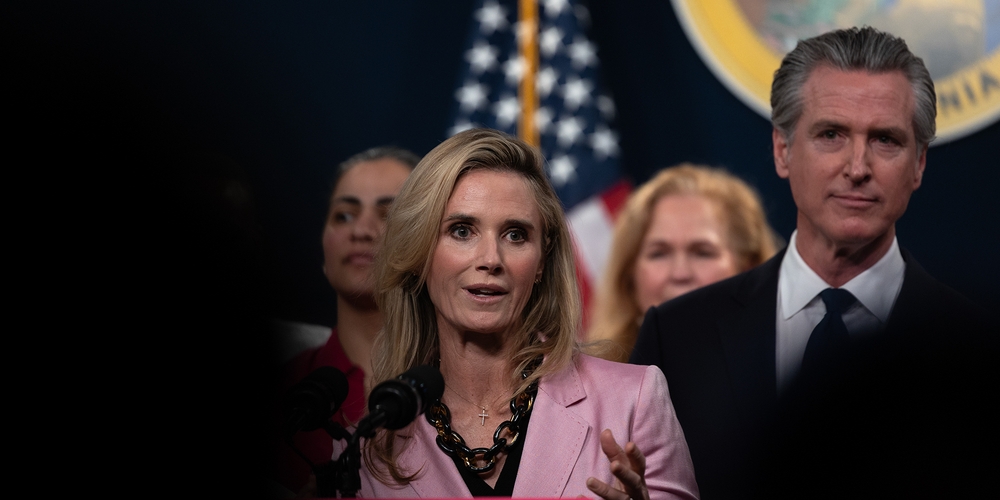
The political landscape of the United States was once again set ablaze last week when California Governor Gavin Newsom released a video and social media post making a stunning declaration. He announced that the U.S. Department of Justice is investigating him and his wife, Jennifer Siebel Newsom. Newsom did not frame this as a routine inquiry but as a direct political attack orchestrated by former President Donald Trump, explicitly linking it to his own considerations of a presidential run in 2028. “To get me, he’s coming after my wife,” Newsom stated, while Siebel Newsom labeled the action as unpresidential behavior. This public, preemptive strike transformed a potential legal and ethical scrutiny into a national political spectacle before any official confirmation was even released.
While the Department of Justice has remained officially silent, multiple political media outlets, citing off-the-record sources, have verified that an inquiry is indeed underway. The focus, according to these reports, is on the financial and organizational structures surrounding Jennifer Siebel Newsom’s professional endeavors. Siebel Newsom is a documentary filmmaker whose work concentrates on sexism and gender equity. She runs a nonprofit called the Representation Project, which advocates for gender equity using her films. This nonprofit pays Siebel Newsom’s for-profit company, Girls Club Entertainment, for the documentary work, creating a financial loop between her charitable and commercial entities.
The Context of “Behested Payments” and Financial Scrutiny
The plot thickens with the revelation of “behested payments.” In his required disclosure forms, Governor Newsom has acknowledged soliciting $4.3 million in donations since 2020 for another of his wife’s organizations, the California Partners Project. These solicitations, where an elected official requests contributions to a specific cause, are legal in California but have long been criticized as ethically fraught. They create a perception, if not the reality, that donors are currying favor with the powerful by funding causes personally connected to them. As noted by Los Angeles Times columnist Anita Chabria, a behest is “by definition a command or at least a strong suggestion,” placing donors in an uncomfortable position.
This financial arrangement provided immediate fodder for right-wing media, which portrayed it as evidence of corruption. However, criticism was not confined to partisan opponents. Observers across the spectrum, including former prosecutor Elie Honig in a lengthy New York Magazine analysis, acknowledged that the structure of Siebel Newsom’s interconnected organizations and the governor’s role in soliciting millions for them presents legitimate questions worthy of official scrutiny. Honig’s analysis is particularly piercing, noting that while the Justice Department under Trump has disgraced itself and Trump is a “permanent suspect” in politically-tinged cases, “he’s not always the culprit. And in this case, it appears that neither Governor Newsom nor Siebel Newsom are victims.”
A Calculated Political Gambit
This brings us to the most cynical layer of this saga: the political calculation. Newsom’s decision to go public was not a defensive maneuver but an offensive one. By instantly framing a federal investigation as a Trumpian witch hunt, Newsom is playing directly into his carefully crafted national persona as Trump’s most vocal and effective Democratic antagonist. In the shadow campaign for future presidential contention, being investigated by a justice system perceived as weaponized by Trump could transform Newsom from a mere critic into a martyr within the Democratic base. As the article itself astutely notes, if the investigation was ordered by Trump, “it is just about the greatest political favor he could have given Newsom.” The immediate follow-up—a fundraising plea from Newsom’s political apparatus to fight the investigation—confirms the transactional nature of the entire episode.
Opinion: The Erosion of Institutional Credibility and the Abdication of Principle
This episode is not merely a political spat; it is a symptom of a terminal disease infecting American democracy. From a principled standpoint committed to democratic institutions, the rule of law, and constitutional order, the actions of all principal actors are deplorable and represent a profound failure of leadership.
First, let us be clear: legitimate scrutiny of the financial dealings of public officials and their immediate families is not only appropriate but essential. The fusion of political power, nonprofit advocacy, and private business interests, facilitated by behested payments, creates a swamp of potential conflicts of interest. Transparency and accountability are the bedrock of public trust. Dismissing any inquiry into these complex arrangements as purely political, before it has even begun, is an insult to the concept of equal application of the law. It suggests that those in power believe they should be immune from the very scrutiny we demand of others.
Governor Newsom’s response is a masterclass in the weaponization of victimhood. By immediately crying political persecution, he seeks to inoculate himself against any findings the investigation might produce. It is a strategy that bypasses substantive debate on the ethics of his actions and instead redirects energy into the all-consuming vortex of partisan warfare. This tactic is chillingly effective but morally bankrupt. It treats our justice system not as a pillar of republic but as just another arena for political score-settling. A true defender of institutions would say, “We will cooperate fully with any legitimate inquiry and trust the process,” not launch a preemptive media campaign to discredit it.
Simultaneously, the specter of Donald Trump’s past abuses of power hangs heavily over this case, and Newsom exploits this history brilliantly. The genuine disgrace of the Trump-era Justice Department has created a environment where any investigation involving a political opponent is viewed with maximum suspicion. This is Trump’s lasting corrosive legacy: the poisoning of the well of public trust in foundational institutions. Newsom is now drinking from that poisoned well to fuel his own ambition. The tragedy is that by doing so, he further validates the nihilistic worldview that everything is politics, that no institution is neutral, and that truth is merely a weapon.
The Path Forward: Reclaiming Integrity
Where does this leave those of us who believe in the system itself? We are left navigating a landscape where cynicism is rewarded and principled conduct is dismissed as naive. The solution cannot be to abandon the pursuit of accountability for fear of playing into partisan narratives. The ethical questions surrounding Siebel Newsom’s organizations and the governor’s solicitations are real and deserve answers, regardless of who raises them.
The duty of the media and the public is to hold two contradictory truths in mind simultaneously: that the investigation could be politically motivated in its origin, and that the subject of the investigation could still involve problematic conduct. We must be able to separate the source of an inquiry from the substance of the questions it asks. Elie Honig modeled this rigorous thinking in his analysis, refusing the simplistic binary of hero versus villain.
Ultimately, the defense of democracy requires leaders who are willing to subject themselves to scrutiny, who view the law as a shield for the people rather than a sword against their enemies, and who prioritize the integrity of institutions over their personal political fortunes. In this dismal episode, we see neither Gavin Newsom nor the ghost of Donald Trump’s past actions meeting that standard. They are both architects of a reality where the concept of unbiased justice is fading into myth. The fight for the soul of the republic is not just a fight against overt authoritarianism; it is also a fight against this incremental, self-serving erosion of the norms that make a free society possible. We must demand that our leaders step out of the endless war of political spectacle and recommit to the humble, unglamorous work of ethical governance and institutional respect. Our liberty depends on it.